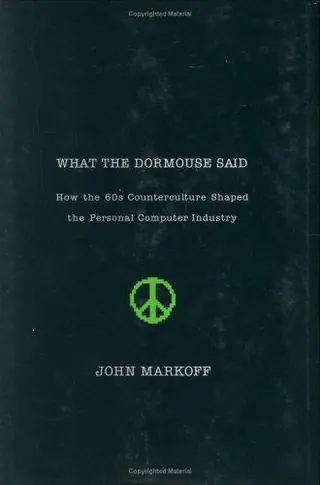
What the Dormouse Said
by John Markoff · first published 2005
76% recommend24% neutral
Why HN recommends it
A history of how 1960s counterculture and psychedelics fed into personal computing, with accounts of Engelbart's Mother of All Demos, Stewart Brand, and early Silicon Valley. For readers of tech culture history.
Summarised by Claude from recommending comments
Most histories of the personal computer industry focus on technology or business. John Markoff's landmark book is about the culture and consciousness behind the first PCs—the culture being counter– and the consciousness expanded, sometimes chemically. It's a brilliant evocation of Stanford, California, in the 1960s and '70s, where a group of visionaries set out to turn computers into a means for freeing minds and information. In these pages one encounters Ken Kesey and the phone hacker Cap'n Crunch, est and LSD, The Whole Earth Catalog and the Homebrew Computer Lab. What the Dormouse Said is a
Affiliate links. As an Amazon Associate I earn from qualifying purchases.
Mentions per year
What Hacker News says
Related books
 2009–2025
Computing in the Middle Ages
Severo M. Ornstein
Recommended by 8 · mentioned by 108 recommend · 10 mention8 recommend · 108 recommend
 2009–2026
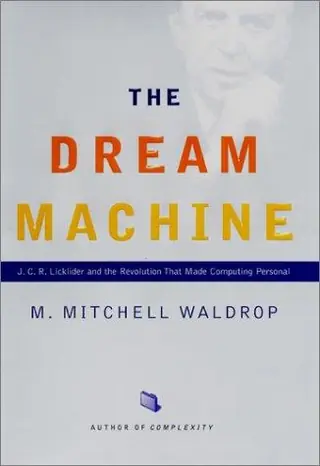
The Dream Machine
M. Mitchell Waldrop
Recommended by 109 · mentioned by 131109 recommend · 131 mention109 recommend · 131109 recommend
 2013–2023
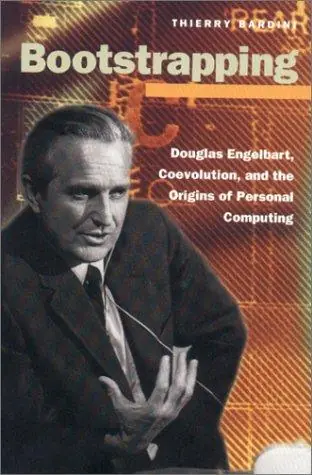
Bootstrapping
Thierry Bardini
Recommended by 2 · mentioned by 42 recommend · 4 mention2 recommend · 42 recommend
 2008–2026
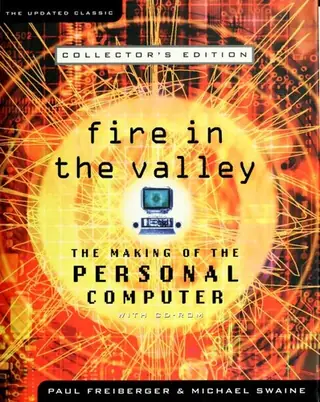
Fire in the valley
Paul Freiberger, Michael Swaine
Recommended by 39 · mentioned by 5239 recommend · 52 mention39 recommend · 5239 recommend
History of Modern Computing, Second Edition
Paul E. Ceruzzi
Recommended by 2 · mentioned by 22 recommend · 2 mention2 recommend · 22 recommend
 2013–2025
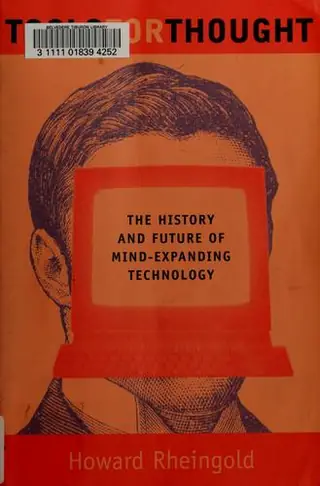
Tools for thought
Howard Rheingold
Recommended by 6 · mentioned by 96 recommend · 9 mention6 recommend · 96 recommend
 2009–2020
Stan Veit's History of the Personal Computer
Recommended by 2 · mentioned by 22 recommend · 2 mention2 recommend · 22 recommend
 2007–2026
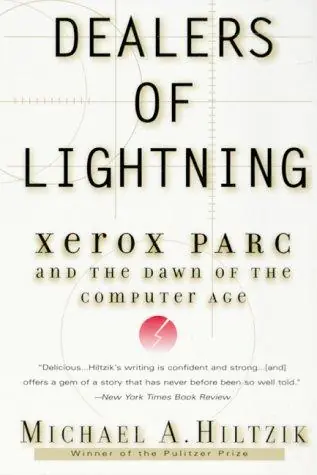
Dealers of Lightning
Michael A. Hiltzik
Recommended by 74 · mentioned by 9674 recommend · 96 mention74 recommend · 9674 recommend
…great book, albeit slightly dated. There are also some extremely interesting synergies between the origins of the computer industry and the psychedelics/California counter culture era. John Markoff's "What the Dormouse Said" [2] is a fantastic read, although it requires knowing about computer history a little bit already. I learned from it that there was scientific research on LSD conducted in Menlo Park, a few blocks away…
on “LSD, Reconsidered for Therapy” ↗…interactive computing. Notably Ted Nelson & Andries van Dam who created hypertext and Alan Kay who, while at PARC, invented the desktop GUI and the concepts for tablet computer. I recommend reading "What the Dormouse Said" by Markoff for a history of that era. (I consider this the "NLS thread" of computer history. The other major interactive thread is from PLATO to Ray Ozzie/NOTES to Mitch Kapor, et al.)
on “As We May Think (1945)” ↗…had lots of exposure to hippie culture. There are actually quite strong connections between computer nerds and the counterculture of the 60s/70s. If you’re curious I recommend the following books: # What the Dormouse Said: How the Sixties Counterculture Shaped the Personal Computer Industry / John Markoff. A great book with many fascinating characters. # From Counterculture to Cyberculture: Stewart Brand, the Whole Earth…
on “Interview: Larry Wall” ↗The intersection of tech culture (and notably Silicon Valley) and 60s counterculture is a fascinating topic. The best book on the subject is, in my opinion, "What the Dormouse Said" by John Markoff [0]. It's a fantastic book, although it requires the reader to already have some knowledge of the people and historical events, as it is not meant to be a computer history primer. But…
on “How the ’60s Counterculture Is Still Driving the Tech Revolution” ↗"I'm not complaining oh wait yes I am see what I did there." More seriously: the many connections between computing and the psychedelic counterculture are well documented. (Markoff's "What the Dormouse Said" is an excellent read in this vein.) Discussions of disproportionate sentencing also strike a chord with "good hackers" who are aware of the history of CFAA sentencing, the Aaron Swartz debacle, and…
on “The "Acid King," Serving Life Without Parole” ↗If this interests you I recommend "What the Dormouse Said: How the Sixties Counterculture Shaped the Personal Computer Industry" by John Markoff and "All Watched Over By Machines of Loving Grace" by the BBC and Adam Curtis https://en.wikipedia.org/wiki/What_the_Dormouse_Said…
on “Ted Nelson on What Modern Programmers Can Learn from the Past (2018)” ↗Seems like there has been renewed interest in psychedelics in the geek community. I'd recommend that everyone read Markoff's "What the Dormouse Said" for the history of geeks and drugs.
on “Geeky Stats About Magic Mushrooms” ↗…psychedelic drugs (LSD, Psilocybin, MDMA). There does seem to be a correlation with an interest in them and computers going all the way back to the beginning. If you're interested in the history I found What the Dormouse Said to be pretty interesting. http://www.amazon.com/What-Dormouse-Said-Counterculture-Pers...
on “Ketamine’s effect bolsters a new theory of mental illness” ↗…it (while IBM was not.) This era is described fairly accurately in Adam Curtis's "All Watched Over By Machines of Loving Grace" (a reference to the Richard Brautigan poem) and John Markoff's excellent "What The Dormouse Said: How the Sixties Counterculture Shaped the Personal Computer Industry" Highly recommend them, even if Curtis does go a little off the deep end at times.
on “The Imaginarium of a Solarpunk Architect” ↗If you're interested in the confluence of psychedelics and the digital age, I can't say enough good things about "What the Dormouse Said: How the Sixties Counterculture Shaped the Personal Computer Industry" by John Markoff. For further exploration, Markoff's book prompted me to recently purchase "Seattle Mystic Alfred M. Hubbard: Inventor,…
on “When Aldous Huxley opened the doors of perception” ↗…The Soul of a New Machine - On computing in the 70's and 80's The Difference Between God and Larry Ellison - On the rise of Oracle (also has the best title) Masters of Doom - A history of id Software What The Dormouse Said - How the 60's counterculture influenced computing The New New Thing - Follows Jim Clark around while he creates SGI, Netscape, etc...
on “Ask HN: Good Books on the History of Technology?” ↗- What the Dormouse Said, John Markoff - Alongside Night, J Neil Schulman, - Prometheus Rising, Robert Anton Wilson - Anything by Doug Rushkoff, Get Back in the Box is a good one for business/entrepreneurship - The Dubliners,…
on “Ask YC: favorite books” ↗John Markoff's book "What the Dormouse Said" tells the tale of 1960s "acid tests" for the explicit purpose of mind augmentation or enhancement. It's a terribly fascinating read.
on “Alcohol and Its Effects on Learning” ↗For anyone who is interested in the article, I strongly recommend reading "What the Dormouse Said" by John Markoff: http://en.wikipedia.org/wiki/What_the_Dormouse_Said It's about how the counter-culture attitude of the 60s helped inspire the PC wave of innovation. Drug use is one of the core topics,…
on “Steve Jobs, LSD and Drug Freedom” ↗I don't know the answer, but I am reminded of John Markoff's 2006 book What the Dormouse Said: How the Sixties Counterculture Shaped the Personal Computer Industry[1]. If you've forgotten what the dormouse said, listen: http://www.youtube.com/watch?v=WANNqr-vcx0 [1]http://www.amazon.com/What-Dormouse-Said-Counterculture-Pers...
on “Is there evidence that drugs can help programmers produce “better” code?” ↗