Twenty Thousand Leagues under the Seas
by F. P. Walter, Jules Verne · first published 2014
29% recommend57% neutral14% critical
Affiliate links. As an Amazon Associate I earn from qualifying purchases.
Mentions per year
What Hacker News says
Related books
 2009–2026
Glasshouse
Charles Stross
Recommended by 19 · mentioned by 3219 recommend · 32 mention19 recommend · 3219 recommend
 2011–2026
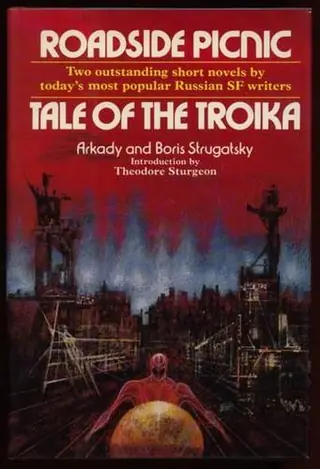
Roadside Picnic
Arkadii Strugatskii, Boris Strugatskii, Arkady and Boris Strugatsky
Recommended by 76 · mentioned by 12976 recommend · 129 mention76 recommend · 12976 recommend
 2008–2026
The Brothers Karamazov
Fiódor Dostoievski, Constance Garrett
Recommended by 86 · mentioned by 18786 recommend · 187 mention86 recommend · 18786 recommend
 2009–2026
The Count of Monte Cristo
Alexandre Dumas
Recommended by 128 · mentioned by 260128 recommend · 260 mention128 recommend · 260128 recommend
 2016–2026
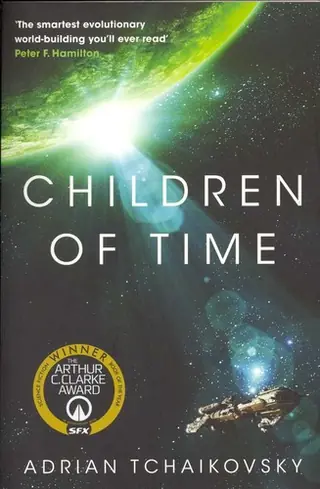
Children of Time
Adrian Tchaikovsky
Recommended by 207 · mentioned by 263207 recommend · 263 mention207 recommend · 263207 recommend
 2007–2026
Accelerando
Charles Stross
Recommended by 160 · mentioned by 287160 recommend · 287 mention160 recommend · 287160 recommend
Yes I was surprised Twenty Thousand Leagues Under the Seas did not make it to this list. But then most people have a very narrow view of what sci-fi is, boiling it down to cyborgs and space.
on “Science Fiction Books Everyone Should Read” ↗…as a kid, I imagine I would be relating differently to all of these very adult concerns. One of the best gifts I ever got was when my dad plopped down a big box full of old classical adventure novels (Twenty Thousand Leagues Under the Seas, King Solomon's Mines, Captains Courageous, Three Musketeers, Count of Monte Cristo type of stuff) and I devoured all of them over the course of the next year or so. I'm sure I would appreciate a lot…
on “Dostoyevsky Isn't Difficult” ↗…diesel. Most of these reactions at industrial scale are more than 50 years old but nobody bothered to actually implement it (even though a hint about sodium cells for electricity generation is present in "Twenty Thousand Leagues Under the Seas: A World Tour Underwater" by Jules Verne already) instead of the more complex approaches like e.g. synthetic gasoline. You can look at the orgpage about these ideas https://orgpad.com/s/energiewende…
on “Gravitricity – Fast, long-life energy storage” ↗Nemo was originally written as a Polish aristocrat. When you consider that, all aspects of his description in Twenty Thousand Leagues Under the Seas (1870) make sense. By the time Verne wrote The Mysterious Island (1875), his ire had become more directed toward the British rather than the Russian empire, so he changed Nemo to be an Indian prince.
It's a great idea, just one suggestion: would it be possible to choose the language of the novels we decide to read? For example, I am French, so I would rather read _The Count of Monte Christo_, _Twenty Thousand Leagues under the Seas_ or _Madame Bovary_ in their original versions.
on “Show HN: Read The Count of Monte Cristo and others in installments in your email” ↗I’ve listened to From the Earth to the Moon and Twenty Thousand Leagues Under the Seas, and between the lists of things that mean nothing to me[0] and the humans being unrealistic[1], I have to assume something was lost in the translation, because they… are just not any good. [0] 10 kinds…
on “We're sorry we created the Torment Nexus” ↗The change about Nemo's origin must have been done before finishing "Twenty Thousand Leagues Under the Seas", because already in that there were expressions of his discontent with the British Empire, above any others, I think towards the end of the novel, when he attacked some British war ship (an attack that…