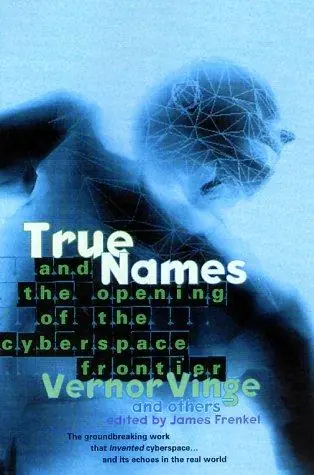
True Names
And the Opening of the Cyberspace Frontier
by Vernor Vinge, James Frenkel · first published 1984
58% recommend41% neutral1% critical
Why HN recommends it
Early cyberpunk novella, from 1981, that imagines cyberspace before the term existed. Praised for prescient ideas about virtual worlds, AI and identity, and for being a human story; suits readers of Snow Crash.
Summarised by Claude from recommending comments
"A marvellous mixture of hard-science SF and sword-and-sorcery imagery.... You wish the author were present so you could applaud." - Analog
Affiliate links. As an Amazon Associate I earn from qualifying purchases.
Mentions per year
What Hacker News says
Related books
Web of Angels
John M. Ford
Recommended by 1 · mentioned by 21 recommend · 2 mention1 recommend · 21 recommend
 2009–2026
The Peace War
Vernor Vinge
Recommended by 24 · mentioned by 4124 recommend · 41 mention24 recommend · 4124 recommend
 2008–2026
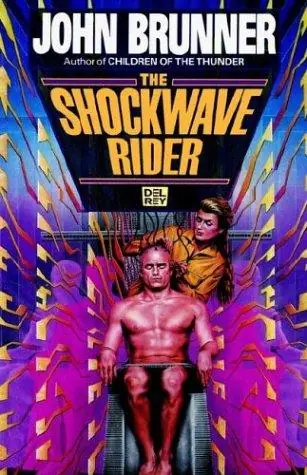
The Shockwave Rider
John Brunner
Recommended by 47 · mentioned by 7547 recommend · 75 mention47 recommend · 7547 recommend
 2007–2026
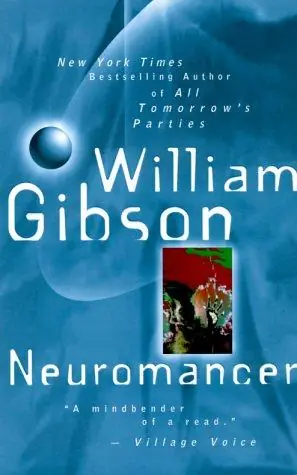
Neuromancer
William Gibson
Recommended by 296 · mentioned by 780296 recommend · 780 mention296 recommend · 780296 recommend
 2015–2026
Cookie monster
Vernor Vinge
Recommended by 11 · mentioned by 1411 recommend · 14 mention11 recommend · 1411 recommend
 2013–2014
Shades of Grey
Jasper Fforde
Recommended by 2 · mentioned by 32 recommend · 3 mention2 recommend · 32 recommend
I don't think 'i robots' are hard scifi. Today i sixth times read The greatest 'True names'(1981) by Vernor Vinge, it is an incredible AI cyberpunk hard scifi novel,aslo a great literature. Update: Thanks for all the great recommends,it is greatest time to find ideas in these books today.…
on “Ask HN: Best hard scifi AI novels?” ↗…topic I also really didn't like the three body problem. I loved Permutation City and most of Ted Chiang (particularly Liking What You See: A Documentary, and The Lifecycle of Software Objects). I love True Names by Vernor Vinge. I loved this: https://sifter.org/~simon/AfterLife/ Hopefully someone finds this helpful, sometimes an anti-recommendation can be just as useful for calibration as a recommendation.…
on “The Culture War: Iain M. Banks’s Billionaire Fans” ↗If you liked Neuromancer then you should read True Names by Vernor Vinge.
on “The Influence of Neuromancer on Cyberpunk” ↗…not realizing the crazy dystopian governance layer our products are stitching together. Tech-native starting points that address this heads on: - “who owns the future,” Jaron Lanier, father of VR - “True Names,” the version with essays at the beginning, Vernor Vinge - Anything out of the cypherpunks, to include early bitcoin docs. You can disagree with the tech and also this group has really distasteful views…
on “Ask HN: Are we building a tech dystopia?” ↗…exactly, since my only impression at the time was that it was trivial). For better ideas on how a virtual world could work, including reasonable hard science to back up claims, read Snow Crash (Stephenson), True Names (Vinge), or Rainbow's End (Vinge) instead. After that, you will quickly realize why many VR purists absolutely detest Oculus's acquisition. As a side note, I distinctly remember Oculus PR in the past…
on “Ready Player One – what Oculus + FB will look like? ” ↗…Also, their bobble technology made them virtually invulnerable, and allowed them to skip across time in stasis. His Zones of Thought series is also amazing, at a whole other level. But do start with True Names, his first published work.
on “Authors see dark side of tech's advances” ↗…tinc). And they were always about being "free from regulation". It's just that hobbyists, activists and people into recreational drugs and CP were early adopters. If you haven't read Vernor Vinge's True Names lately, I highly recommend it.
on “European Parliament approves copyright reform” ↗…I’ve read in a long time): https://www.npr.org/2016/08/31/490101821/the-nix-is-a-viciou... - Lake Success - Permutation City - Harry Potter and The Methods of Rationality (https://www.hpmor.com/) - True Names - Any of the stories by Ted Chiang, but specifically “Liking what you See: A documentary” and “The life cycle of software objects”
on “Ask HN: Great fiction books that have had a positive impact on your life?” ↗I urge you to read 'True Names' by Vernor Vinge.
on “Ask Eliezer Yudkowsky: How did you convince the Gatekeeper to release the potentially genocidal AI?” ↗"True Names and Other Dangers". Reading a remark by Vernor Vinge on his concept of the "Singularity" led to my current career as a Research Fellow of the Singularity Institute for Artificial Intelligence.
on “Ask YC: What's the most inspiring sci-fi book you've read?” ↗Vernor Vinge: True Names (short story), A Deepness in the Sky, Rainbow's End Greg Egan: Permutation City, Quarantine (More programmer's fiction than startup fiction.)
on “Ask HN: Recommend any good business/hacker fiction?” ↗Vernor Vinge --- A Fire Upon the Deep. (Also worth seeking out is the hugely influential novella "True Names", but you'd probably have to dig it out of a library someplace.) Neal Stephenson --- Cryptonomicon. (Present day setting, but with an SF sensibility; ties into his literally epic Baroque Cycle.) Charles…
on “Ask HN: What sci-fi books are you reading?” ↗…(and interesting), but all the stuff about folding space, neo-feudalism, etc. doesn't follow from that. You could get "rejection of technology, regression" in a cleaner book I think. Actually, Vinge's True Names would be top on my list (and only 90 pages or so).
on “Books to Read in a Lifetime” ↗…fiction drag. Or maybe Andy Weir's "The Martian". Written SF has traditionally been utter rubbish at predicting developments in the IT/computing sector, with notable exceptions -- for example the novella "True Names" by Vernor Vinge. (I've attempted this too but I'm not going to bang my own drum here.)
on “Why Futurism Has a Cultural Blindspot” ↗The Three Body Problem is one of my main reasons for learning Chinese :) Vernor Vinge single handedly became one of my favourite writers (along side Clarke and Lem) with his short story True Names. I didn't find Rainbow's End as easy a read, I'll probably reapproach it after finishing The Star Diaries or Snow Crash, though.
on “Ask HN: 2018 Summer Reading List?” ↗