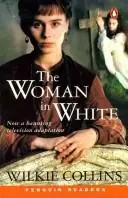
The Woman in White
by Wilkie Collins · first published 1800
43% recommend57% neutral
The Woman in White famously opens with Walter Hartright's eerie encounter on a moonlit London road. Engaged as a drawing master to the beautiful Laura Fairlie, Walter is drawn into the sinister intrigues of Sir Percival Glyde and his 'charming' friend Count Fosco, who has a taste for white mice, vanilla bonbons and poison. Pursuing questions of identity and insanity along the paths and corridors of English country houses and the madhouse, The Woman in White is the first and most influential of the Victorian genre that combined Gothic horror with psychological realism.
Affiliate links. As an Amazon Associate I earn from qualifying purchases.
Mentions per year
What Hacker News says
Related books
 2018–2026
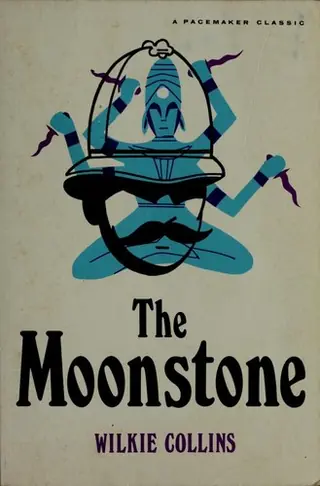
The Moonstone
Wilkie Collins
Recommended by 5 · mentioned by 85 recommend · 8 mention5 recommend · 85 recommend
 2010–2026
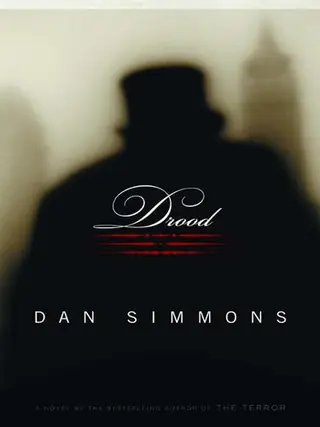
Drood
Dan Simmons
Recommended by 7 · mentioned by 87 recommend · 8 mention7 recommend · 87 recommend
 2010–2026
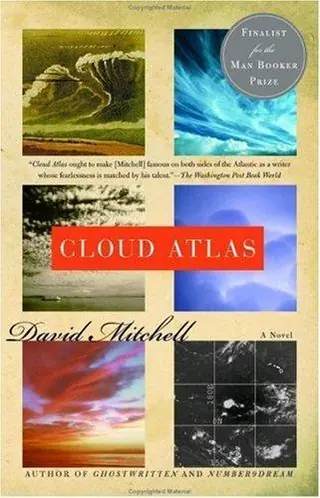
Cloud Atlas
David Mitchell
Recommended by 27 · mentioned by 4727 recommend · 47 mention27 recommend · 4727 recommend
 2009–2026
A Christmas Carol
Charles Dickens
Recommended by 12 · mentioned by 4212 recommend · 42 mention12 recommend · 4212 recommend
 2008–2026
David Copperfield
Charles Dickens
Recommended by 8 · mentioned by 448 recommend · 44 mention8 recommend · 448 recommend
 2008–2026
Hyperion Cantos
Dan Simmons
Recommended by 53 · mentioned by 7553 recommend · 75 mention53 recommend · 7553 recommend
 2011–2026
Roadside Picnic
Arkadii Strugatskii, Boris Strugatskii, Arkady and Boris Strugatsky
Recommended by 76 · mentioned by 12976 recommend · 129 mention76 recommend · 12976 recommend
 2008–2026
A Tale of Two Cities
Charles Dickens
Recommended by 23 · mentioned by 11923 recommend · 119 mention23 recommend · 11923 recommend
…yes to Trollope, and I think there are a lot of nineteenth-century novelists who are like that (not quite as well known as the biggest names, but absolutely superb). Wilkie Collins (The Moonstone, The Woman in White) is another good example from that category.
on “Ask HN: What are the best unknown books you have read?” ↗Exactly! This is a discussion from the 19th century, if not earlier -- just read The Woman in White (or watch the recent excellent BBC adaptation).
…pretty quick as long as the distance wasn't too great. But, in this case, you're right. I searched the text and it was indeed telegrams that were being sent. The Moonstone stands up pretty well. The Woman in White is pretty good too. I haven't read his other books although I'm told they fall off from those two.
on “An Elegy for the Landline in Literature” ↗…lacking as well; I vaguely remember not liking A Tale of Two Cities in high school. Bleak House is probably the one on my list. I did read and enjoy the two obvious Wilkie Collins novels (Moonstone and Woman in White) and have also seen the latter in what I think is an underrated musical. I've heard rather mixed things and haven't tried other works.
on “Mutual Friends: The Adventures of Charles Dickens and Wilkie Collins” ↗…Indemnity are also great explorations of the postwar noir genre. I'm sure there are essays about how it's all connected, and how it can probably be traced back to early mysteries like Wilkie Collins's The Woman in White, but I haven't found anything yet that charts the history of the genre and explains the relative stability of its tropes and motifs over time.
on “Father Knox’s decalogue: the ten rules of Golden Age detective fiction” ↗Related to Dickens and Collins: anyone who's read works by Dickens (who hasn't) and Collins (usually The Moonstone or The Woman in White) and would enjoy a fictional exploration of their relationship in a somewhat darker, rather macabre setting with Wilkie Collins as an unreliable (opium addicted) narrator might consider reading Dan Simmons'…
on “Mutual Friends: The Adventures of Charles Dickens and Wilkie Collins” ↗…fan ought to have read, but I would like to recommend a lesser known title of Simmons for readers who have read at least some works of Charles Dickens (self-explanatory) and Wilkie Collins (such as The Woman in White or The Moonstone). Simmons wrote Drood (2009), which takes these two classical authors and places them in a mystery novel. What struck me as particularly masterful is that Simmons managed to write his…
on “Dan Simmons, author of Hyperion, Song of Kali, dead at 77” ↗45. The Woman in White – Wilkie Collins
…Shakespeare is still mandatory to learn in India, and novels that are today confined to humanities in Britain, are most read in India - they don't read catcher in the rye, they read The Tempest and The Woman in White etc. You can see that firsthand - Indians use idioms that long ago fell out of use in Britain. "Please do the needful" anyone? "I was doing that only"? This is not just about Indians. Germans, as I have…
on “As Interest Fades in the Humanities, Colleges Worry” ↗