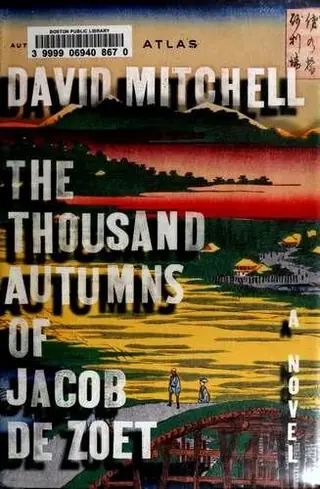
The Thousand Autumns of Jacob de Zoet
by David Mitchell · first published 2010
86% recommend14% neutral
Why HN recommends it
Historical novel set at a Dutch trading post in Japan in the late 1790s and early 1800s. It offers a vivid contrast between Dutch and Japanese cultures, written in beautiful, entertaining prose.
Summarised by Claude from recommending comments
The year is 1799, the place Dejima in Nagasaki Harbor, the “high-walled, fan-shaped artificial island” that is the Japanese Empire’s single port and sole window onto the world, designed to keep the West at bay; the farthest outpost of the war-ravaged Dutch East Indies Company; and a de facto prison for the dozen foreigners permitted to live and work there. To this place of devious merchants, deceitful interpreters, costly courtesans, earthquakes, and typhoons comes Jacob de Zoet, a devout and resourceful young clerk who has five years in the East to earn a fortune of sufficient size to win the
Affiliate links. As an Amazon Associate I earn from qualifying purchases.
Mentions per year
What Hacker News says
Related books
 2020–2022
Slade House
David Mitchell
Recommended by 1 · mentioned by 21 recommend · 2 mention1 recommend · 21 recommend
 2020–2022
Utopia Avenue
David Mitchell
Recommended by 2 · mentioned by 32 recommend · 3 mention2 recommend · 32 recommend
 2014–2025
The Bone Clocks
David Mitchell
Recommended by 7 · mentioned by 117 recommend · 11 mention7 recommend · 117 recommend
 2019–2026
Recursion
Blake Crouch
Recommended by 12 · mentioned by 1512 recommend · 15 mention12 recommend · 1512 recommend
 2018–2026
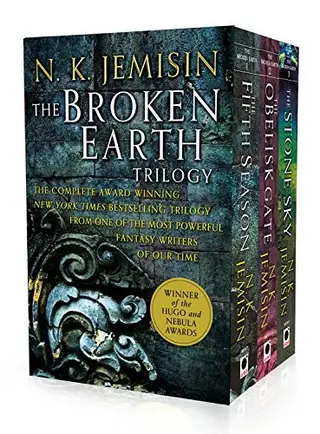
The Broken Earth Trilogy
N. K. Jemisin
Recommended by 21 · mentioned by 2921 recommend · 29 mention21 recommend · 2921 recommend
 2011–2026
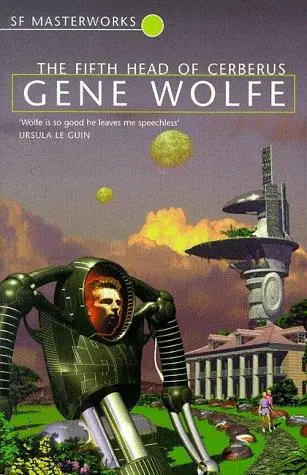
The Fifth Head Of Cerberus
Gene Wolfe
Recommended by 21 · mentioned by 2621 recommend · 26 mention21 recommend · 2621 recommend
 2010–2026
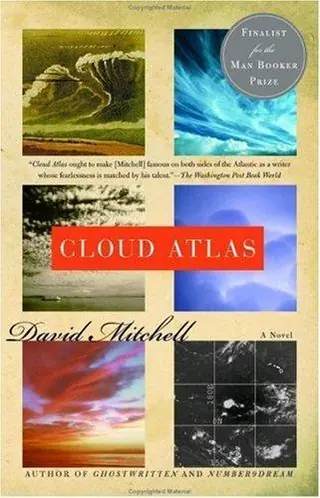
Cloud Atlas
David Mitchell
Recommended by 27 · mentioned by 4727 recommend · 47 mention27 recommend · 4727 recommend
 2008–2026
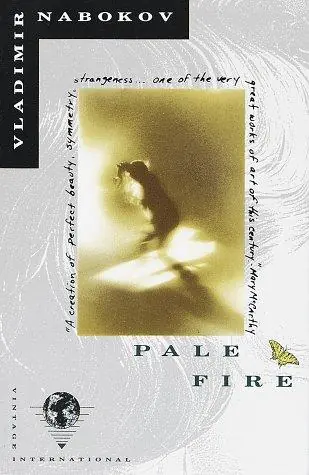
Pale Fire
Vladimir Nabokov
Recommended by 41 · mentioned by 8041 recommend · 80 mention41 recommend · 8041 recommend
David Mitchell - The Thousand Autumns of Jacob de Zoet. Historical fiction, set in Japan later 1790s - early 1800s, in a Dutch trading post.
on “Ask HN - what interesting books did you read this year (including non tech)?” ↗The Bone Clocks and The Thousand Autumns of Jacob de Zoet are both greatly entertaining novels as well (and tangentially related to both, the shorter novel Slade House). Personally I found these more enjoyable than Cloud Atlas, which is good and a must-read…
on “50 authors, 50 science fiction stories shorter than novels” ↗If you enjoyed The Bone Clocks, consider trying the other books in that same universe. Like The Thousand Autumns of Jacob de Zoet (particularly if you enjoy its historical setting of Edo period Japan on the artificial island of Deshima where the Dutch were allowed to operate a trading post), or the shorter Slade House. Of course…
on “Ask HN: What is the best thing you read in 2022?” ↗I’m reading Wolf Hall. It’s amazing how much more history is ‘sinking in’ when told as historical fiction. Recommended, as is The Thousand Autumns of Jacob de Zoet, for the same reason. Also that’s just beautifully written.
on “The Last Testaments of Richard II and Henry IV” ↗…20s and loved it, but listening to it in my early 40s was a transcendant joy. Don't be scared by the runtime - you won't want it to end. Other authors I happen to enjoy very much include David Mitchell (Thousand Autumns or Bone Clocks FTW), Cory Doctorow (Makers, Walkaway), Blake Crouch (Recursion), Daniel Suarez (Influx, Delta-V, Daemon), Robin Sloan (Sourdough, Mr. Penumbra's 24-hour Bookstore). Just to wrap up and…
on “Ask HN: Are books worth it?” ↗…were the case that a mysterious woman from, say, the Dutch East Indies — to make up a random, semi-plausible example — really did wash ashore in a Japanese fishing village. Sounds like a sequel to "The Thousand Autumns of Jacob de Zoet" (awesome book by the way).
on “Utsuro-Bune” ↗The Thousand Autumns of Jacob de Zoet is lovely and the contrast between the Dutch and the Japanese cultures in the 18th century is quite striking.
on “The Last Testaments of Richard II and Henry IV” ↗This is a delightful historical fiction if you're into this. https://en.wikipedia.org/wiki/The_Thousand_Autumns_of_Jacob_... Also there's a museum. It's on my list! https://www.niche-museums.com/59
on “The East India Company in Japan” ↗Dunno. Maybe _The Thousand Autumns of Jacob De Zoet_, by Thomas Mitchell, a novel set in the Dutch trading post at Nagasaki, ca. 1800. Maybe de Tocquivelle's _Souvenirs_ (of the revolution of 1848)--but that I am re-reading. Maybe the NYRB edition of Thoreau's…
on “Ask HN: Best book you read in 2010 and briefly why” ↗