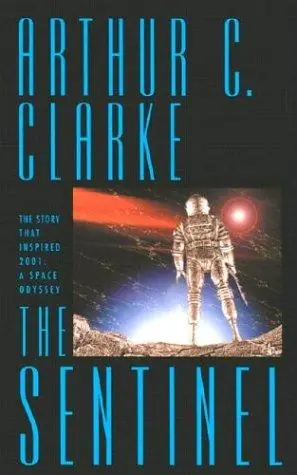
The Sentinel
by Arthur C. Clarke · first published 1983
15mentions
1recommended by
13HN commenters
2011–2025first – last mentioned
8% recommend85% neutral8% critical
From the Introduction... Today's readers are indeed fortunate; this really is the Golden Age of science fiction. There are dozens of authors at work today who can match all but the giants of the past. (And probably one who can do even that, despite the handicap of being translated from Polish. . . ) Yet I do not really envy the young men and women who first encounter science fiction as the days shorten towards 1984, for we old-timers were able to accomplish something that was unique. Ours was the last generation that was able to read everything. No one will ever do that again.
Affiliate links. As an Amazon Associate I earn from qualifying purchases.
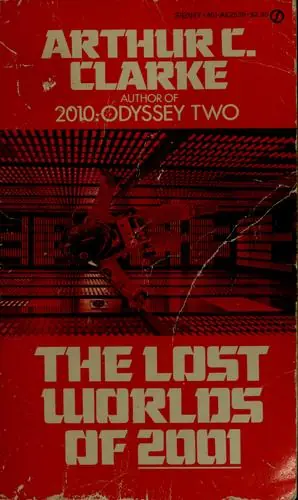
Also read Clarke's short story "The Sentinel", upon which 2001 is based.
on “Christopher Nolan: The power of people and why 2001 should be preschool viewing” ↗What hasn't been mentioned yet is that Kubrick was inspired by the short story "The Sentinel" by AC Clarke. The monoliths in the short story are placed by intelligent beings through space, typically on moons of adjacent planets. The monoliths are sending signals home (wherever that is) once…
on “"2001": The Monolith and the Message (Roger Ebert, April 21, 1968)” ↗I think all the short stories in Ray Bradbury's collection "The Illustrated Man" have twists. Strong recommend, if you've never read it. https://en.wikipedia.org/wiki/The_Illustrated_Man The Sentinel, by Arthur C. Clarke, certainly has a twist. But it doesn't come as a surprise nowadays, because everyone's seen 2001. Hmmm. Many of Kurt Vonnegut's stories have astonishing twists, but I can't think…
on “Ask HN: What are your favorite (sort) sci-fi stories with twists?” ↗Possible counter-example for your teacher: Arthur C. Clarke's 'The Sentinel'? I also recall Robert Graves' writing, in 'Goodbye to All That', of one of his fellow soldiers saying that after the war, he would read the whole of Trollope's Barchester chronicles, as nothing happens…
on “The significance of plot without conflict (2012)” ↗"The Sentinel" collection has a bunch of Clarke's early short stories, some of which he later developed into novels: https://www.goodreads.com/book/show/149070.The_Sentinel
on “Writing Great Mystery Plots” ↗Before all of that was Clarke's short story "The Sentinel", which was the actual genesis of the idea.
on “2001: A Space Odyssey” ↗…1958 short story of the same title. He stated that it was his favourite of all his novels. Clarke also wrote a short step outline with the same title, published in Omni magazine and anthologised in The Sentinel in 1983. > The novel tells of a utopian human colony in the far future that is visited by travellers from a doomed Earth, as the Sun has gone nova. The Songs of Distant Earth explores apocalyptic, atheistic,…
on “Science fiction and the death of the sun” ↗No. It was developed concurrently with the film version and parts of it were even based on Clarke's earlier short stories (e.g. The Sentinel).
on “A book Stanley Kubrick didn’t want anyone to read is being published” ↗…resonance of his themes, so read the story then look for how the movies hew to the writing. There's a strange reversal of books adapted from movies, but even in the case of Arthur Clarke's 2001 (vs. The Sentinel) these read as fan fiction.
on “Blade Runner” ↗The book and movie were done at the same time. Clarke wrote multiple versions of it - see "The Lost Worlds of 2001". The concept is from a short story "The Sentinel" by Clarke.
on “Scratches in 2001: A Space Osyssey (2018)” ↗…spent reading it may be better spent elsewhere? Someone unfamiliar with Clarke who reads this piece of junk may decide they don't want to waste even more time with The Nine Billion Names of God or The Sentinel or The Star, and I'm sure we agree that'd be a shame.
on “Rescue Party (1946)” ↗Well, Kubrick and Clarke developed 2001 together, based pretty loosely on the Clarke short story The Sentinel, so I don't think it is applicable.
on “Stanley Kubrick's the Shining Maps of the Overlook” ↗> based pretty loosely on the Clarke short story The Sentinel The Sentinel provided the idea for the monolith on the moon being an alien 'intelligent life detector' (i.e. to detect when humans had achieved spaceflight). But it has no man-apes, no Jupiter mission,…
on “Stanley Kubrick's the Shining Maps of the Overlook” ↗Hence 'loosely'. From your link: > Clarke offered Kubrick six of his short stories, and by May 1964, Kubrick had chosen "The Sentinel" as the source material for the film
on “Stanley Kubrick's the Shining Maps of the Overlook” ↗…there were no photographs. The future of cooking was something that famous futurist Arthur C Clarke got wrong. He might have predicted geostationary communications satellites but in his short story The Sentinel - which was the inspiration for the film/book 2001 - the crew of a small lunar rover fry their sausages in a conventional frying pan.
on “Science of Microwave Ovens (2016)” ↗