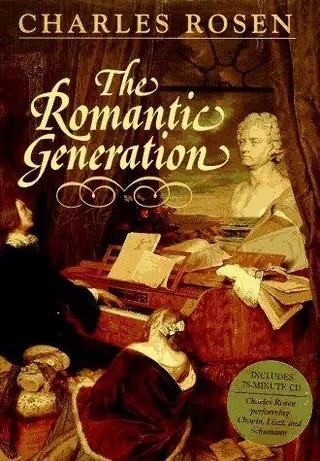
The romantic generation
by Charles Rosen · first published 1995
3mentions
3recommended by
3HN commenters
2018–2022first – last mentioned
100% recommend
Rosen examines how 19th Century composers extended the boundaries of music, and their engagement with literature, landscape and the divine.
Affiliate links. As an Amazon Associate I earn from qualifying purchases.
…terms "pastiche" and "parody" carefully delineated in scholarly works, though these have been commenting primarily in the classical eras and later, long after the parody masses. Charles Rosen (whose The Romantic Generation is now a classic, if controversial text) in particular has pointed out quite a few works he sees as pastiches as opposed to parodies.
on “Debussy: the musical genius who erupted out of nowhere” ↗…notations which correspond to the same sound. Notation is ambiguous, and this can be a source of both frustration (for the students) and invention (for the composers). Charles Rosen opens his book The Romantic Generation with a fascinating discussion about music which is seen and not heard which deals with this philosophical issue. Of course this practice goes back much further. Composers have been playing with notation…
on “Why are D-sharp and E-flat considered to be two different notes?” ↗There's a great book called "Age of Wonder: The Romantic Generation and the Discovery of the Beauty and Terror of Science" by Richard Holmes that is about the period between Newton and Darwin in which science and art were mixed -- you had poets like Coleridge who were…
on “When Engineers Were Humanists” ↗