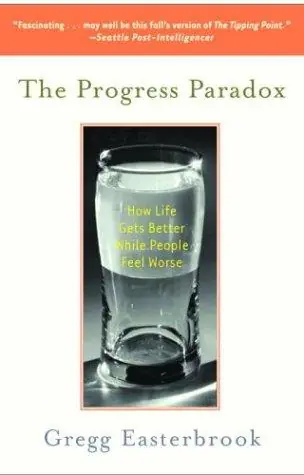
The Progress Paradox
by Gregg Easterbrook · first published 2003
5mentions
2recommended by
3HN commenters
2009–2014first – last mentioned
67% recommend33% neutral
Affiliate links. As an Amazon Associate I earn from qualifying purchases.
…media and iPhones than we are without them? I think that for the most part, the answer is no. Most use is superficial and procrastination rather than meaningful connection with people. Check out The Progress Paradox by Gregg Easterbrook. He talks about how we've made all of this "progress" in our standard of living, but that it isn't actually making us happier. However, I agree with the central idea that "toys"…
on “Stupid Apps and Changing the World” ↗This is just one point of many made in Gregg Easterbrook's The Progress Paradox. It describes ways life continues to get better, but people feel worse despite it.
on “Crime in America keeps going down, yet the American public refuses to believe it” ↗…different components of life-goodness into one binary value: Yes I'd trade permanently; or No, I prefer my life here-and-now. (This is a variation on Gregg Easterbrook's thought experiment in his book, The Progress Paradox.)
on “The Myth of Technological Progress” ↗This dovetails with the thesis of writer Gregg Easterbrook's 2003 book, The Progress Paradox. He proposes a thought experiment: Would you permanently trade places with a random person who lived, say, 100 years ago? His view was that your answer would probably be "no." [EDIT: Easterbrook's point…
on “Would You Rather Be Rich In 1900, Or Middle-Class Now?” ↗Gregg Easterbrook proposes a thought experiment in The Progress Paradox, which went approximately like this: Would you agree to permanently trade places with a random person who lived X hundred years ago? Chances are: no you wouldn't. (The book: http://www.amazon.com/Progress-Paradox-Better-While-People/d....…
on “Charlie Stross: Reasons to be Cheerful” ↗