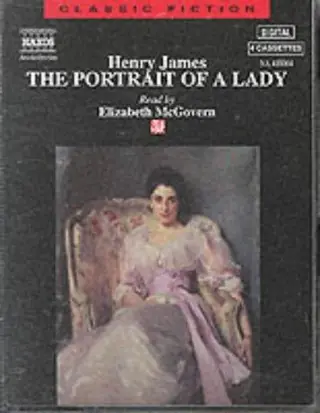
The Portrait of a Lady
by Henry James · first published 1881
5mentions
1recommended by
5HN commenters
2010–2023first – last mentioned
20% recommend80% neutral
Young American Isabel Archer charms European society, but falls prey to the machinations of a calculating older woman.
Affiliate links. As an Amazon Associate I earn from qualifying purchases.
Read freeStandard Ebooks
…recommending Henry James in reference to readers attention spans, who often balk at the idea of reading anything quite as dense as from James' writings. But they're missing out. His famous Chp. 42 from Portrait of a Lady is the single best articulation of personal reflection on a failed marriage I have ever read - ever. [0] Losing out on that simply because it's a big imposing paragraph suggests an unwillingness to challenge…
on “What makes writing more readable?” ↗Coetzee is on my wishlist, heard great things about him - as soon as I am done with my current read I suppose: Portrait of a lady (Henry James) ;) Update: Great, thanks for the suggestion - I'll go look it up at the uni library.
on “Do Hackers read *other* books?” ↗I wonder how the 'psychological novel' which was supposed to be invented in James' The Portrait of a Lady (1880) (according to the article) is distinct from, e.g., Crime and Punishment (1866) (or Notes from Underground, though I guess that was a novella so it doesn't count). Is Portrait of a Lady more psychologically…
on “Novels were never the same after Henry James” ↗I read Daisy Miller and Portrait of a Lady, kind've the same book if you ask me. The ending of Portrait is unsatisfying and meant to be. Does she go back to Osmond? But like Blade Runner, there are two edits: One ends with Henrietta telling Caspar…
on “Novels were never the same after Henry James” ↗…about what a character is thinking or feeling. If you object to an author mentioning that a character is gay, it surely can't be because that's not a directly observable characteristic. You could cut The Portrait of a Lady down to about 5 pages if you removed all the descriptions of people's psychological states. While we're on the topic of Roald Dahl (who perhaps doesn't quite reach the psychological depth of Henry James),…