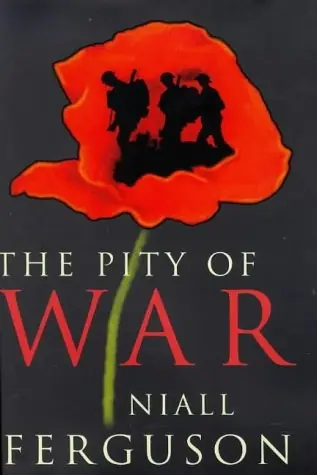
The Pity of War
by Niall Ferguson · first published 1998
50% recommend50% neutral
In The Pity of War, Niall Ferguson explodes the myths of 1914-18. He argues that the fatal conflict between Britain and Germany was far from inevitable. It was Britain's declaration of war that needlessly turned a continental conflict into a world war, and it was Britain's economic mismanagement and military inferiority that necessitated American involvement, forever altering the global balance of power. Ferguson vividly brings back to life one of the seminal catastrophes of the century, not through a dry citation of chronological chapter and verse, but through a series of chapters that a
Affiliate links. As an Amazon Associate I earn from qualifying purchases.
Mentions per year
What Hacker News says
Related books
 2009–2022
Time and the art of living
Robert Grudin
Recommended by 2 · mentioned by 72 recommend · 7 mention2 recommend · 72 recommend
 2016–2026
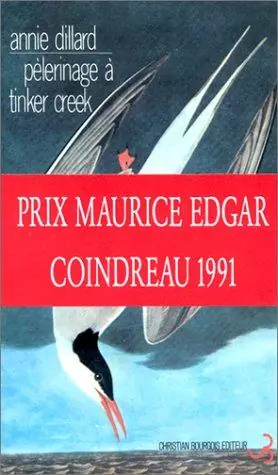
Pilgrim at Tinker Creek
Annie Dillard
Recommended by 11 · mentioned by 1511 recommend · 15 mention11 recommend · 1511 recommend
 2016–2026
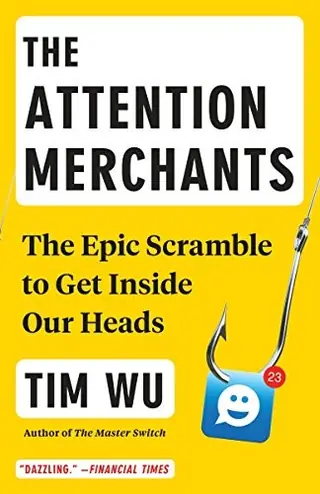
The Attention Merchants
Tim Wu
Recommended by 23 · mentioned by 3523 recommend · 35 mention23 recommend · 3523 recommend
 2007–2026
Titan
Ron Chernow
Recommended by 19 · mentioned by 2619 recommend · 26 mention19 recommend · 2619 recommend
 2014–2024
Our Mathematical Universe
Max Tegmark
Recommended by 32 · mentioned by 4732 recommend · 47 mention32 recommend · 4732 recommend
 2009–2026
Le Ton beau de Marot
Douglas R. Hofstadter
Recommended by 27 · mentioned by 5227 recommend · 52 mention27 recommend · 5227 recommend
Beyond good and evil
Friedrich Nietzsche
Recommended by 35 · mentioned by 8535 recommend · 85 mention35 recommend · 8535 recommend
 2008–2026
The Death and Life of Great American Cities
Jane Jacobs
Recommended by 61 · mentioned by 8761 recommend · 87 mention61 recommend · 8761 recommend
Niall Ferguson's Pity of War: Explaining World War I describes the finances of the participants in great detail. It's a fascinating read.
on “The extraordinary story of Britain’s efforts to finance the First World War” ↗…Hamlet, The Town, The Mansion. A River Runs Through It Programming Erlang: Software for a Concurrent World A Pattern Language The Analects Bhagavad Gita Apology The Republic Touch the Earth The Pity of War: Explaining World War I The Civil War: A Narrative
on “Ask HN: What books have made the biggest impact on your mental models?” ↗I really should do a list, but here's a few more: "Nothing Like It In The World" Stephen Ambrose The men who built the transcontinental railroad 1863-1869 "The Pity of War" Niall Ferguson Explaining World War 1 "Steve Jobs" Walter Isaacson "The Wright Brothers as Engineers" Quentin Wald "With the Old Breed" Eugene Sledge "Surely You're Joking, Mr. Feynman" Richard Feynman…
on “Ask HN: Are books worth it?” ↗The article reminded me of Niall Ferguson's Pity of War. http://www.nytimes.com/books/99/05/09/reviews/990509.09bergh...
Niall Ferguson makes a detailed case for this in The Pity of War. https://www.amazon.com/Pity-War-Explaining-World/dp/04650571...
on “Britain Should Not Have Fought in the First World War” ↗…healthcare is the most heavily regulated industry (by far) in the US. Heavy bureaucratic regulations make an organization unable to adapt to local and/or changing circumstances. I read in the book "The Pity of War" by Ferguson that the reason the death rates of the German army in WW1 were so much lower than that of the British is the British generals would craft detailed orders on how the soldiers were to achieve…
on “Top navy admiral wants rust-free ships” ↗According to "The Pity of War" by Ferguson, the Germans in WW1 were able to kill British soldiers at about twice the rate as vice versa. They attributed this to the German Army giving goals as orders rather than methods, allowing…
on “Why dumb recruits cost the Army, big-time (2006)” ↗The Pity of War by Niall Ferguson is an in-depth study of the economics of WW1. It covers where the billions went. The industrialists did very well, to the point that Eisenhower in his farewell address cautioned against…
on “Eugene Debs Was Jailed for Speaking Out Against WWI, 100 Years Ago This Week” ↗