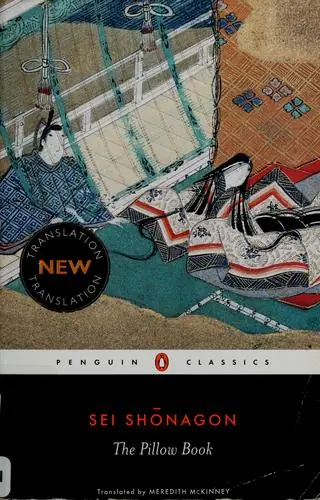
The pillow book
by Sei Shōnagon · first published 1967
5mentions
1recommended by
5HN commenters
2018–2024first – last mentioned
20% recommend80% neutral
Affiliate links. As an Amazon Associate I earn from qualifying purchases.
Love to see classic Japanese literature on here ;) Can also recommend Sei Shonagon's Pillow Book, oshida Kenko's Essays in Idleness, and the Uji collection of medieval tales. This constitutes my life hack for decompression. Around 10-11 pm. Turn off everything. And focus your undivided attention…
on “The Diary of Murasaki Shikibu (1007-1010)” ↗…https://en.wikipedia.org/wiki/Kendama and a Nintendo 3DS and a Sony Minidisc player and a box of 4x6 prints I made some of which are anime art and https://en.wikipedia.org/wiki/Ukiyo-e and also a book or a copy of the Pillow Book. (This is not all I am into you will find some Italian and Russian futurist painting reproductions, maybe a book about Fuzzy Logic or Margaret Thatcher too. Probably the strangest thing about my backpack…
on “Ask HN: Why is Japan so insular?” ↗A broader perspective can never hurt. And you can't get more different than by going back. I'm currently reading Sei Shounagon's The Pillow Book. The author was a woman in the Heian court in Kyoto about 1000 AD, attendant to the Empress. By tradition it is a collection of her dairy entries, letters, poetry drafts and other personal papers, not…
on “Why Read Classic Books?” ↗https://en.wikipedia.org/wiki/Light_skin_in_Japanese_culture > In Japan the preference for skin that is white and free of blemishes has been documented since at least the Heian period (794–1185), as in books like The Pillow Book and The Tale of Genji.[1] There is an old proverb "white skin covers the seven flaws" (色の白いは七難隠す, iro no shiroi wa shichinan kakusu) which refers to a white-skinned woman being beautiful even if her features…
on “India Debates Skin-Tone Bias as Beauty Companies Alter Ads” ↗…on your assessment of Japanese. I would argue that Japanese is the most difficult written language in common usage / not artificial. Moreover, one of the greatest literary achievements of Japan, “The Pillow Book” is written entirely in hiragana. Today you have so much text that leans into the resolve of ambiguity that kanji lends that you’d lose a lot of writings were everyone to unlearn kanji, but I disagree…
on “If English was written like Chinese (1999)” ↗