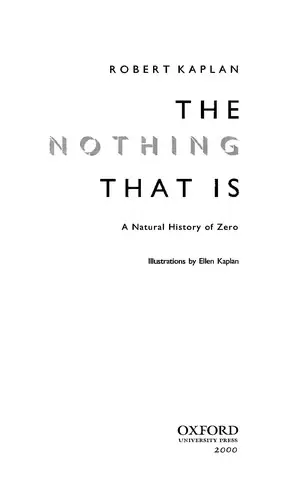
The nothing that is
by Kaplan, Robert, Robert Kaplan, Ellen Kaplan · first published 1999
80% recommend20% neutral
Without zero, mathematics as we know it would not exist. And without mathematics our understanding of the universe would be vastly impoverished. But where did this nothing, this hollow circle, come from? And what, exactly, does it mean? For Kaplan, the history of zero is a lens for looking not only into the evolution of mathematics but into very nature of human thought. He points out how the history of mathematics is a process of recursive abstraction: how once a symbol is created to represent an idea, that symbol itself gives rise to new operations that in turn lead to new ideas. The beauty o
Affiliate links. As an Amazon Associate I earn from qualifying purchases.
I recently read Simple Heuristics That Make Us Smart by Gerd Gigerenzer, Peter M. Todd, and the ABC Research Group and The Nothing That Is: A Natural History Of Zero by Robert Kaplan. Both were great reads and left me energized. Neither had much to do with technology or startups. But I felt more prepared and motivated to solve problems…
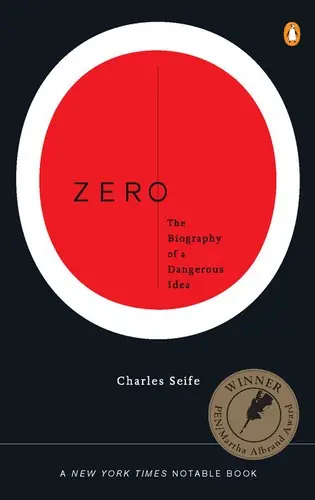
on “Ask YC (and PG): What books do you have on your bookshelf? ” ↗Zero: The Biography of a Dangerous Idea by Charles Seife is one of the most engaging books I've read about mathematics. In its Amazon reviews, I also see The Nothing That Is: A Natural History of Zero by Robert Kaplan recommended.
on “Do Teachers Need to Include the History of Mathematics in Their Teaching? (2003)” ↗> Is it though? All languages have the word 'nothing'. The interpretation of the concept that been different over time. See perhaps The Nothing That Is: A Natural History of Zero by Kaplan: * https://www.goodreads.com/book/show/3188988
on “What have been the greatest intellectual achievements?” ↗…enjoyed these books on the history of that question: Charles Seife's "Zero: The Biography of a Dangerous Idea" (http://www.amazon.com/Zero-Biography-Dangerous-Idea-ebook/dp...) Robert Kaplan's "The Nothing That Is: A Natural History of Zero" (http://www.amazon.com/Nothing-that-Natural-History-ebook/dp/...)
on “Is zero an even number?” ↗It's a remarkable coincidence that I'm reading the book The Nothing that Is: A Natural History of Zero by Robert Kaplan, and this passage on page 96 seems precisely relevant to this situation: """A Roman idiosyncrasy about counting reinforced this avoidance. The 360 degrees…
on “AI is removing the middle class of software engineering” ↗