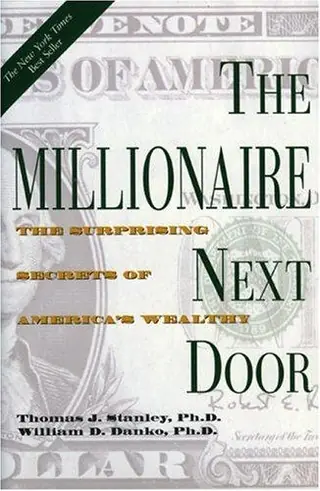
The millionaire next door
by Thomas J. Stanley, William D. Danko · first published 1996
59% recommend36% neutral5% critical
Why HN recommends it
Data-backed look at how typical American millionaires build wealth through frugality, avoiding luxury spending and fees, and tracking expenses. Suits anyone, including high earners, who wants a saver's mindset.
Common criticism: Some say it relies on survivorship bias and confuses correlation with causation
Summarised by Claude from recommending comments
Can you spot the millionaire next door? Who are the rich in this country? What do they do? Where do they shop? What do they drive? How do they invest? Where did their ancestors come from? How did they get rich? Can I ever become one of them? Get the answers in The Millionaire Next Door, the never-before-told story about wealth in America. You'll be surprised at what you find out. "Why aren't I as wealthy as I should be?" Many people ask this question of themselves all the time. Often they are hard-working, well-educated, middle-to-high-income people. Why, then, are so few affluent? The answer
Affiliate links. As an Amazon Associate I earn from qualifying purchases.
Mentions per year
What Hacker News says
Related books
 2009–2026
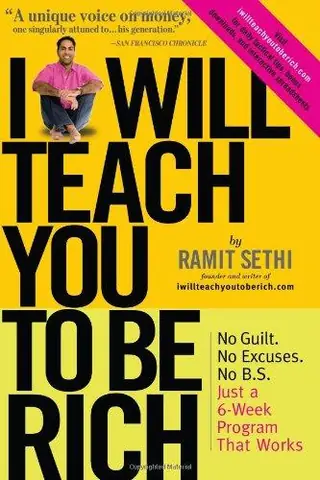
I will teach you to be rich
Ramit Sethi
Recommended by 38 · mentioned by 4938 recommend · 49 mention38 recommend · 4938 recommend
 2007–2026
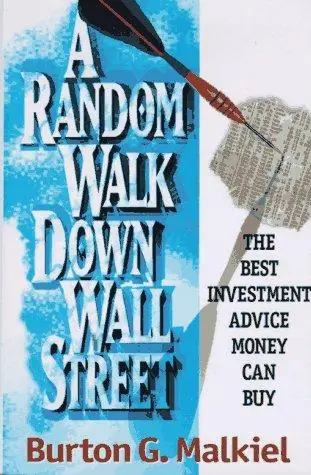
A Random Walk Down Wall Street
Burton Gordon Malkiel
Recommended by 127 · mentioned by 190127 recommend · 190 mention127 recommend · 190127 recommend
 2010–2020
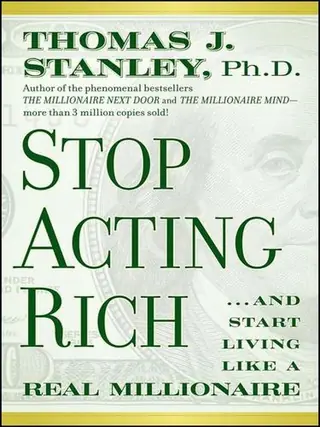
Stop acting rich
Thomas J. Stanley
Recommended by 4 · mentioned by 54 recommend · 5 mention4 recommend · 54 recommend
 2007–2025
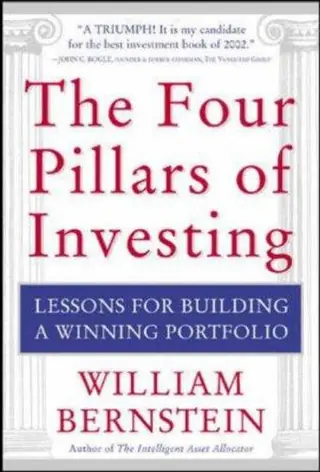
The four pillars of investing
William J. Bernstein
Recommended by 26 · mentioned by 2726 recommend · 27 mention26 recommend · 2726 recommend
 2008–2021
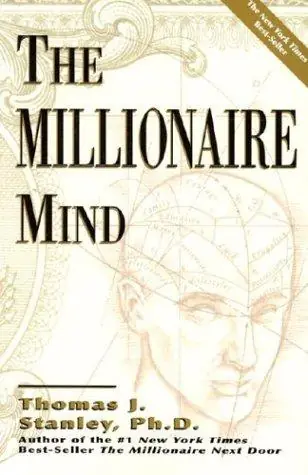
The millionaire mind
Thomas J. Stanley
Recommended by 5 · mentioned by 115 recommend · 11 mention5 recommend · 115 recommend
 2008–2025
Your Money Or Your Life
Joe Dominguez, Vicki Robin
Recommended by 42 · mentioned by 4842 recommend · 48 mention42 recommend · 4842 recommend
 2007–2026
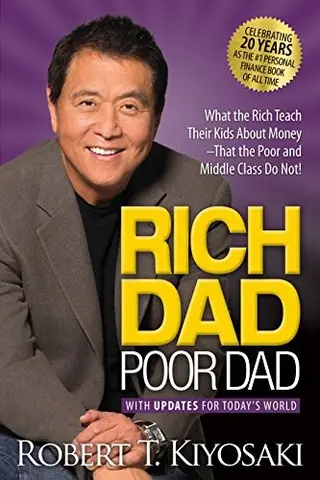
Rich Dad, Poor Dad
Robert T. Kiyosaki, Sharon L. Lechter
Recommended by 96 · mentioned by 27496 recommend · 274 mention96 recommend · 27496 recommend
Go read The Millionaire Next Door. You'll see that there are plenty of people like yourself who remain frugal after managing to pull themselves out of poverty. I'm suggesting the book to both validate your behavior but also give you…
on “On the Experience of Being Poor-Ish, for People Who Aren't” ↗In that case, may I recommend The Millionaire Next Door? http://www.amazon.com/Millionaire-Next-Door-Thomas-Stanley/d... EDIT: Must say I'm not really sure why I was downmodded; this is an excellent book (a classic really) that provides advice from 'actual…
on “Warren Buffett's 10 Ways To Get Rich” ↗…"wealthy?" Is it income or assets? If income, what happens to people making $300,000 a year but spending it all (I have met these people). What happens to the Millionaires Next Door (http://www.amazon.com/The-Millionaire-Next-Door-Surprising/d... ; it has done more to shape my thinking about wealth than any other book. One surprising fact: most millionaires don't have extraordinary incomes but do consistently live below their means…
on “Why education startups do not succeed” ↗Looks like it's time to recommend The Millionaire Next Door: http://www.amazon.com/Millionaire-Next-Door-Thomas-Stanley/d... Don't bother to buy it: Get it out of the library and skim it. It's not a difficult read and it belabors its own point a bit. My own…
on “No, You can't retire rich at 30 if you sell your startup” ↗The Millionaire Next Door: The Surprising Secrets of America's Wealthy by Thomas Stanley http://www.amazon.com/The-Millionaire-Next-Door-Surprising/d...
on “Ask HN: if you could only read one book, which would it be?” ↗Per The Millionaire Next Door (see https://www.amazon.com/Millionaire-Next-Door-Surprising-Amer... for the link), most wealthy are those who have a reasonable income but good financial discipline. Which means that a shocking number…
on “We are publishing the tax secrets of the .001%” ↗…selective with my examples. One more thing that is also true is that a side effect of their lack of mobility is that it is more challenging for them to scale vis-a-vis the technology companies. "PS: Read the millionaire next door and you find a lot of people in the use that made a few million from those bricklaying startups. The main difference is it often took them 20 years to get where software companies got in 5." The OP cited…
on “If Software Is Eating The World, Why Don't Coders Get Any Respect?” ↗Personally, I prefer the book Millionaire Next Door. Helped me develop some effective money saving ideas: http://www.amazon.com/The-Millionaire-Next-Door-Surprising/d...
on “Guy Kawasaki - Four free books” ↗Here are some of my personal favorites: 1) The Millionaire Next Door 2) The Intelligent Investor (must read!) 3) How to Get Out of Debt, Stay Out of Debt, and Live Prosperously 4) Your Money or Your Life 5) I Will Teach You to Be Rich (relevant to you at your age) 6) Why…
on “Ask HN: A good book about personal finance?” ↗…Walk Down Wall Street by Burton G. Malkiel lays out the basics of portfolio diversification. A Random Walk Down Wall Street is one of the best books I've ever read, and I'd only add that I think The Millionaire Next Door is also excellent. When most of us think about millionaires we think about Hollywood stars, tech company founders, and finance moguls. But most millionaires are actually normal people who spend below…
on “Hard-won lessons about money and investing” ↗Find a copy of The Millionaire Next Door and read it. Particularly the last third about what happens inside of families where the parents have money. Long story short, the "one big mistake in life" quote is exactly right.
on “If I Knew Then” ↗…wellbeing That, or a completely irresponsible attitude towards consumer debt. In most cases, the latter. So, this isn't really a very sound strategy for finding a mate who is financially sound. Read The Millionaire Next Door. Most people who are actually wealthy drive moderate cars that are completely paid for. Since many of them own a small business that often works in a fairly blue collar industry, they're more likely to…
on “The Age of Absurdity: Why Modern Life Makes It Hard to Be Happy (2010)” ↗…line is that it's extremely difficult for working professionals to become ''rich'' in the sense that they can indefinitely sustain an upper class lifestyle on passive investment income alone. Read ''The Millionaire Next Door'' by Thomas Stanley (http://fave.co/2cLN5gp) to learn more about how wealth is truly accumulated and managed in the United States. This book had a greater impact on me than pretty much any other I've…
on “Everybody Thinks They're Middle-Class” ↗The Millionaire Next Door: The Surprising Secrets of America's Wealthy. We know the "rich", people who spent $10M on a Yacht as a parking space for their 1M private jet which they use as a cellar for their $10k wines. And we…
on “Ask HN: Which non-technology book has influenced you the most and why?” ↗You may like reading The Millionaire Next Door. It explains that the majority of millionaires in the US are like those you describe, and not like the flashy movie ones we see in the media. Edit: Link for convenience: https://www.amazon.com/Millionaire-Next-Door-Surprising-Amer...
on “Survivorship Bias” ↗