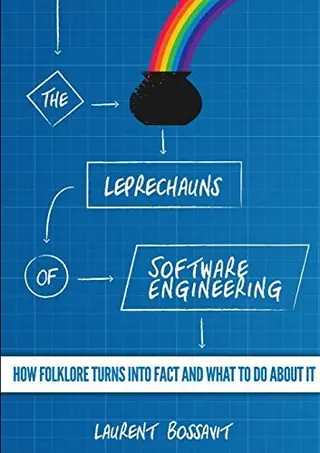
The Leprechauns of Software Engineering
by Laurent Bossavit · first published 2015
79% recommend17% neutral4% critical
Why HN recommends it
Accessible investigation tracing citation chains behind software folklore like the 10x programmer and rising bug-fix costs, showing where claims were misread or unsupported. Suits programmers curious about evidence.
Summarised by Claude from recommending comments
Affiliate links. As an Amazon Associate I earn from qualifying purchases.
Mentions per year
What Hacker News says
Related books
 2016–2021
Software defect removal
Robert H. Dunn
0 recommend · 2 mentioned0 recommend · 2 mention0 recommend · 20 recommend
 2012–2021
Balancing agility and discipline
Barry W. Boehm
Recommended by 3 · mentioned by 53 recommend · 5 mention3 recommend · 53 recommend
 2012–2024
Making Software
Andy Oram
Recommended by 12 · mentioned by 2512 recommend · 25 mention12 recommend · 2512 recommend
 2008–2025
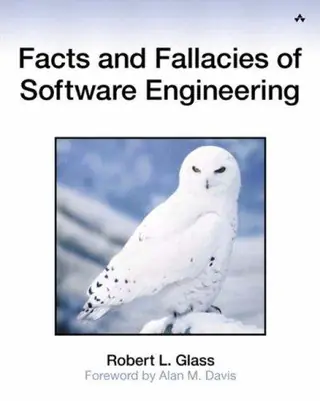
Facts and Fallacies of Software Engineering
Robert L. Glass
Recommended by 19 · mentioned by 3019 recommend · 30 mention19 recommend · 3019 recommend
 2007–2026
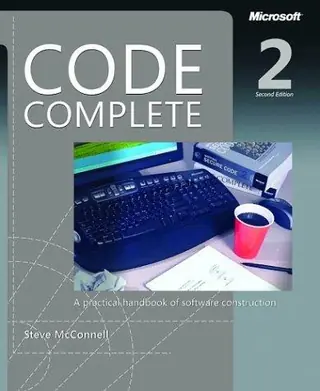
Code Complete
Steve McConnell
Recommended by 393 · mentioned by 669393 recommend · 669 mention393 recommend · 669393 recommend
 2007–2026
Domain-Driven Design
Eric Evans
Recommended by 104 · mentioned by 191104 recommend · 191 mention104 recommend · 191104 recommend
 2007–2026
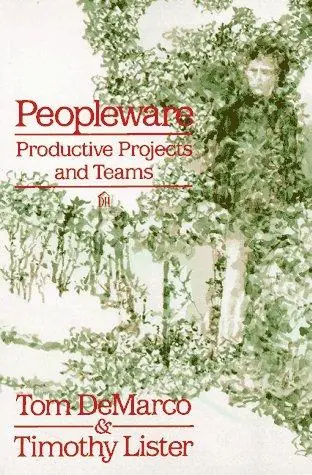
Peopleware
Tom DeMarco, Timothy Lister
Recommended by 276 · mentioned by 415276 recommend · 415 mention276 recommend · 415276 recommend
 2008–2026
Clean Code
Robert C. Martin
Recommended by 298 · mentioned by 739298 recommend · 739 mention298 recommend · 739298 recommend
I’m not so sure about that book. It includes Steve McConnell’s claims about 10x productivity, which Laurent Bossavit thouroughly and convincingly debunked in his book, The Leprechauns of Software Engineering. A bunch of citations isn’t the same as evidence. When I dig into software studies, I find all kinds of issues, ranging from subjects of convenience (the professor used their undergrad class for their…
on “Evidence-based Software Engineering: based on the publicly available data” ↗There is an interesting and quite surprising book about this (among other similar theses/memes/opinions/whatever) titled "The Leprechauns of Software Engineering" (by Laurent Bossavit).
on “Paul Buchheit on Joining Google, How to Become a Great Engineer, and Happiness” ↗…might be too strong a word, I agree with you that the the AI-is-the-future people haven't done nearly enough to prove their claims. But that's nothing new in our industry, really. I would recommend "The Leprechauns of Software Engineering" by Laurent Bossavit for an insightful and entertaining overview of just how much of software "engineering" is based on "truths" that we don't question.
on “It's still ok to enjoy programming” ↗> A good programmer is ten times more productive than an average programmer. A great programmer is 20-100 times more productive than the average. This is not an exaggeration – studies since the 1960′s have consistently shown this. That's folklore, not fact. The short form of the argument is: the studies are old, not very credible, and based on a notion of "productivity" which is most generous
on “Some Lesser Known Truths About Programming” ↗I'm disappointed to see the 10x programmer meme hit a publication like the Economist. There's no scientific evidence of 10x differences in programmer productivity. To quote Laurent Bossavit [1], who's investigated the studies people like McConnell use: "How strong is the support conferred to the 10x claim by the best-reputed list of references, for a reader persistent enough to follow the chain o
on “Super-star programmers” ↗The '10x' super star and other myths debunked: https://leanpub.com/leprechauns/read
on “The Programmer's Price: Want to hire a coding superstar? Call the agent” ↗http://leanpub.com/leprechauns In the downloadable sample there is a nice analysis which refutes the "zealots who enforced weren't the brightest". In the short: there were no zealots. Nothing was enforced, the term "waterfall" comes up much later and it was meant as being iterative from the beginning. So one might ask: how come that this folklore is being trumpeted all around like a truth?
on “Programming like Kent Beck” ↗I enjoyed the book _Leprechauns of Software Engineering_ which did track down all the chains of citations to find where the original work was misunderstood or even nonexistent. I would bet that it covers most or even all of these citations, but I’m not taking the time to pull it out and cross reference. https://leanpub.com/leprechauns
on “The “bugs are 100x more expensive to fix in production” study might not exist” ↗I was using "research" in the colloquial sense, not in the "research paper" sense. Bossavit researched the 10x claims (thoroughly and meticulously) and wrote up his findings in the book I mentioned. You can find it here: http://leanpub.com/leprechauns It's an impressive work of scholarship; many of the citations he followed were out of print, expensive, or referring to unnamed parts of 300-page b
on “There are no 10x developers, but there are 1/10 ones” ↗I don't understand what you're getting at here. Laurent's book (written after McConnell's blog) is available at http://leanpub.com/leprechauns . If you're unable or unwilling to figure that out, I suspect you're not really trying. You're engaging in an asymmetric attack here--posting trivial statements that avoid the substance of my comments, but require me to do a lot of work to satisfy you. I'v
on “There are no 10x developers, but there are 1/10 ones” ↗While this list is certainly educational, remember that most of these "laws" are heuristics based on personal experience. The discipline of software development is about as rigorous as parapsychology. To learn what we really know about software, I recommend Making Software: What Really Works & Why We Believe It[1], The Leprechauns of Software Engineering[2], and browsing It Will Never Work in The
on “Programming Laws and Reality: Do We Know What We Think We Know?” ↗"The Leprechauns of Software Engineering" is a fun read that takes a look into the origins of some of the software engineering folklore: https://leanpub.com/leprechauns/read
on “Frequently Forgotten Fundamental Facts about Software Engineering (2001) [pdf]” ↗About the 10x difference in programmer productivity: it's a "leprechaun", a false myth emerged from misquoting of previous articles, poor review processes of the claims made and the generalized tendency to ape a scientific process in the software engineering world. Quite some tall claims but I have read a book that makes some good arguments supporting this as well as debunking a couple of these le
on “Ask HN: What to do after failing final interviews twice?” ↗Lauren Bossavit has taken the trouble to trace those citations. His book about his search for the truth behind those claims (and several other common software engineering beliefs) is well worth reading: https://leanpub.com/leprechauns
on “The 10x developer is not a myth (2013)” ↗Laurent Bossavit tears the Boehm paper apart in his book "Leprechauns of Software Engineering"[1]. It's a good read for anyone interested in the empirical side of software research. [1]: https://leanpub.com/leprechauns
on “Cold Showers: For when people get too hyped up about things” ↗