The Last Question
by Isaac Asimov · first published 2007
55% recommend45% neutral
Why HN recommends it
Short, free story spanning trillions of years of human history, tackling entropy, computing and the fate of the universe. Quick to read, with a closing twist and an optimistic tone; suits fans of big-picture sci-fi.
Summarised by Claude from recommending comments
"The Last Question" is a science fiction short story by Isaac Asimov, first published in Science Fiction Quarterly in November 1956. Asimov considered it his favorite of all his own works. Told in seven vignettes spanning billions of years, the story follows humanity's recurring attempts to answer a single question: can entropy be reversed? It begins in 2061, when two technicians drunkenly pose the question to Multivac — a vast supercomputer that has just solved Earth's energy crisis. The story then leaps forward through the ages. Civilization spreads across galaxies, merges with its machin
Affiliate links. As an Amazon Associate I earn from qualifying purchases.
Mentions per year
What Hacker News says
Related books
 2011–2026
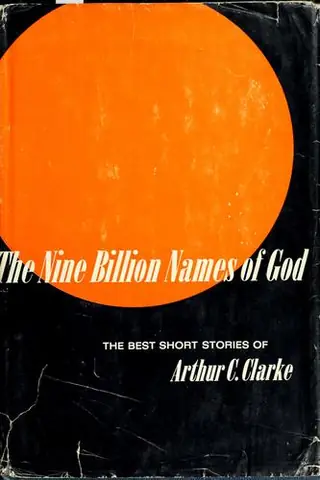
The nine billion names of God
Arthur C. Clarke
Recommended by 22 · mentioned by 5222 recommend · 52 mention22 recommend · 5222 recommend
The Last Answer
Isaac Asimov
Recommended by 13 · mentioned by 1813 recommend · 18 mention13 recommend · 1813 recommend
 2010–2016
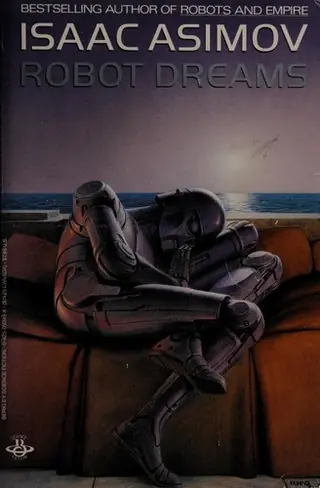
Robot Dreams
Isaac Asimov
Recommended by 1 · mentioned by 21 recommend · 2 mention1 recommend · 21 recommend
The Egg
Andy Weir
Recommended by 20 · mentioned by 3220 recommend · 32 mention20 recommend · 3220 recommend
 2013–2024
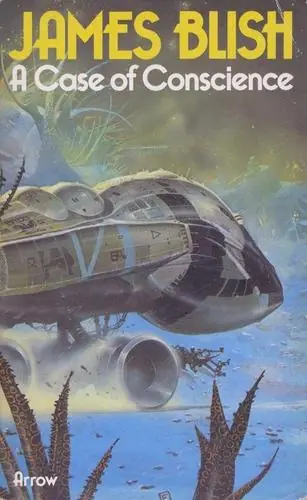
A Case of Conscience
James Blish
Recommended by 2 · mentioned by 32 recommend · 3 mention2 recommend · 32 recommend
The Complete Stories
Isaac Asimov
Recommended by 4 · mentioned by 94 recommend · 9 mention4 recommend · 94 recommend
 2010–2026
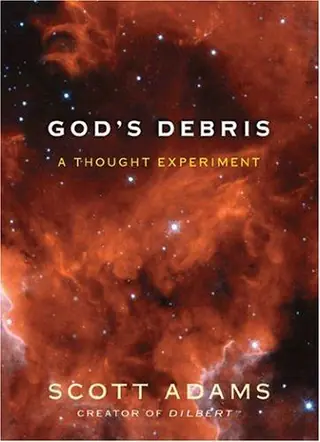
God's debris
Scott Adams
Recommended by 7 · mentioned by 177 recommend · 17 mention7 recommend · 177 recommend
 2010–2016
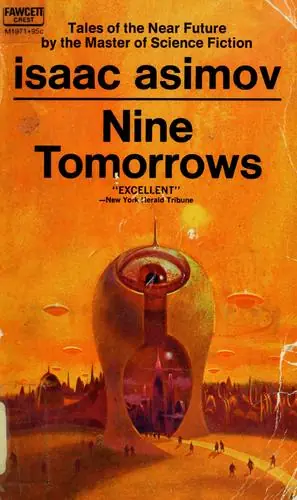
Nine tomorrows
Isaac Asimov
Recommended by 1 · mentioned by 41 recommend · 4 mention1 recommend · 41 recommend
…and His Years of Pilgrimage, and Blood Meridian all dazzled me. Oh, and The Sandman, Watchmen, Maus, and Persepolis for graphic novels. For short stories: MMAcevedo (https://qntm.org/mmacevedo), The Last Question by Asimov, The Library of Babel by Borges, and The Dead by Joyce (whose final sentence is my favorite of all English-language writing). Lastly, The Design of Everyday Things changed how I saw man-made…
on “Ask HN: What are some must read books?” ↗…this story was his crowning achievement in short fiction and he knew it too. You can read his other things and none of them will give the same feeling. Nightfall is a decent story though. But yeah, The Last Question is in a league of its own. It's one of my favorite short stories ever along with The Library of Babel by Borges, The Great Automatic Grammatizator by Roald Dahl, and "Repent, Harlequin!" said the Tick-Tock…
on “The Last Question” ↗…Collide http://robinhanson.typepad.com/files/three-worlds-collide.pd... The Metamorphosis of Prime Intellect http://localroger.com/prime-intellect/mopiall.html The next few are short stories: The Last Question http://www.thrivenotes.com/the-last-question/ The Last Answer http://www.thrivenotes.com/the-last-answer/ Let's Help Germinate This Seed http://www.thrivenotes.com/lets-help-germinate-this-seed/…
on “Ask HN: Sci-Fi novels?” ↗…Randomness 7/10 Finding Flow: The Psychology of Engagement with Everyday Life 8/10 How to Get Filthy Rich in Rising Asia 9/10 Reluctant Fundamentalist 9/10 The Sense of an Ending - Julian Barnes 8/10 The Last Question - Asimov - 9/10 The Magic of Thinking Big - 6/10 The catcher in the Rye 8/10 Models 7/10 High Fidelity - Nick Hornby 8/10 The Ocean at the End of the Lane - Neil Gaiman 7/10 The Surrender Experiment…
on “Ask HN: Books you read in 2015?” ↗…life would be incomplete without them. :) 3) I didn't know about that book. It sounds like I should definitely read it. I'm off to look it up. And for you, I recommend the evolutionary short story, The Last Question, by Isaac Asimov, 1956. http://multivax.com/last_question.html
on “Oppenheimer's recommendation letter for Richard Feynman” ↗i can't narrow this down to one. some of these are already named: Cryptonomicon, Snow Crash, "The Last Question", Ender's Game/Shadow, Dune, Slaughterhouse 5, Ringworld
on “Ask YC: What's the most inspiring sci-fi book you've read?” ↗Agreed. Three fiction recommendations: * The Penelopiad by Margaret Atwood * The Last Question by Isaac Asimov * Star Maker by Olaf Stapledon Three non-fiction recommendations: * Art is Work by Milton Glaser * Pragmatic Thinking And Learning by Andy Hunt * The First And Last Freedom by Jiddu…
on “Summer Reading List” ↗I recommend you the story "The Last Question", by Isaac Asimov[0], one of my favourite stories of all time. It's about how the question about reverting the direction of the entropy keeps rising on people, throughout the life of the universe. [0]…
on “Entropy explained, with sheep (2016)” ↗The Last Question by Isaac Asimov Shows humanity over the centuries as this one AI becomes more and more prescient and helpful. It never turns bad but instead shows how this tool becomes more and more opaque until humans…
on “Ask HN: Science Fiction books that predict where ChatGPT might lead us?” ↗"A Canticle For Leibowitz" "The Sparrow" "Lord of Light" "The Immortal" "Hyperion" "The Last Question" "Do Androids Dream of Electric Sheep?" "Stranger in a Strange Land" "The City and the Stars" "Childhood's End" "Anathem" "Eifelheim" "A Case of Conscience" "VALIS" trilogy "The Book of Strange…
on “Ask HN: Books that gave you different perspective on religion” ↗…seem to believe in the heat death of the Universe I’m not sure I believe that the heat death of the universe really is the end of all things forever and for all time either, after reading Asimov’s The Last Question and a particularly fantastic manga oneshot adaptation by manga artist Ryul. If you haven’t read it, I can’t recommend it more highly, and the manga version is a nice addition to the canon. I found a…
on “Brain Uses Quantum Effects, New Study Finds [video]” ↗May I strongly suggest you to read Asimov’s short story The Last Question for an answer. https://users.ece.cmu.edu/~gamvrosi/thelastq.html tl;dr: likely as long as the lifespan of the universe.
on “Biggest dark matter detector spots a single weird particle” ↗I hoped for actual fiction, like "The Laundry Archives" (where computation can summon demons), "The Lifecycle of Software Objects" (about raising children AI), "The Last Question" (short story from Asimov) or "The Nine Billion Names of God" (about monks buying a computer for religious purposes). All of the above are highly recommended, by the way.
on “Six works of Computer Science-Fiction” ↗This kind of discussion always reminds me of the Asimov story "The Last Question" https://www.multivax.com/last_question.html
on “Physicists Debate Hawking’s Idea That the Universe Had No Beginning” ↗…the only interesting part. I guess it's possible that a gifted author could wrap these fact with a human-interest element in a way that is worthwhile while still communicating an essential idea ("The Last Question" by Asimov comes to mind). But, by experience, this just isn't within the abilities of most magazine writers. And it doesn't need to be, because the material facts are plenty interesting on their own.…
on “The Ultimate Counterfeiter Isn’t a Crook — He’s an Artist” ↗