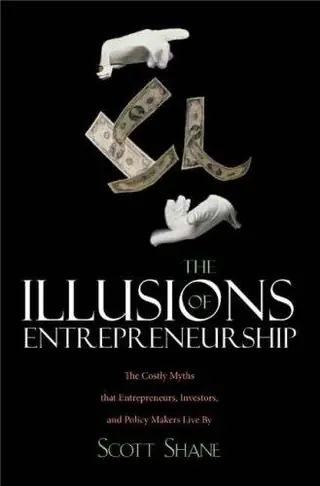
The Illusions of Entrepreneurship
by Scott A. Shane · first published 2008
8mentions
3recommended by
6HN commenters
2008–2016first – last mentioned
50% recommend50% neutral
"There are far more entrepreneurs than most people realize. But the failure rate of new businesses is disappointingly high, and the economic impact of most of them disappointingly low, suggesting that enthusiastic would-be entrepreneurs and their investors all too often operate under a false set of assumptions. This book shows that the reality of entrepreneurship is decidedly different from the myths that have come to surround it. Scott Shane, a leading expert in entrepreneurial activity in the United States and other countries, draws on the data from extensive research to provide accurate, us
Affiliate links. As an Amazon Associate I earn from qualifying purchases.
…and 824 times more likely to be high growth then starting something like a restaurant. But there's far more restaurants in those statistics people love to quote. Read: Finding Fertile Ground or The Illusions of Entrepreneurship by Scott Shane to understand the reality of entrepreneurship and high tech companies.
on “How to Promote Startups” ↗Lots of costs, risks, benefits... to be weighed. And certainly a lot of them are NOT about salary and security. It's worth taking a look at Scott Shane's January 2008 “Illusions of Entrepreneurship: The Costly Myths that Entrepreneurs, Investors, and Policy Makers Live By” - or at least the discussions at Amazon reviews: http://www.amazon.com/isbn/dp/0300113315 It is a huge leap, and this will help…
on “Is it crazy to quit a 6+ figure salaried job to do a startup right now?” ↗For a good book on interpreting some of the Kaufman data, check out: The Illusions of Entrepreneurship: The Costly Myths That Entrepreneurs, Investors, and Policy Makers Live By Scott A. Shane Cheers, Tristan
on “Entrepreneurial Activity Reaches Highest Point in 14 Years” ↗>If you're sick of your current job, want a change, and hate being a subordinate, the answer is 'no'. According to Illusions of Entrepreneurship, most entrepreneurs are in their 40s, not 20s. Additionally, many entrepreneurs, (I believe it said a plurality) were entrepreneurs because they didn't like or couldn't work well under a boss more than…
on “Should I Become an Entrepreneur?” ↗According to the Book Illusions of Entrepreneurship, most people who work in their own businesses make significantly less than they would working for others. However, they're as happier as if they made 200k more than they do, so in general they're happier…
on “Are Today’s ‘Entrepreneurs’ Actually the Unemployed?” ↗…in 10 startups fail. This commonly cited 90% startup failure rate is actually based on a 7yr timescale (if I'm not mistaken). I remember it being an example of a common misconception in the book "The Illusions of Entrepreneurship" [1]. Just because a small company eventually fails, it doesn't mean the investors didn't get any amount of ROI out of it. For example: It's possible a company makes 10's of millions in revenue but fails…
on “Is the DAO going to be DOA?” ↗…percent of entrepreneurs earn more money than employees. And the typical entrepreneur earns less money than he otherwise would have earned working for someone else." (from Scott Shane, the author of "The Illusions of Entrepreneurship via http://blog.guykawasaki.com/2008/01/top-ten-myths-o.html)
on “Are founders significantly richer than most people?” ↗…research showed the real estate bubble was about to burst. It's an interesting thesis, though it does suffer from survivorship bias. I thought the most interesting part was data from the book, "The Illusions of Entrepreneurship", by Scott Shane. New-business success is clearly correlated with the size of initial capitalization. The data show that organizing as a corporation is best. But failed entrepreneurs tend to organize as…
on “Malcolm Gladwell: Entrepreneurs are anything but risk-takers” ↗