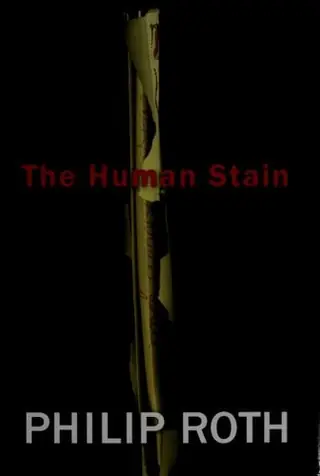
The Human Stain
by Philip Roth · first published 1999
12mentions
1recommended by
11HN commenters
2010–2026first – last mentioned
9% recommend91% neutral
In 1990's America, the Human Stain is the story told by Nathan Zuckerman, a writer who lives a secluded life until the aging classics professor Coleman Silk becomes his new neighbor.
Affiliate links. As an Amazon Associate I earn from qualifying purchases.
You may be referring to the Philip Roth incident. (There are a number of such incidents, but this is perhaps the most famous). Essentially, the article on Roth's book The Human Stain (an excellent book by the way) cited a New York Times critic as saying that the main character may have been inspired by a particular person. Roth's agent attempted to remove this (Roth says that he was…
on “How I Snuck Through Wikipedia’s Notability Test” ↗It appears so: https://en.wikipedia.org/wiki/The_Human_Stain >Roth described in a 2012 piece for The New Yorker how his novel was inspired by an event in the life of his friend Melvin Tumin, a "professor of sociology at Princeton for some thirty years". Tumin…
on “An Open Letter to Wikipedia (2012)” ↗I _have_ read The Human Stain, which is about Coleman Silk, a Classics professor at a small liberal arts college, who is fired after an innocuous remark about two students who fail to come to class for the first couple of weeks. The…
on “How to Spot a Spook” ↗That's not the general assertion the article makes. Roth complained about an interpretation of _The Human Stain_ that had been made in numerous extremely reputable secondary sources, despite the fact that the article included a recitation of Roth's own intent. That's the core argument beneath the rant. Is that…
on “Philip Roth: An Open Letter to Wikipedia” ↗I don't have much to say about his tone ("drops mic" and all that). But the core issue here, just to make it very clear: Roth disagreed with a critical interpretation of _The Human Stain_ (albeit an interpretation that was grounded in fact --- "which acquaintance of Roth was the story inspired by"), and felt that his standing as the book's author gave him the authority to demand the…
on “Philip Roth: An Open Letter to Wikipedia” ↗One example that comes to my mind is when author Philip Roth attempted to clarify the inspiration for his book The Human Stain. http://www.newyorker.com/online/blogs/books/2012/09/an-open-... The wikipedia entry for The Human Stain now contains a reference to the controversy http://en.wikipedia.org/wiki/The_Human_Stain#Anatole_Broyard...
on “Wikipedia Zero” ↗Clearly the author has never read "The Human Stain" by Philip Roth.
on “How to Spot a Spook” ↗…Roth saw it read: > Salon.com critic Charles Taylor argues that Roth had to have been at least partly inspired by the case of Anatole Broyard, a literary critic who, like the protagonist of ''The Human Stain'', was a man identified as Creole who spent his entire professional life more-or-less as white. Roth states there is no connection, as he did not know Broyard had any black ancestry until an article published…
on “Philip Roth: An Open Letter to Wikipedia” ↗…better, and we must do better, and we will do better, and we will start this moment today." 3. Finally -- and a better example of le mot juste I've not seen in a while -- a central plot element of The Human Stain is the power of allegation, even when false. The line Roth objected to was about the alleged inspiration for his character. Note, as Andreas Kolbe does in the first comment to Oliver's blog, that this…
on “Philip Roth: An Open Letter to Wikipedia” ↗…Wand by Marlen Haushofer. Haruki Murakami is missing, though maybe with 1Q84 he better fits into a list of the current century. Stephen King? Paul Auster? Philip Roth? Though maybe that would be for The Human Stain, and that's from 2000. As an aside, I was happily surprised to see The Master and Margarita on the list. It's one of the more known books that I thought had a very special charm, but not one I'd expect…
on “Books of the Century by Le Monde” ↗That's not clear to me, because I've never read The Human Stain. If it provides a different perspective on the same issues, why don't you tell us about it?
on “How to Spot a Spook” ↗…of the term was current in the 70s, and Agee, given his profession, probably was aware of The Spook Who Sat by the Door (book, 69; movie 73) about a black agent, the title playing on the ambiguity. The Human Stain came out 16 yrs after Agee's article.
on “How to Spot a Spook” ↗