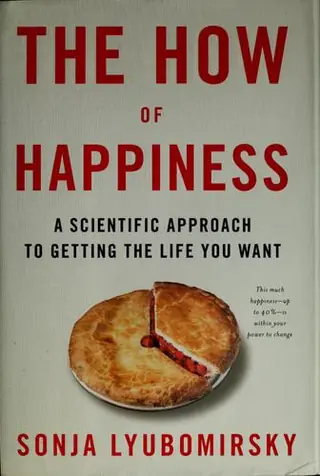
The how of happiness
by Sonja Lyubomirsky · first published 2007
50% recommend50% neutral
Drawing on her own groundbreaking research with thousands of men and women, research psychologist and University of California professor of psychology Sonja Lyubomirsky has pioneered a detailed yet easy-to-follow plan to increase happiness in our day-to-day lives-in the short term and over the long term. The How of Happiness is a different kind of happiness book, one that offers a comprehensive guide to understanding what happiness is, and isn’t, and what can be done to bring us all closer to the happy life we envision for ourselves. Using more than a dozen uniquely formulated happiness-increa
Affiliate links. As an Amazon Associate I earn from qualifying purchases.
Mentions per year
What Hacker News says
Related books
 2007–2026
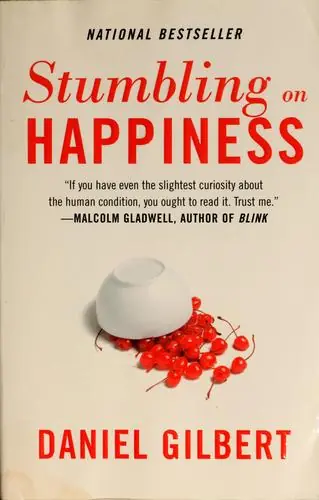
Stumbling on happiness
Daniel T. Gilbert
Recommended by 38 · mentioned by 5238 recommend · 52 mention38 recommend · 5238 recommend
 2013–2025
The first and last freedom
Jiddu Krishnamurti
Recommended by 3 · mentioned by 43 recommend · 4 mention3 recommend · 43 recommend
 2020–2024
The Almanack of Naval Ravikant
Eric Jorgenson
Recommended by 14 · mentioned by 2214 recommend · 22 mention14 recommend · 2214 recommend
 2008–2026
The Happiness Hypothesis
Jonathan Haidt
Recommended by 40 · mentioned by 5140 recommend · 51 mention40 recommend · 5140 recommend
 2015–2026
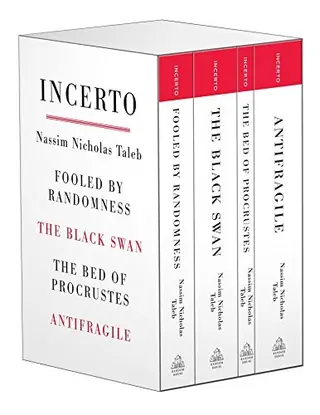
Incerto
Nassim Nicholas Taleb
Recommended by 32 · mentioned by 4132 recommend · 41 mention32 recommend · 4132 recommend
 2008–2026
The Denial of Death
Ernest Becker
Recommended by 40 · mentioned by 6140 recommend · 61 mention40 recommend · 6140 recommend
 2009–2026
Kitchen Confidential
Anthony Bourdain
Recommended by 47 · mentioned by 8447 recommend · 84 mention47 recommend · 8447 recommend
There's a lot of great research on the topic of happiness - it's the field of Positive Psychology A great "how to" book is: The How of Happiness: A New Approach to Getting the Life You Want by Sonja Lyubomirsky (a Ph.D. researcher in the field of study) http://thehowofhappiness.com -- this book shares the specific advice you share in your comment.…
on “Show HN: Three Things Daily – Make gratitude a daily habit” ↗…(above baseline). One gem from the field: If Money Doesn't Make You Happy Then You Probably Aren't Spending It Right [0]. Great books from the field: Stumbling on Happiness by Daniel Gilbert [1] and The How of Happiness by Sonja Lyubomirsky [2] [0] https://scholar.harvard.edu/files/danielgilbert/files/if-mon... [1] https://www.amazon.com/Stumbling-Happiness-Daniel-Gilbert/dp... [2] https://www.amazon.com/How-Happiness-Approach-Getting-Life/d...
on “Ask HN: How to optimize your career for happiness?” ↗…https://www.givingwhatwecan.org/ Finally, on the topic of happiness, read up on Positive Psychology to learn how to extract more enjoyment / eudaemonia out of life. Start by reading books by Ph.D. researchers (e.g. The How of Happiness, Stumbling on Happiness, etc).
on “Tell HN: I have the perfect job, why is it not enough?” ↗If you're smart and unhappy, it seems like the best next step is to read some books on the topic of Positive Psychology written by researchers that study it. Two great starts: The How of Happiness and Stumbling on Happiness but there are many more. ps - 4DWW (Four Day Work Week) would be an amazing improvement to happiness to anyone who gets it. Let's all work on making it the norm!
on “If you’re so smart, how come you’re not happy?” ↗The How of Happiness is a research-backed yet very practical/usable book describing several techniques for finding happiness in life.
on “The Positive Programmer” ↗…Gilbert. It's a great overview of how error-prone our predictions about what will make us happy are; along with, if I remember right, good advice for how to maximize happiness (alternatively, read The How of Happiness for more-direct advice). https://www.amazon.com/Stumbling-Happiness-Daniel-Gilbert/dp... https://www.amazon.com/How-Happiness-Approach-Getting-Life/d...
on “Ask HN: Life Changing Books?” ↗…well being). If you read books, consider reading ones by Ph.D. researchers in the field, rather than journalists (who unfortunately often overstep conclusions of research findings). For example: The How of Happiness by Sonja Lyubomirsky https://www.amazon.com/How-Happiness-Approach-Getting-Life/d... I think trying LSD or Magic Mushrooms once (after proper research and understanding of safety precautions) may be…
on “Tell HN: Turned 44 today and I'm lost” ↗…non-experts dabbling in social science / psychology. Positive Psychology is a great example -- rather than reading one of the dozens of books written by non-experts, why not go with something like The How of Happiness or Stumbling on Happiness - by people who actually study and run experiments they write about.
on “Ask HN: Which books have made you a better thinker and problem solver?” ↗There has been research done on happiness as a subject of science. The How of Happiness is a nice book for a popular audience on the subject.
on “Things I do to be consistently happy” ↗The book "The How of Happiness" has a some other good evidence-based methods for increasing happiness too: http://bookoutlines.pbworks.com/The-How-of-Happiness
on “Ask HN: Self improvement programs” ↗…going to incorporate some exercises or ideas from positive psychology (which again, should be a complement to, not a replacement for, therapy of some form), a good place to start would be the book The How of Happiness, a relatively new book by one of the most respected scientists in the field of positive psych. It contains a popular review of the science of subjective well-being and how that relates to an individual's…
on “Ask HN: How do you deal with suicidal thoughts ?” ↗…variation in how people respond to sleep deprivation. There you go. It's the tyranny of averages: when variation between humans is greater than the effect of the intervention. This reminds me of reading The How of Happiness and learning that happiness is basically 50% genetics, 10% circumstances and 40% behavior. The author frames that 40% as a really big number, but I thought about it the other way around: if you're unlucky…
on “The effects on cognition of sleeping 4 hours per night for 12-14 days” ↗…“set points” for happiness—a predisposition to stay at a certain level of happiness—account for a large, but not overwhelming, percentage of our well-being. (Fifty percent, says Sonja Lyubomirsky in The How of Happiness. Circumstances account for 10 percent, and the other 40 percent is within our control.) But why do countries with the highest self-reports of subjective well-being also yield the most suicides? How is…
on “What Makes Us Happy?” ↗…well being can be correlated to three factors: genetics 50%, controllable life circumstances (e.g. habits, hobbies, voluntary social engagement) 40%, uncontrollable life circumstances 10% [source: The How of Happiness by Sonja Lyubomirsky]. In other words... a “shit life” for someone who hit the genetic lottery for happiness could look quite similar to a “golden life” for someone with terrible happiness genetics. The…
on “Let’s avoid talk of ‘chemical imbalance’: it’s people in distress” ↗According to studies cited by Sonjy Lyubomirsky (http://www.faculty.ucr.edu/~sonja/ ) in her Book "The how of happiness" (a happiness book from a scientific view), the genetic predisposition is about 50%. 10% is your environment, and the rest is what you do with your life. So, there is room for improvement for most people,…
on “Being unhappy running a successful business” ↗