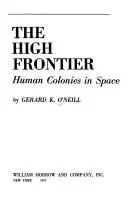
The high frontier
by Gerard K. O'Neill · first published 1976
50% recommend50% neutral
Why HN recommends it
Argues that orbital space habitats and asteroid resource use could be economically viable with 1970s technology, backed by detailed engineering parameters. Often read as a formative book on space settlement.
Summarised by Claude from recommending comments
A biography of Shelley which includes excerpts of his writing that are important for a comprehension of his thought and art.
Affiliate links. As an Amazon Associate I earn from qualifying purchases.
Mentions per year
What Hacker News says
Related books
 2009–2021
Colonies in Space
T.A. Heppenheimer
Recommended by 2 · mentioned by 42 recommend · 4 mention2 recommend · 42 recommend
 2010–2022
The millennial project
Marshall T. Savage
Recommended by 4 · mentioned by 54 recommend · 5 mention4 recommend · 54 recommend
 2008–2023
Mining the sky
Lewis, John S.
Recommended by 9 · mentioned by 119 recommend · 11 mention9 recommend · 119 recommend
 2008–2026
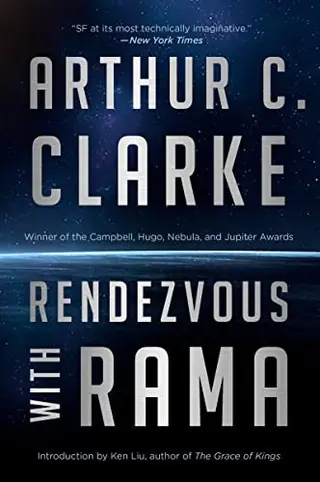
Rendezvous with Rama
Arthur C. Clarke
Recommended by 51 · mentioned by 9651 recommend · 96 mention51 recommend · 9651 recommend
 2007–2026
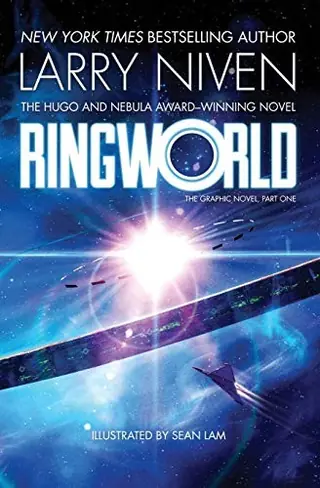
Ringworld
Larry Niven
Recommended by 51 · mentioned by 15951 recommend · 159 mention51 recommend · 15951 recommend
 2008–2026
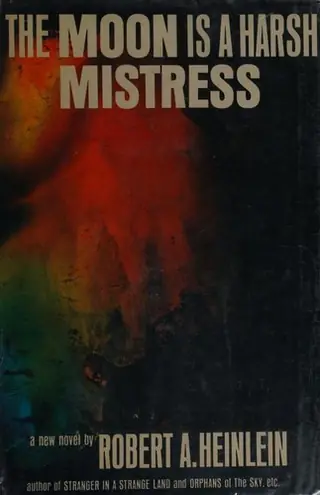
The moon is a harsh mistress
Robert A. Heinlein
Recommended by 139 · mentioned by 305139 recommend · 305 mention139 recommend · 305139 recommend
 2015–2026
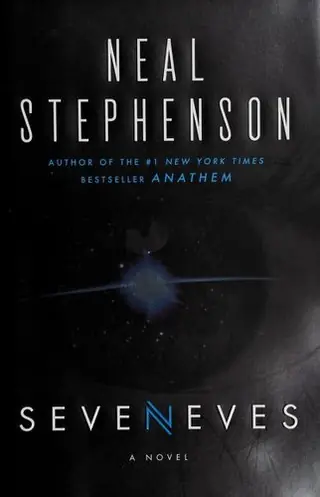
Seveneves
Neal Stephenson
Recommended by 182 · mentioned by 417182 recommend · 417 mention182 recommend · 417182 recommend
 2008–2026
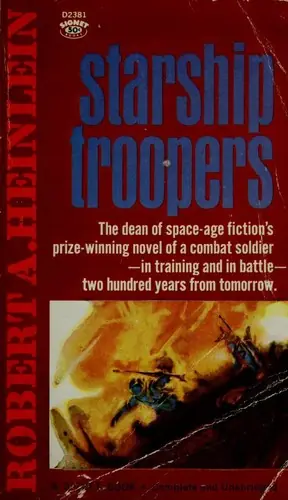
Starship Troopers
Robert A. Heinlein
Recommended by 57 · mentioned by 21857 recommend · 218 mention57 recommend · 21857 recommend
Many of these pictures are based on designs described in one of my favorite books of all time, The High Frontier, by Gerard K. O'Neil. In it, O'Neil, a Princeton physicist and founder of the Space Studies Institute, goes on to describe in great technical detail the feasibility of building artificial space habitats…
on “Space Colony Art from the 1970s” ↗These are from Gerard O'Neill's book, The High Frontier, which described how such colonies could be built and outlined their engineering parameters. I first read it as a boy and it's always stuck with me. Essentially, with the technology of the 70s he argued…
on “Space colony art from the 1970s” ↗…frequencies chosen pass through without interacting. So no. A beam going off axis will not set your city on fire. In terms of the actual concept, the original book to read is Gerard O'Neill's 1976 The High Frontier. O'Neill proposed to boostrap orbital colonies at L4 and L5. These colonies would build and maintain orbital solar stations. I think that realistically, that window has passed. If solar power stations…
on “Harvesting solar power in space and sending it back to Earth” ↗I dunno, OP’s approach seems pretty common for serial founders. The High Frontier is a fun book.
on “Ask HN: I want my next startup to be in space tech. Where do I start?” ↗I can recommend Gerard O'Neill's The High Frontier. https://www.scribd.com/doc/239652061/The-High-Frontier-Human... Thanks for the recommendation for The Millenium Project, jasonpeacock, I'll check it out. :-)
on “SpaceX is launching an inflatable space habitat” ↗…drop yourself down another? It be a lot easier to mine asteroids and build colonies in Earth or solar orbit. And potentially hugely profitable if they choose a platinum-rich asteroid. See further: 'The High Frontier: Human Colonies in Space' by Gerard K. O'Neill 'Mining the Sky' by John S. Lewis
on “SpaceX plans to debut Red Dragon with 2018 Mars mission” ↗For some more concrete reading, try The High Frontier by Gerard O'Neill[1]. He makes the opposite case; arguing that orbital habitats could have a net positive economic return in fairly short order. [1]: https://www.amazon.com/High-Frontier-Human-Colonies-Apogee/d...
on “Bezos names big next rocket New Glenn” ↗I recommend checking out O'Neill's book The High Frontier where he lays out a plan for how to do this. Keyword: regolith Mars is at least 10x harder. The path to space settlement is in our own backyard.
on “Notice of termination of Twitter merger agreement” ↗> I'd love to hear about your economical plan to extract resources and populate the rest of the solar system. A good starting point is Gerard O’Neill’s 1977 book The High Frontier. > It currently costs approximately $4,000 per kg to transport anything into space, that's current bargain basement SpaceX pricing. It also consumes non-renewable fossil fuels to do so. There are plenty…
on “Why is Singapore no longer "cool"?” ↗…to mention that (I recall reading a long time ago) a typical asteroid contains as much iron ore as is present in the Iron Range. And there are a whole _lot_ of typical asteroids. I'm a big fan of the High Frontier. We just gotta get out of earth's gravity well cheaply and easily.
on “The Star Trek Economy” ↗Its interesting to me that this is written by Krugman. I am glad to see that he has read The High Frontier, Its one of my personal favorites.
on “The Theory of Interstellar Trade (1978) [pdf]” ↗…does not choke itself with its own overgrowth? There are three primary ideas that give me hope in the future of humanity. The first is space settlement, especially on orbital colonies. The books The High Frontier and Mining the Sky are great introductions to this concept. And after a long “space winter”, it’s gaining steam. The second is the humble concept of recycling. I believe technological progress will allow…
on “Ask HN: Will humans ever willingly stagnate?” ↗…https://en.wikipedia.org/wiki/O%27Neill_cylinder > The O'Neill cylinder (also called an O'Neill colony) is a space settlement concept proposed by American physicist Gerard K. O'Neill in his 1976 book "The High Frontier: Human Colonies in Space". O'Neill proposed the colonization of space for the 21st century, using materials extracted from the Moon and later from asteroids. > An O'Neill cylinder would consist of two…
on “Elon Musk’s plan to build one Starship a week and settle Mars” ↗Stephenson’s Seveneves brought Gerard K. O’Neill’s High Frontier orbital habitats alive. There was a report Ron Howard was going to make a big-budget movie out of it. For advanced science and math integral to the story, I don’t know of anyone who does it deeper or…
on “Ask HN: Works of fiction delving into advanced scientific notions?” ↗The High Frontier: Human Colonies in Space, 1976, Gerard K. O'Neill https://en.m.wikipedia.org/wiki/The_High_Frontier:_Human_Col...
on “The moon blew up without warning and for no apparent reason (2017)” ↗