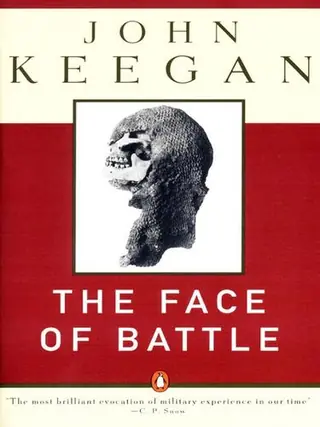
The Face of Battle
A Study of Agincourt, Waterloo, and the Somme
by John Keegan · first published 1976
4mentions
4recommended by
4HN commenters
2016–2024first – last mentioned
100% recommend
The Face of Battle is military history from the battlefield: a look at the direct experience of individuals at 'the point of maximum danger'. It examines the physical conditions of fighting, the particular emotions and behaviour generated by battle, as well as the motives that impel soldiers to stand and fight rather than run away. And in his scrupulous reassessment of three battles, John Keegan vividly conveys their reality for the participants, whether facing the arrow cloud of Agincourt, the levelled muskets of Waterloo or the steel rain of the Somme.
Affiliate links. As an Amazon Associate I earn from qualifying purchases.
I'd also recommend The Face of Battle by John Keegan. It covers Agincourt, Waterloo and the Somme: "The Face of Battle is military history from the battlefield: a look at the direct experience of individuals at 'the point of maximum danger'.…
on “Anatomy of a World War I Artillery Barrage” ↗A book [1] that's nearly 30 years old now by one of the best military historians of his age, John Keegan: The Face of Battle. It looks at what it was actually like to be there, in the midst of it, at three famous battles. I need to read it again. [1] https://www.amazon.com/Face-Battle-Study-Agincourt-Waterloo/...?
on “Pre-Modern Battlefields (2015)” ↗…only an amazing history but it's also a remarkable bit of writing in its own right. It's one of those exceptional books on war and the history of warfare and up there with the likes of John Keegan's The Face of Battle and others that comprise the main text corpus about warfare. It's an essential read for anyone who's interested in the subject. It's author, Paul Fussell, an educator in English, was a WWII veteran and…
on “My War (1982)” ↗Fallows references John Keegan's astounding book "The Face of Battle" which discusses Agincourt, Waterloo and the Somme from the perspective of the combatants themselves, which was at the time, and to some degree still is, novel. The nature of combat and its tide is quite…
on “M-16: A Bureaucratic Horror Story (1981)” ↗