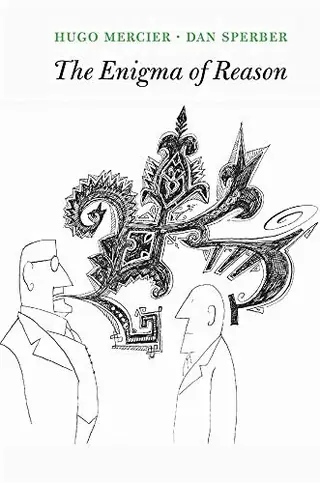
The enigma of reason
by Hugo Mercier, Dan Sperber, Liam Gerrard · first published 2017
62% recommend38% neutral
Why HN recommends it
Argues that human reason evolved to produce and evaluate arguments in social settings, not to reach truth alone; useful for readers interested in cognitive science, bias, and how group discussion improves thinking.
Summarised by Claude from recommending comments
Reason, we are told, is what makes us human, the source of our knowledge and wisdom. If reason is so useful, why didn't it also evolve in other animals? If reason is that reliable, why do we produce so much thoroughly reasoned nonsense? In their groundbreaking account of the evolution and workings of reason, Hugo Mercier and Dan Sperber set out to solve this double enigma. Reason, they argue with a compelling mix of real-life and experimental evidence, is not geared to solitary use, to arriving at better beliefs and decisions on our own. What reason does, rather, is help us justify our beliefs
Affiliate links. As an Amazon Associate I earn from qualifying purchases.
Mentions per year
What Hacker News says
Related books
 2017–2026
The elephant in the brain
Kevin Simler, Robin Hanson
Recommended by 35 · mentioned by 5435 recommend · 54 mention35 recommend · 5435 recommend
 2012–2026
The Righteous Mind
Jonathan Haidt
Recommended by 94 · mentioned by 14494 recommend · 144 mention94 recommend · 14494 recommend
 2015–2026
Sapiens
Yuval Noah Harari
Recommended by 201 · mentioned by 376201 recommend · 376 mention201 recommend · 376201 recommend
 2007–2026
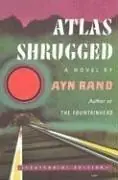
Atlas Shrugged
Ayn Rand, Sophie Bastide-Foltz, Adrian Rand
Recommended by 207 · mentioned by 758207 recommend · 758 mention207 recommend · 758207 recommend
 2011–2026
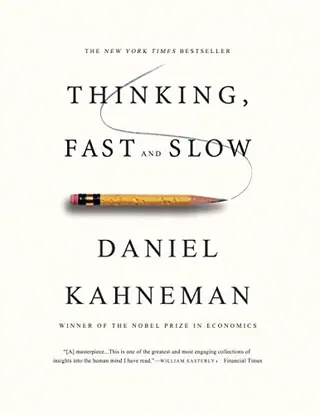
Thinking, fast and slow
Daniel Kahneman
Recommended by 373 · mentioned by 879373 recommend · 879 mention373 recommend · 879373 recommend
…Factfulness by Hans Rosling - The War on Science by Shawn Otto - Basic Economics by Thomas Sowell - A Short History of Nearly Everything by Bill Bryson - The Storm Before the Storm by Mike Duncan - The Enigma of Reason by Hugo Mercier Fiction: - And Then There Were None by Agatha Christie - The Mistborn Trilogy by Brandon Sanderson - The Magicians by Lev Grossman The non-fiction books were all incredible and highly…
on “Ask HN: Books you read in 2018?” ↗> The Enigma of Reason (Hugo Mercier and Dan Sperber, 2017): their argumentative theory holds that reasoning evolved for social rather than individual epistemic purposes, to produce and evaluate arguments in group contexts.…
on “Why thinking out loud with someone beats thinking alone” ↗…very well argued, although the basic premise was quite unintuitive - to me at least - it only started to "click" towards the end of the book) on how (evolved, human) reason might work is the book The Enigma of Reason by Hugo Mercier and Dan Sperber. It was suggested to me by an American forensics professor and was probably one of the most important books I read in 2019. I don't want to hype it too much, but I sort…
on “A Meta-Scientific Perspective on Thinking: Fast and Slow (2020)” ↗…Life would be my go-to. It's all about how people's motives are a lot more self-serving than you might think, including your own. If you liked that, and then really want to go off the deep end, try The Enigma of Reason.
on “What's the most radical book you've read?” ↗I wonder if the reference you are reaching for, if it's not the Jonathan Haidt book suggested by a sibling comment, is The Enigma of Reason by the cognitive psychologists Hugo Mercier and Dan Sperber (2017). In that book (quoting here from the abstract), Mercier and Sperber argue that reason 'is not geared to solitary use, to arriving at…
on “Show HN: Llama 3.2 Interpretability with Sparse Autoencoders” ↗The Elephant in the Brain The Enigma of Reason The Problem of Political Authority
on “Ask HN: What 3 Books Would You Recommend to Anyone?” ↗I think you'd appreciate some of the more philosophical thoughts behind folks like Robin Hanson or gwern, then. Or even father down that road, books like The Enigma of Reason. The idea that previous business success only weakly predicts future business success, and that that correlation probably becomes even weaker as one tries things increasingly far from the perimeter,…
on “Why I'm Done Making Desktop Applications” ↗…humans do have a powerful capacity to evaluate and challenge the explanations presented by others, and we are able to reject bad explanations. For those interested, a great book on this topic is "The Enigma of Reason" by Mercier and Sperber (https://www.hup.harvard.edu/catalog.php?isbn=9780674237827), but the gist here is that we must understand that while explanations are not the same as transparent interpretability,…
on “Why are we using black box models in AI when we don’t need to? (2019)” ↗…something fundamental about the brain. The other thing that annoys me is his pessimism and nihilism of seeing human beings as fatally irrational. One response that I found interesting was the book The Enigma of Reason by two evolutionary psychologists who argue that reason evolved in humans specifically because we are social animals, and the purpose of reason is to persuade others. It's why we are so much better at…
on “Daniel Kahneman on when to trust intuitive judgment” ↗Hey HN, Virang here, founder of Nimrobo AI. I've always been fascinated by the idea that argumentation, rather than solo reasoning, leads to better outcomes. Inspired by the book "The Enigma of Reason", I started an experiment to see if this holds true for AI. The result is Nimrobo AI: a platform where you can create AI agents with specific personas (e.g., a cynical historian, an optimistic futurist,…
on “Show HN: AI debates between AI agents with different personas” ↗…next year: The Language Instinct: How the Mind Creates Language Essays of Montaign Why Zebras Don't Get Ulcers Higher Speculations: Grand Theories and Failed Revolutions in Physics and Cosmology The Enigma of Reason Surfing Uncertainty: Prediction, Action, and the Embodied Mind Impro Deng Xiaoping and the Transformation of China Invisible Cities Collapse of Complex Societies -- Favorites from this year: Death's…
on “Ask HN: Books you plan to read in 2020?” ↗Hugo Mercier was recently on Sean Carroll's podcast talking about the concepts from his new book The Enigma of Reason. The gist of it is that most of the function of what we call reasoning doesn't exist to implement logical reasoning, but rather evolved to provide the social utility of providing "reasons" to convince…
on ““Just a statistical text predictor”” ↗…environment. I think extreme success in the modern world creates a very unhealthy environment for the state of your smartness. After all, if I am to believe what Mercier and Sperber are saying in "The Enigma of Reason", reasoning evolved not as a tool to find the truth and make good decisions but as a social tool - to convince others to cooperate with you, to justify your actions in front of the others, to secure your…
on “Twitter has officially changed its logo to ‘X’” ↗Sounds like they applied insights from Mercier and Sperber's "The Enigma of Reason", namely that perceiving truth is hard, but sorting arguments by quality is much easier. Or -adversarial reason-giving as the engine of collective knowledge
on “Debate May Help AI Models Converge on Truth” ↗…through logic, they use logic to try and come up with a reason for what they believe. When you really stop to think about that, it changes everything and explains a lot. (This is outlined in the book The Enigma of Reason: A New Theory of Human Understanding)
on “Why I Stopped Arguing with People” ↗