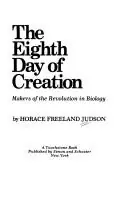
The eighth day of creation
by Horace Freeland Judson · first published 1969
100% recommend
Why HN recommends it
A detailed, well-researched history of the molecular biology revolution, built on extensive interviews with key scientists. Recommended for readers who want to understand how researchers thought and worked.
Summarised by Claude from recommending comments
In this classic book, the distinguished science writer Horace Freeland Judson tells the story of the birth and early development of molecular biology in the US, the UK, and France. The fascinating story of the golden period from the revelation of the double helix of DNA to the cracking of the genetic code and first glimpses of gene regulation is told largely in the words of the main players, all of whom Judson interviewed extensively. The result is a book widely regarded as the best history of recent biological science yet published.
Affiliate links. As an Amazon Associate I earn from qualifying purchases.
Mentions per year
What Hacker News says
Related books
 2019–2025
The dark lady
Mike Resnick
Recommended by 2 · mentioned by 32 recommend · 3 mention2 recommend · 32 recommend
 2009–2026
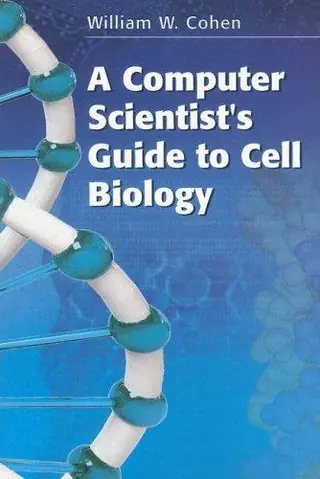
A Computer Scientist's Guide to Cell Biology
William W. Cohen
Recommended by 5 · mentioned by 55 recommend · 5 mention5 recommend · 55 recommend
 2009–2026
The double helix
James D. Watson, Grover Gardner narrator, Alexander Gann, Jan Witkowski
Recommended by 17 · mentioned by 5217 recommend · 52 mention17 recommend · 5217 recommend
Molecular biology of the gene
James D. Watson, Nancy H. Hopkins, Jeffrey W. Roberts, Joan Argetsinger Steitz
Recommended by 4 · mentioned by 64 recommend · 6 mention4 recommend · 64 recommend
 2020–2024
How Innovation Works
Matt Ridley
Recommended by 11 · mentioned by 1411 recommend · 14 mention11 recommend · 1411 recommend
 2008–2026
Molecular Biology of the Cell
Bruce Alberts, Alexander Johnson, Julian Lewis, David O Morgan
Recommended by 49 · mentioned by 7749 recommend · 77 mention49 recommend · 7749 recommend
 2021–2026
Immune
Philipp Dettmer
Recommended by 19 · mentioned by 2219 recommend · 22 mention19 recommend · 2219 recommend
 2008–2026
The making of the atomic bomb
Richard Rhodes
Recommended by 117 · mentioned by 161117 recommend · 161 mention117 recommend · 161117 recommend
"The Eighth Day of Creation: Makers of the Revolution in Biology" by Horace Freeland Judson; a masterpiece originally published in 1979 and based on ~10 years of research, interviews w/ more than 100 scientists &c. http://www.nytimes.com/2011/05/11/science/11judson.html?_r=0
on “Ask HN: What is HN reading?” ↗Molecular Biology of the Cell, Molecular Biology of the Gene, Cancer (all textbooks) The Eighth Day of Creation
on “Ask HN: Best biology books?” ↗Agreed and second Judson's "The Eighth Day of Creation" [1]. One of the best books that covers the history of the molecular biology revolution, told by a master historian who interviewed the major players extensively. It's a thrilling read. [1] https://www.amazon.com/Eighth-Day-Creation-Revolution-Commem...
on “DNA: ‘The Power of the Beautiful Experiment’” ↗…books: Watson's book on the discovery of the structure of DNA (with a heavy prior: he's a colossal asshole who wrote the book to give him the best light), Maddox's biography (The Dark Lady of DNA), and The Eighth Day of Creation by Horace Judson. The third book is the most important because Franklin gave her scientific notes to her friend Aaron Klug and Judson did some very careful sleuthing to extract what Franklin did and…
on “A Rover Named After DNA Pioneer Rosalind Franklin Is Headed for Mars in 2020” ↗…Douglas R. Hofstadter, Gödel, Escher, Bach: An Eternal Golden Braid • David Goodsell, The Machinery of Life • William W. Cohen, A Computer Scientist’s Guide to Cell Biology • Horace Freeland Judson, The Eighth Day of Creation: Makers of the Revolution in Biology • Lewis Thomas, The Medusa and the Snail: More Notes of a Biology Watcher
on “I should have loved biology” ↗…very strongly that she was cheated, and while I do believe she was definitely slighted and not given enough credit, the underlying story is fairly complicated. I recommend reading both Dark Lady and Eighth Day of Creation and then forming your own opinion. personally I thought her personal diaries, which she willed to Aaron Klug and were used in the writing of Eighth Day, were really illuminating.
on “We're Incentivizing Bad Science” ↗…acknowledgements). She got more credit than people today believe (mainly because of the misleading book "Dark Lady" and the terrible book "The Double Helix"). The best original source I've found on this is The Eighth Day of Creation, which is based on primary sources (Franklin's notebooks which she willed to Aaron Klug, along wiht interviews with most of the people involved). After reading that I concluded that the work Franklin…
on “Scientists who never won a Nobel Prize” ↗I will second “The Eighth Day of Creation” (which despite its cool title, has nothing to do with religion). I can’t agree with your conclusion, though. It’s very clear she should have been awarded the prize, not Wilkins (who I think should not…
on “Scientists who never won a Nobel Prize” ↗Well, if you want to get a clue about how molecular biologists think you could do a lot worse then read "The eighth day of creation." It's a general history of molecular biology. If you find any of it confusing then a good introductory text book may help; Molecular Biology of the Cell or Stryer would get you started (and will be…
on “Ask HN: Best resources to learn about protein folding and algorithms for it?” ↗It used to be The Growth of Biological Thought (great writeup of Meischer's discovery of DNA), but now it's The Eighth Day of Creation (for the methodologically sourced material of molecular biology).
on “Ask HN: What's your favorite history of science book?” ↗I can recommend "The Eighth Day of Creation" as a very well-researched history of the early days of molecular and structural biology. The value comes from the deep relationship between the savvy journalist-author and the scientists who did the…
on “Greatest Science Books of All Time (2006)” ↗…http://actachemscand.org/pdf/acta_vol_06_p0634-0640.pdf which W&C specifically mention in their paper. I personally agree about Franklin and the Nobel- I think most people just read Dark Lady and believe its conclusion. I always recommend that people read Eighth Day of Creation, which presents a very compelling alternate view based on primary data.
on “Friedrich Miescher discovered DNA in 1869, a century before Watson and Crick” ↗"The Eighth Day of Creation" is a second-hand account of the discovery of DNA and the molecular biotechnology revolution that followed. It's like watching da Vinci paint the Mona Lisa.
on “Ask HN: Any recommendation for a good History of Science book?” ↗Perhaps this is obvious, but if you liked this article, check out the works referenced in it! The Eighth Day of Creation, The Machinery of Life, A Computer Scientist’s Guide to Cell Biology, and GEB are all outsanding.
on “I should have loved biology (2020)” ↗In line with some other comments: The list is finite, and curated, so I will add some not included: GEB (As FuriouslyAdrift said), and The Eighth Day of Creation. The latter is a collection of first-hand interviews with the biologists who shaped the rapid expansion of the field in the 20th century.
on “100 Or so Books that shaped a Century of Science (1999)” ↗