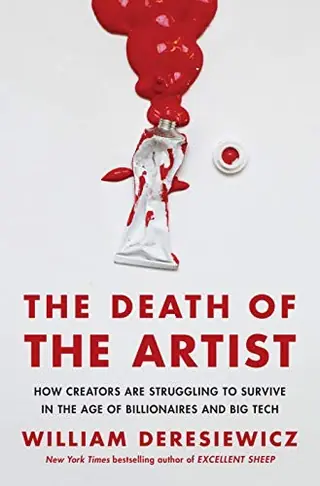
The Death of the Artist
by William Deresiewicz · first published 2020
3mentions
2recommended by
3HN commenters
2020–2025first – last mentioned
67% recommend33% neutral
"Over the last twenty years, art has become more accessible than ever before. A painter can post their latest creation on Instagram and wait as the likes pile up; a budding filmmaker can shoot a clip on their iPhone, then upload it to YouTube for thousands to view. The digital landscape has fundamentally altered what it means to be creative, as well as how consumers interact with artistic production both economically and curatorially. William Deresiewicz, a leading critic of contemporary culture in America, argues that we are in the midst of an epochal transformation within art. Whereas the ni
Affiliate links. As an Amazon Associate I earn from qualifying purchases.
…music and videos so accessible to people who didn’t go to school for any of that, let alone owned complex equipment or expensive licenses to Adobe Thisandthat. It’s worth reading William Deresiewicz‘ The Death of the Artist. I’m not entirely convinced that marketing that everyone can create art/games/whatever is actually a net positive result for those disciplines.
on “Will AI be the basis of many future industrial fortunes, or a net loser?” ↗…think it's fascinating to read about how this model has worked and has not worked for artists, starting with musicians and now extending across many different artist mediums. William Deresciewicz's "Death of the Artist" book interviews 100+ "successful" artists on their experiences selling through digital platforms. It's particularly interesting to read about how the digital sales channels affect the type of art and…
on “Why a Paid Newsletter Won’t Be Enough Money for Most Writers” ↗I recently read Cory Doctorow's "Chokepoint Capitalism" and William Deresiewicz's "The Death of the Artist" which both decry the sentiment that somehow Big Tech has been a boon for artists. The reality is that anti-competitive practices in these companies has made them more of an extractive monopoly rather…
on “Who Pays for the Arts?” ↗