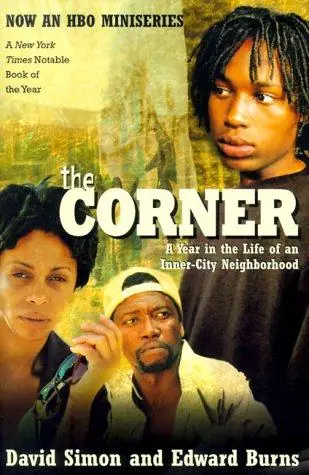
The corner
a year in the life of an inner-city neighbourhood
by David Simon, Edward Burns, Ed Burns · first published 1997
91% recommend9% neutral
Why HN recommends it
A nonfiction account of a year spent with drug dealers, users and residents on one Baltimore corner. It offers a vivid, sad and humane portrait of inner-city life and the effects of the drug trade.
Summarised by Claude from recommending comments
The notorious corner of West Fayette and Monroe Streets in Baltimore is a 24-hour open-air drug market that provides the economic fuel for a dying neighbourhood. Through the eyes of one broken family – two drug-addicted adults and their smart, vulnerable 15-year-old son, DeAndre McCollough – Simon and Burns examine the sinister realities of inner cities across the USA and unflinchingly assess why law enforcement policies, moral crusades and the welfare system have accomplished so little.
Affiliate links. As an Amazon Associate I earn from qualifying purchases.
…it has had 150 years of racial warfare - whites hating on blacks, blacks hating on whites. All of it has been entirely destructive, and it really needs to stop. Try watching a couple episodes of The Corner ( http://www.amazon.com/Corner-Year-Life-Inner-City-Neighborho... ). It's based on a the account of a journalist who spent a year following a family in Baltimore. It also matches my personal experiences…
on “Why Vote? Freakonomics' take on voting” ↗If you want the real setting for "The Wire", read " The Corner: A Year in the Life of an Inner-City Neighborhood" by David Simon and Ed Burns. The depiction of one of today's most derelict inner-city neighborhoods is heartbreaking and disconcerting.
on “The NYPD Tapes” ↗If you want a more visceral account, "The Corner" by David Simon is a non-fiction chronicle of the Baltimore drug culture's effect on the people who live in it. Simon spent about year (~1993) following and interviewing the people who lived on a specific…
on “How My School and District Failed its Students” ↗Unfortunately, places like these still exist. Read 'The Corner' by David Simon (creator of The Wire and Treme) if you're interested in a more modern take on the ghetto. Take home message: the war on drugs in its current form is not working and the side effects are…
on “Brutal New York - 1965/95 ” ↗For nonfiction I think about Homicide: A Year on the Killing Streets and The Corner: A Year in the Life of an Inner-City Neighborhood by David Simon (and Ed Burns for The Corner) a lot. They are very funny and very sad and really changed how I see the world. So I cheated, two books.
on “Ask HN: What's the "best" book you've ever read?” ↗…book about the practice of journalism I've ever read. After a year following the detectives, you'd think Simon would be pretty much in cahoots with the police...but he followed up "Homicide" with "The Corner", in which he spent a year embedded with drug dealers and their customers...apparently most of the friendsships he made in the Baltimore Police department evaporated after he published a book bringing…
on “Using Metadata to Find Paul Revere” ↗If you've enjoyed The Wire, do read David Simon's books, it's outstanding work: - Homicide: A Year on the Killing Streets - The Corner: A Year in the Life of an Inner-City Neighborhood
on “The Wire in HD (2014)” ↗…eventually consider them "one of us", and will resume (mostly) normal behavior. They're not technically academic works, but I consider David Simon's books "Homicide: A Year on the Killing Streets" and "The Corner: A Year in the Life of an Inner-City Neighborhood" (co-written with Edward Burns) to be in the category of such studies. The first book was the inspiration of the television series of the same name, and…
on “In Defense of Ethnography” ↗…the reality of the drug trade, especially the drug trade in Baltimore (if anything, it has vague similarities to the 80s-early 90s drug trade in Chicago.) Yes, I know he worked at the Baltimore Sun. The Corner was exactly authentic Baltimore. Even Simon would tell you that The Wire isn't. The drug trade was a setting for making statements and playing out thought experiments about morality, power, and institutions…
on “Be critical or be corrupted” ↗Or read the nonfiction book "The Corner." David Simon, one of the authors, went on to create The Wire.
on “Being Poor by John Scalzi” ↗…give more insight and provoke some thought (if you haven't done so already): Homicide (a year on the killing streets), David Simon http://en.wikipedia.org/wiki/Homicide:_A_Year_on_the_Killing... The Corner: A Year in the Life of an Inner-City Neighborhood, David Simon and Ed Burns http://en.wikipedia.org/wiki/The_Corner:_A_Year_in_the_Life_...
on “What Do Real Thugs Think of The Wire?” ↗…problems (which are present, usually to a lesser extent, in many other cities) from David Simon: - Homicide: A Year on the Killing Streets (book) - Homicide: Life on the Streets (TV series) - The Corner: A Year in the Life of an Inner-City Neighborhood (book) - The Corner (TV miniseries) - The Wire (TV series)
on “Landlords are trying not to rent to startups in San Francisco” ↗David Simon's books "Homicide: A Year on the Killing Streets" and "The Corner: A Year in the Life of an Inner-City Neighborhood" (co-written with former homicide detective Ed Burns) are the kind of stories that change your thinking forever.
on “But I'm Not a Lawyer, I'm an Agent” ↗…seem to only show that you are unlikely to end up in prison with a drug offense as your most serious crime. This jives with David Simon's description of the prevailing attitude of enforcement in The Corner. The justice system is too overwhelmed to press charges for mere drug offenses, so you are less likely to end up with a conviction without a more serious crime attached.
on “The War on Drugs and Prison Growth: Limited importance and legislative options [pdf]” ↗