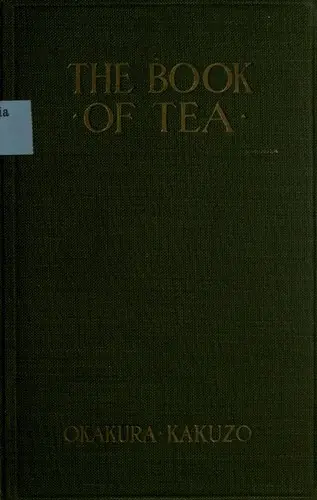
The Book of Tea
by Okakura Kakuzō · first published 1900
75% recommend25% neutral
Why HN recommends it
Essays on tea history and the Japanese tea ceremony that serve as an accessible introduction to Eastern culture for Western readers, with aesthetic observations such as the Japanese preference for asymmetry.
Summarised by Claude from recommending comments
Tea began as a medicine and grew into a beverage. In China, in the eighth century, it entered the realm of poetry as one of the polite amusements. The fifteenth century saw Japan ennoble it into a religion of aestheticism - Teaism. Teaism is a cult founded on the adoration of the beautiful among the sordid facts of everyday existence. It inculcates purity and harmony, the mystery of mutual charity, the romanticism of the social order.
Affiliate links. As an Amazon Associate I earn from qualifying purchases.
…for some sort of DIY health thing. People do silly things like over-doing something if they think it's good for you. Well, that then makes it bad for you. There's a great book on all this called The Book of Tea by Okakura Kakuzo : http://en.wikipedia.org/wiki/The_Book_of_Tea A very good read on the subject. I think Google Books probably has a free translation.
on “Too Much Tea Causes Unusual Bone Disease” ↗The Book of Tea by Kakuzo Okakura: http://www.sacred-texts.com/bud/tea.htm
on “Taming Perfectionism” ↗I would recommend The Book of Tea by Okakura Kakuzo. It's a great introduction to eastern culture for westerners taking tea as link and guide. Despite it was published in 1906 it's interestingly both actual and dated. http://en.wikipedia.org/wiki/The_Book_of_Tea
on “Hacker's Guide to Tea” ↗Children of Time by Adrian Tchaikovsky. Sci-fi action-adventure involving AI, terraforming, and a man-made race of intelligent spiders. The Book of Tea by Okakura Kakuzō. Philosophy, history, and aesthetics in a 1906 treatise on tea.
on “Ask HN: Best non-business books to read on vacation” ↗…tyranny. He argues the ideal political structure is the sovereign city state, especially with regard to democracy. It’s not the best writing, but it completely changed my perspective on government. The Book of Tea by Okakura Kakuzō (1906) Essays on tea, its history, and its relation to Japanese aesthetics. Also includes commentary on art, and the cultural relationship between East and West.
on “Ask HN: Favorite Nonfiction Books of 2020?” ↗The Book of Tea is a really awesome work on the Japanese Tea Ceremony and historical tea culture. Originally written in English, too. https://en.wikipedia.org/wiki/The_Book_of_Tea https://www.gutenberg.org/ebooks/769
on “ISO Standard for Preparing Tea” ↗The Book of Tea by Okakura Kakuzō (1906)
on “Ask HN: Good books written before ~1900?” ↗Japoneses aesthetics favor assimetry. There's a lovely book , Book of Tea, that have fun with west tastes https://www.gutenberg.org/files/769/769-h/769-h.htm
on “The buns in McDonald's Japan's burger photos are all slightly askew” ↗I have read briefly about the Kyoto school, but haven't delved deeply in to it yet. In Heidegger I hear echoes of Buddhism, the Tao Te Ching, and Hinduism. Recently I came across "The Book of Tea"[1], which Tomonobu Imamichi claimed Heidegger plagiarized. I've only just started reading it, and so far it seems nothing like Heidegger, but maybe it gets more interesting later. [1] - https://en.wikipedia.org/wiki/The_book_of_tea
on “Understanding Heidegger on technology (2014)” ↗Some of the things Kyle said and quoted seem relevant to an earlier HN discussion [1] titled I don't "get" art """ The Book of Tea[2]... requires a mutual understanding between the artist and the spectator: > The sympathetic communion of minds necessary for art appreciation must be based on mutual concession. The spectator must…
on “When Art, Apple and the Secret Service Collide: 'People Staring at Computers'” ↗