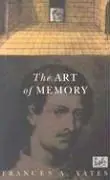
The art of memory
by Frances Amelia Yates · first published 1966
71% recommend29% neutral
Why HN recommends it
Scholarly history of the memory palace (method of loci) from Greece and Rome through the Renaissance, tying mnemonics to rhetoric, philosophy and Giordano Bruno. For readers curious how earlier cultures remembered.
Summarised by Claude from recommending comments
Affiliate links. As an Amazon Associate I earn from qualifying purchases.
Mentions per year
What Hacker News says
Related books
 2017–2024
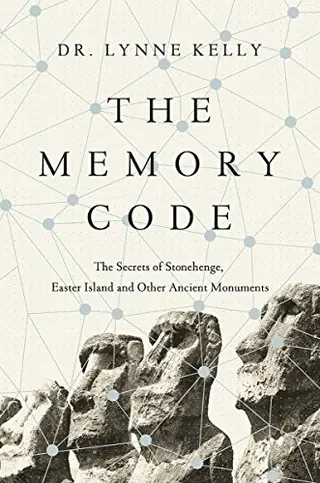
The Memory Code
Lynne Kelly
Recommended by 3 · mentioned by 53 recommend · 5 mention3 recommend · 53 recommend
 2011–2018
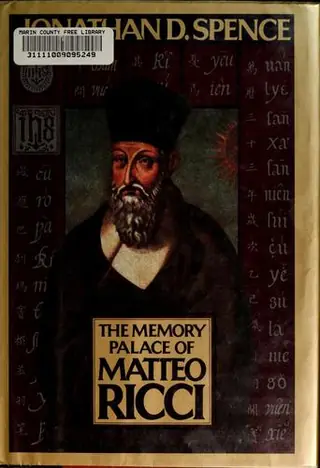
The memory palace of Matteo Ricci
Jonathan D. Spence
Recommended by 4 · mentioned by 44 recommend · 4 mention4 recommend · 44 recommend
 2020–2026
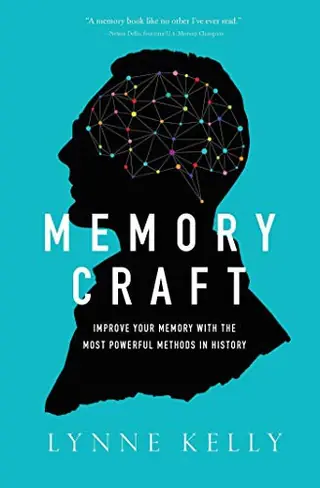
Memory Craft
Lynne Kelly
Recommended by 5 · mentioned by 85 recommend · 8 mention5 recommend · 85 recommend
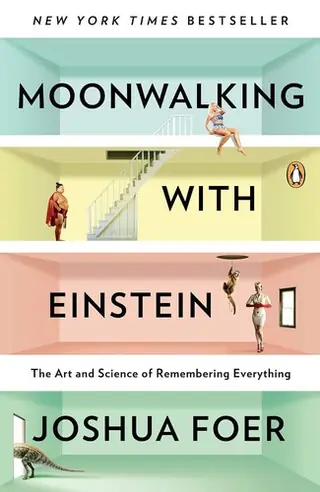 2011–2026
Moonwalking with Einstein
Joshua Foer, Mike Chamberlain (Narrator) Joshua Foer
Recommended by 98 · mentioned by 13798 recommend · 137 mention98 recommend · 13798 recommend
 2010–2026
The Shallows
Nicholas G. Carr
Recommended by 39 · mentioned by 6739 recommend · 67 mention39 recommend · 6739 recommend
 2009–2026
Romeo and Juliet
William Shakespeare
Recommended by 9 · mentioned by 1049 recommend · 104 mention9 recommend · 1049 recommend
 2007–2026
Siddhartha
Hermann Hesse
Recommended by 138 · mentioned by 186138 recommend · 186 mention138 recommend · 186138 recommend
 2008–2026
Tao Te Ching
Stephen Mitchell
Recommended by 103 · mentioned by 204103 recommend · 204 mention103 recommend · 204103 recommend
…how. But the Greeks and the Romans did it, and every culture before them. If they hadn't done it, you wouldn't have a laptop or a phone because you'd still be living on the savanna or in a cave. The Art of Memory by Frances Yates https://www.google.com.au/books/edition/The_Art_Of_Memory/bH...
on “Someone in the Kalahari Collected Crystals 105,000 Years Ago” ↗The standard work on the ars memoria is Frances Yates' The Art of Memory, which covers Renaissance practitioners (Lull, Bruno, Fludd, etc.) in some detail. These techniques date back to the classical art of rhetoric, which cultivated the capacity to memorize long speeches…
on “Learn to remember everything: The memory palace technique” ↗I read a fascinating book on the the Art of Memory by Francis Yates some years ago [1] in which she explores the topic with much depth, a pleasure to read. I have certainly been surprised we forgot about this - once I became aware of it, it made so much…
on “The Secrets of Sherlock’s Mind Palace” ↗…memorize large works like that after just one hearing. There are techniques that allow one to remember information like that, but it still requires effort. Here are two great books on that subject: - The Art of Memory by Frances Yates (covers Greece, Rome, and Europe) - The Memory Code by Lynne Kelly (goes back further into prehistory) And two quick articles about memory feats in ancient Greece[1] and Rome[2]. [1]…
on “The Presence of One’s Own Smartphone Reduces Available Cognitive Capacity” ↗…the same thing recently. If anyone's interested in learning more about how previous cultures remembered vast amounts of information I would recommend the book I'm currently reading: Frances Yates - The Art of Memory, and the one I'm planning to read next: Mary Carruthers - The Book of Memory. One of the most interesting aspects for me is how the concept of memory in the middle ages was much more closely associated…
on “Are we losing our ability to remember?” ↗So many articles and books cite Frances Yates' "The Art of Memory", but it seems almost nobody has actually read it judging by which parts are typically cited. After years of nagging curiosity (especially after reading "Moonwalking with Einstein") I eventually dove…
on “The Method of Loci” ↗This looks fantastic, I'd love to try this. Regarding your question about why this works : I urge you to read at least the first chapter of Frances Yates The Art of Memory https://en.wikipedia.org/wiki/The_Art_of_Memory - how people learned to retain vast stores of knowledge before the invention of the printed page.
on “Ask HN: Who wants to collaborate?” ↗The Art of Memory by Frances Yates. Classic study of how people learned to retain vast stores of knowledge before the printed page.
on “Ask HN: Books on meta-learning” ↗…Aleph) and his essays. Poems by William Blake especially the Marriage of Heaven and Hell. Anything by Mircea Eliade (especially the myth of the eternal return, Anything by Frances Yates (especially The Art of Memory (GET THIS BOOK)), the Nag Hammadi Scriptures, the Tao Te Ching, the writings of Chuang Tzu, Currently: Zen Mind, Beginner's mind. Much much more really.
on “Ask HN: What books have helped make who you are today?” ↗…on HN interested in autonomous, decentralized systems not acquainted with Giordano Bruno should become so: http://en.wikipedia.org/wiki/Giordano_Bruno http://warburg.sas.ac.uk/index.php?id=446 "The Art Of Memory" by Frances Yates outlines the pathway of mnemonic and knowledge systems from alchemy to the Rennaissance, and is a comprehensive introduction to the life and work of Giordano Bruno, Ramon Llull and many…
on “A global decentralized encrypted datastore with anonymous publishing” ↗Great book. "The Art of Memory" by Frances Yates is also a fascinating read. Chronicles the memory palace technique along its entire 2300 year history in popular culture.
on “Show HN: RebilderU – Learn with a near perfect memory” ↗It is likely that they are mnemonic devices that encode information. Read The Memory Code by Lynne Kelly for more information. It's one of the most interesting books I've read, right up there with The Art of Memory by Frances Yates. http://www.lynnekelly.com.au/the-memory-code/
on “Twisted textile cords may contain clues to Inca messages” ↗"The Art of Memory" by Frances Yates is an interesting and scholarly book on the ancient origins of this idea. It's not a light read but I find it fascinating how influential this idea has been over such long periods of…
on “Brain Maps Out Ideas and Memories Like Spaces” ↗…interactive. It's a skill, like walking. I've taught kids the art. It takes work and very specific techniques. I'd point anyone interested in the topic to folks like Henri Bergson, or Frances Yates's "Art of Memory".
on “Why can’t we remember being born or our first words?” ↗Great book, motivated me to then read The Art of Memory by Frances Yates. Although I'd say traditional mnemonic devices like memory palaces are basically linear information storage and recall devices. This can create issues in building a flexible web of information,…
on “Creativity fundamentally comes from memorization?” ↗