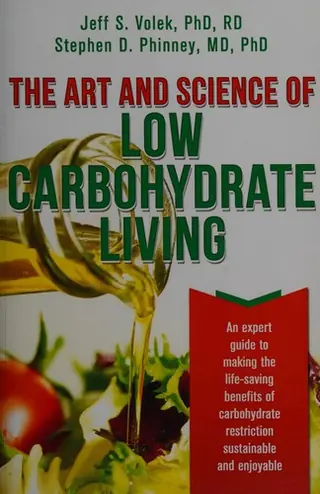
The art and science of low carbohydrate living
by Jeff Volek · first published 2011
88% recommend13% neutral
Why HN recommends it
A dense but approachable medical and scientific look at low-carb and ketogenic eating, reviewing many studies, especially experiments comparing low-carb with low-fat diets. Suits readers wanting technical grounding.
Summarised by Claude from recommending comments
Carbohydrate restriction is commonly practiced but seldom taught. Now, the authors provide a definitive resource for low carbohydrate living. They show how carb restriction can help you manage insulin resistance, metabolic syndrome and type-2 diabetes, as well as improving blood glucose and lipids while reducing inflammation, all without drugs.
Affiliate links. As an Amazon Associate I earn from qualifying purchases.
Mentions per year
What Hacker News says
Related books
 2014–2026
The big fat surprise
Nina Teicholz
Recommended by 19 · mentioned by 3119 recommend · 31 mention19 recommend · 3119 recommend
 2011–2026
Why we get fat
Gary Taubes
Recommended by 45 · mentioned by 6345 recommend · 63 mention45 recommend · 6345 recommend
 2008–2025
Good calories, bad calories
Gary Taubes
Recommended by 91 · mentioned by 13291 recommend · 132 mention91 recommend · 13291 recommend
Kind of crazy that you guys don't understand this yet. I may not know how to hack, but I know how the body operates. Most people would do well to read Volek & Phinney, both 'the art and science of low carbohydrate living' and 'the art and science of low carbohydrate performance'
on “Is Fat Killing Us, or Is Sugar?” ↗If you were to do so -- you'd need to re-examine the role that fat played in your diet. The technical layman's reference would probably be "Art and Science of Low Carbohydrate Living" by Phinney/Volek. (or possibly the Performance one for athletes)
on “Two Months of Soylent” ↗…complexity of metabolic pathways and exactly how, on a biochemical level, the process of lipogenesis is initiated. Even if you don't plan on doing the high fat, low carb thing, I highly recommend reading The Art and Science of Low Carbohydrate Living by Drs Phinney and Volek - you'll learn about how carbohydrates in any form are a major metabolic challenge for most people and how fatty acid metabolism works. If you want science, read that book.
on “Meta-study says too much carbohydrate, not fat, leads to obesity” ↗…In that time I've shed 20 pounds (and I was never fat) and my cholesterol numbers have improved significantly. My experience is by no means scientific evidence, but just thought I'd share. Reading "The Art and Science of Low Carbohydrate Living" by Drs Phinney and Volek was life-changing.
on “The case for eating steak and cream” ↗Quite a bit of research has been done, check out Phinney and Volek's "The Art and Science of Low Carbohydrate Living".
on “Ask HN: What are you doing to improve your health?” ↗Obviously listen to your dr over me, but it's a common 'mistake' with keto to not up your fat enough. More fatty meat might actually work out better for you than turkey. Take a look at The Art and Science of Low Carbohydrate Living for more info on the importance of keeping your fat to protein ratio high.
on “Fat-fueled brain: unnatural or advantageous?” ↗…motivation and understanding of the changes in your body to make it worth your time. If you want something light, read Keto Clarity. If you want a dense but approachable medical perspective, read The Art And Science of Low Carbohydrate Living. I've been in nutritional ketosis approaching a year, and I wouldn't recommend it to anyone who hasn't done their research on it.
on “Diet that mimics fasting appears to slow aging” ↗…any good or not, so it's a red herring here. A really great book that points out many studies related to low-carbohydrate diets (especially experimental studies comparing against low-fat diets) is "The Art and Science of Low Carbohydrate Living". Written by two scientists who've spent their careers studying this, they point out that almost all studies which show poor results and undesirable side effects from a low-carb diet only last a few weeks…
on “Obesity is rising in Silicon Valley” ↗…"Why we get fat and what to do about it" by Gary Taubes. Not only it changed my life (overweight to my healthiest ever), it also led me to challenge everything about our dietary dogmas. I further read "Art and Science of Low Carbohydrate Living", watched a lot of lectures and saw studies which question our current notions. Overall I am more skeptical of studies which have links to those benefiting from it commercially.
on “Ask HN: What books changed the way you think about almost everything?” ↗“The Art and Science of Low Carbohydrate Living” has a pretty serious chunk of science. (To the point at least where I felt out of my depth) Did you catch Leo Laporte / Steve Gibson (ala Security Now) covering LCHF diets a few weeks ago?
on “Salt, We Misjudged You” ↗