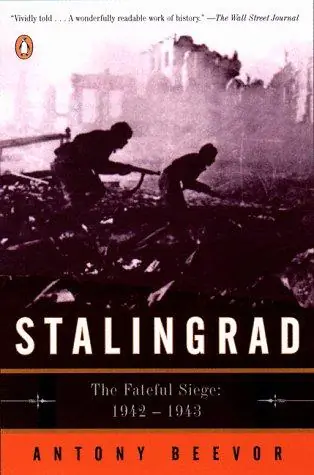
Stalingrad
by Antony Beevor · first published 1998
71% recommend21% neutral7% critical
Why HN recommends it
Gripping, vivid narrative history of the Stalingrad campaign, valued for its emotional weight and for making the scale of the battle and its human cost clear to general readers.
Summarised by Claude from recommending comments
This gripping history is the definitive account of the battle that shifted the tide of World War II, conveying the experience of soldiers on both sides as they fought in inhuman conditions, and of civilians trapped on an urban battlefield.
Affiliate links. As an Amazon Associate I earn from qualifying purchases.
Mentions per year
What Hacker News says
Related books
 2019–2024
How to Do Nothing
Jenny Odell
Recommended by 17 · mentioned by 2217 recommend · 22 mention17 recommend · 2217 recommend
 2017–2026
The Silk Roads
Peter Frankopan
Recommended by 22 · mentioned by 3422 recommend · 34 mention22 recommend · 3422 recommend
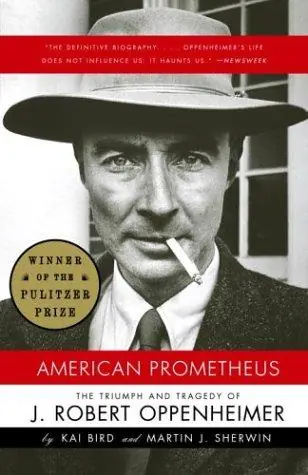 2008–2026
American Prometheus
Kai Bird, Martin J. Sherwin
Recommended by 24 · mentioned by 4524 recommend · 45 mention24 recommend · 4524 recommend
 2007–2026
Titan
Ron Chernow
Recommended by 19 · mentioned by 2619 recommend · 26 mention19 recommend · 2619 recommend
 2010–2026
The Windup Girl
Paolo Bacigalupi
Recommended by 43 · mentioned by 6843 recommend · 68 mention43 recommend · 6843 recommend
 2008–2026
The Prize
Daniel Yergin
Recommended by 36 · mentioned by 4236 recommend · 42 mention36 recommend · 4236 recommend
 2009–2026
Impro
Keith Johnstone
Recommended by 58 · mentioned by 7258 recommend · 72 mention58 recommend · 7258 recommend
 2008–2026
Heart of Darkness
Joseph Conrad
Recommended by 41 · mentioned by 10341 recommend · 103 mention41 recommend · 10341 recommend
Yes, I spend at least the last hour before bed reading. I alternate every other book fiction and non-fiction. I actually just finished the latest Stormlight book and loved it. Currently re-reading Stalingrad by Anthony Beevor.
on “Ask HN: Do you read books regularly? Fiction or nonfiction?” ↗…subject your interested in without distractions, while online content is optimized for short attention span and serving ads. For example, you can spend an hour watching a documentary on the battle of Stalingrad. Or, you can spend an hour reading Beevor's "Stalingrad" and learn 50 times as much, and you'll gain a far greater understanding of it. If you want to learn even more, you can dive into Glantz's trilogy…
on “Ask HN: Are books worth it?” ↗Agreed, great book. If you haven't read Anthony Beevor's Stalingrad as a 'non-fiction' take I can also highly recommend. I presume he must have been heavily influenced by Grossman.
on “Reading Grossman's “Stalingrad” and ”Life and Fate”” ↗+1 for Stalingrad by Beevor A soul shaking book. It changed my outlook on bureaucracy/society/humanity.
on “Reading Grossman's “Stalingrad” and ”Life and Fate”” ↗Stephen Bungay, Most Dangerous Enemy: excellent revisionist account of the Battle of Britain. Anthony Beevor, Stalingrad Anthony Beevor, Downfall: Berlin 1945 TN DuPuy, A Genius for War: explains how and why the German army was better Von Manstein, Lost Victories: inside account by the author of the sickleschnitt, the…
on “Military Reading List” ↗…NYRB. A minor classic. I'm not a war buff by any stretch, but I can recommend Antony Beevor. Sometimes his books devolve into exhausting, never-ending play-by-plays of tank and troop movements, but both Stalingrad and The Fall of Berlin [3] and were fascinating just for his ability to conjure up the time and place. Inside the Third Reich was similarly interesting, even it's known to be a flawed narrative. I also…
on “The dubious distinction, and literary legacy, of Leo Szilard” ↗Any Anthony Beevor books really - Stalingrad, Berlin, D-Day. Max Hastings can be good too - but harder to read On a history topic im liking Dan Snows podcast, and Al Murrays We have ways of making you talk podcast
on “Ask HN: What are your favourite history books?” ↗…draft animals is preventing them getting eaten in the collapse. We'd probably also run out of trees in a few years. (Collapsists should make more study of WW2, such as Beevor's magnificent, horrifying Stalingrad. Or the siege of Leningrad. Surrounded Soviet civilians died by the millions. And that wasn't a collapse in the collapsist sense, the social, legal and technological order remained somewhat intact)
on “Collapse OS – bootstrap post-collapse technology” ↗Two good books to read on this topic are: - Stalingrad - Berlin: The Downfall 1945 Both by Antony Beevor. After reading these books, it really convinced me how much undue credit the US gets for "winning" WW2 (in Europe) when its pretty clear the Soviets…
on “Why do people think that the US won WW2 in Europe?” ↗"Russia: Revolution and Civil War". Antony Beevor is an historian with a knack for good anecdotes. It can be a little hard to follow, but it's worth a read. His books about the battle of Stalingrad and Berlin are much better though. I'm currently reading "Lamb: The Gospel According to Biff". If you need a book to unwind from a brick about the civil war, this is it. It's hilarious. "Salt Fat Acid…
on “Ask HN: Any interesting books you have read lately?” ↗…extensively actually read. Because people scan a page rather than read every word in the order the author thought best does not devalue what is going on. Say you were interested in WW2 history you could read Stalingrad by Antony Beevor to then become an expert on that aspect of the war. Or you could research the topic online going across many online sources to answer your own questions. This latter approach where no…
on “How People Read Online: New and Old Findings” ↗I got a little carried away with the list; I realised I had two American entries on it and wanted it to be a little more global. While I've read Antony Beevor's Stalingrad I'm not familiar with how the war as a whole is remembered in Russia.
on “My grandfather at Dunkirk” ↗What I don't like so much about Beevor's Stalingrad is the narrative he weaves. He gets into the minds of his subjects and "tells" the reader what they were thinking, which is effectively impossible. This is a narrative flourish meant to grab the reader's…
on “Reading Grossman's “Stalingrad” and ”Life and Fate”” ↗Antony Beevor mentions this story his book about Stalingrad. It's in reference to Hitler's stategy on the Eastern front.
on “How Much Land Does a Man Need? (1886)” ↗…often misleadingly disguised as impartial information, enough that I'm sure lots of his readers actually think everything he describes happened exactly like he said, inner thoughts included. Now, if "Stalingrad" was a historical novel like "I, Claudius", where you understand the author is making many things up for the sake of entertainment, that'd be fine -- but I don't think that's what Beevor intends.
on “Reading Grossman's “Stalingrad” and ”Life and Fate”” ↗