Scapegoat
by René Girard · first published 2003
44% recommend44% neutral11% critical
Affiliate links. As an Amazon Associate I earn from qualifying purchases.
Mentions per year
What Hacker News says
Related books
 2007–2026
Blood Meridian
Cormac McCarthy
Recommended by 105 · mentioned by 192105 recommend · 192 mention105 recommend · 192105 recommend
 2008–2026
Meditations by Marcus Aurelius
Marcus Aurelius, Meric Casaubon
Recommended by 184 · mentioned by 251184 recommend · 251 mention184 recommend · 251184 recommend
 2015–2026
Sapiens
Yuval Noah Harari
Recommended by 201 · mentioned by 376201 recommend · 376 mention201 recommend · 376201 recommend
 2014–2026
Three-Body Problem
Cixin Liu, Ken Liu
Recommended by 233 · mentioned by 513233 recommend · 513 mention233 recommend · 513233 recommend
 2007–2026
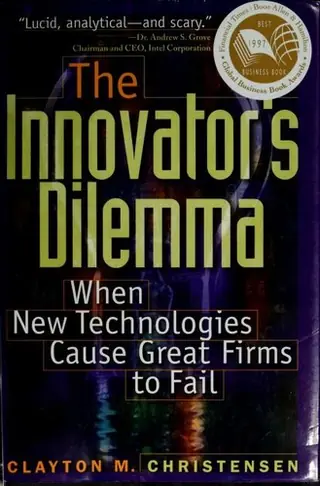
The Innovator's Dilemma
Clayton M. Christensen, L J Ganser, Don Leslie
Recommended by 148 · mentioned by 340148 recommend · 340 mention148 recommend · 340148 recommend
 2007–2026
Atlas Shrugged
Ayn Rand, Sophie Bastide-Foltz, Adrian Rand
Recommended by 207 · mentioned by 758207 recommend · 758 mention207 recommend · 758207 recommend
 2007–2026
How to Win Friends and Influence People
Dale Carnegie
Recommended by 579 · mentioned by 853579 recommend · 853 mention579 recommend · 853579 recommend
…Silicon Valley and Speaking Out Against Injustice - Susan Fowler Uncanny Valley - Anna Wiener What Tech Calls Thinking: An Inquiry Into the Intellectual Bedrock of Silicon Valley - Adrian Daub The Scapegoat - René Girard
on “Ask HN: Books on the inside stories of big tech?” ↗“The Scapegoat” by Rene Girard, which suggests that we are deeply vulnerable to imitating others; and that when we imitate, this tends to lead to deep conflict, for we often imitate desire for scarce objects (e.g. a…
on “Ask HN: What is one book you would recommend everyone to read?” ↗…definitely on that list are Weaponised Sacredness by Sarah Perry, specifically the section on egregores (https://www.ribbonfarm.com/2015/05/07/weaponized-sacredness/ ctrl-f “The Egregore”), Rene Girard’s Scapegoat, and as antagonistic reading (threatening ideas you must engage with) Spandrell’s IQ Shredder, and Nick Land’s Hell-Baked. In general the list is about coming to understand little-recognized forces that…
on “Meditations on Moloch” ↗The Scapegoat, René Girard.
on “Ask HN: What was the best book you read in 2016?” ↗…that coin is shaming a violator of norms (whether guilty or innocent) is also a group bonding experience, and potentially a selfish means for signaling one's moral high ground to the tribe. Rene Girard's Scapegoat Theory presents an interesting model of the phenomenon: https://www.iep.utm.edu/girard/#H3
on “Editing in an age of outrage” ↗Someone here gave a link to a masterful takedown of Girard's claims in The Scapegoat. Basically, in order to make his claims, he's just making stuff up - about Christianity, and about Oedipus, and about almost everything else he cites as historical evidence for his position. If you…
on “The Last of the Hedgehogs: René Girard” ↗Start with some online summaries. Girard's theories span multiple essays and books. Instead of jumping straight into one of his books, it will help to get some overall context. I personally read "The Scapegoat" but Girard is doing literary critique which, like philosophy, can be dense and difficult to read if one isn't used to such texts. Personally, I would like to read "Deceit, Desire and the Novel: Self…
on “I read a book that blew my mind a little” ↗…Good imitators copy a transcendent goal or figure, and linear time helps forming the image of the transcendent goal. Linear time drives progress and long-term thinking. Rene Girard also believes the Scapegoat Mechanism is the center of human civilization. Due to the destructiveness of Mimetic Competition, all tribes would be plagued by serious conflicts and violence, eventually, the communitiy will find someone/something…
on “Peter Thiel's Religion” ↗…culture! innovation!—are weak. Study after study showed remote work didn’t hurt performance. So why the crackdown? The Girardian Unmasking French philosopher René Girard’s theories on mimetic desire and scapegoating explain this better than any MBA analysis. Here’s how: 1. Mimetic Desire: The Office as a Shared Delusion Girard argued that humans don’t desire things directly—we desire through others. For decades,…
on “How Remote Work Died: A Girardian Tragedy in Corporate America” ↗