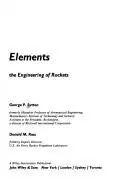
Rocket propulsion elements
by George Paul Sutton · first published 1949
12mentions
3recommended by
7HN commenters
2012–2025first – last mentioned
43% recommend57% neutral
Affiliate links. As an Amazon Associate I earn from qualifying purchases.
…SpaceX enthusiast. In addition to having a physics degree, years ago I was part of a very early-stage startup (never got off the ground) at one point looking at launch vehicles, and so I read Sutton's Rocket Propulsion Elements (a very nice introductory text, I highly recommend) among others and did a bunch of scaling analysis. (SpaceX would've been a competitor.)
on “Musk explains why SpaceX prefers clusters of small engines” ↗See also: "Rocket Propulsion Elements", by George Sutton. Now in its 9th edition.
on “How to Design, Build and Test Small Liquid-Fuel Rocket Engines (1967)” ↗The standard text on the matter is "Rocket Propulsion Elements", by George Sutton. Another recommended reference is "Design of Liquid Propellant Rocket Engines" by Dieter K.Huzel and David H.Huang.
on “How to Design, Build and Test Small Liquid-Fuel Rocket Engines (1967)” ↗…Raptor engine during the flight. I have always been a rocket/space enthusiast (was planning to be an Astronaut until my vision stopped being 20/20) and one of my favorite books on the subject is Sutton's "Rocket Propulsion Elements." One of the things that was clear from this text was just how difficult it is to manage the thrust of a rocket engine. Many engines had 2 or maybe 3 "settings" but the continuously variable thrust of…
on “Proof that with the right software anything can “fly” (SN6 test hop from SpaceX)” ↗Well it is rocket science. I can strongly recommend any version of "Rocket Propulsion Elements: And Introduction to the Engineering of Rockets" Knowing calculus when you read it is helpful but not essential. That said, rocket engine design is a tradeoff between how much energy you generate in…
on “3D printed rocket – operational tests” ↗…sources on all possible topics. So we have to rely on secondary sources for most of our knowledge. That isn't unique to history, that's true of every damn subject. I actually worked my way through most of Rocket Propulsion Elements by Sutton a few years ago, actually doing the math on how rocket engine design works (I was thinking about building my own as a hobby- had a kid instead and all that free time vaporized). It took me…
on “Was Ramesses II That Great?” ↗…source of acceleration) and drag (or air resistance) is proportional to the cube of the velocity. So the faster you try to make something go, the harder the air resists it moving. Using the math from "Rocket Propulsion Elements" [2] it seems like for anything other than a needle shaped projectile it would not be practical. [1] http://www.navytimes.com/news/2008/01/navy_railgun_test_0801... [2] http://www.amazon.com/Rocket-Propulsion-Elements-George-Sutt...…
on “Build the "USS Enterprise" in 20 years, for 1 trillion USD” ↗…then I would expect them not to have any idea how rockets work or even a passing knowledge of physics. Combine that with a language translation stage and well, accuracy is probably not high. The book "Rocket Propulsion Elements" [1] which is pretty much everything known about rockets that isn't classified, is pretty dense for a reason. I certainly don't hold it against the journalists who are trying to do their job as best they…
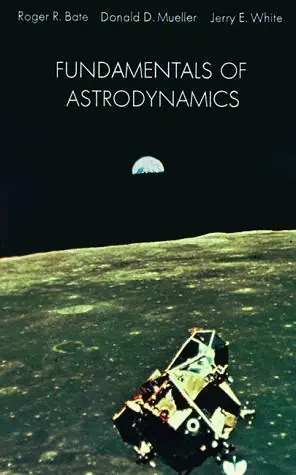
on “Iran in space” ↗In his interviews with Tim Urban from Wait But Why, there's a bit of detail about what he read leading up to his founding of SpaceX. They're all hard science texts – Rocket Propulsion Elements (Sutton), Aerothermodynamics of Gas Turbine and Rocket Propulsion (Oates), Fundamentals of Astrodynamics (Bate). From everything I've heard, he's well-versed in the material in a way that not many CEOs…
on “Background on the Falcon 9 Launch” ↗…apart, he decided to build his own rocket and this was the genesis of SpaceX. Additional info from Jim from a follow-up interview[2]: >Cantrell ... loaned him some textbooks to study. The books were "Rocket Propulsion Elements," "Aerothermodynamics of Gas Turbine and Rocket Propulsion," "Fundamentals of Astrodynamics," and the "International Reference Guide to Space Launch Systems." He would quote passages verbatim from these…
on “Elon Musk Tried to Destroy a Tesla Whistleblower” ↗> I don’t think he reads I've read that he's read "Rocketeers" by Belfiore, along with "Rocket Propulsion Elements" and "Fundamentals of Astrodynamics". I have all three. The latter two are very non-trivial. Musk is extremely well informed about technology. The idea that he doesn't read is not compelling.
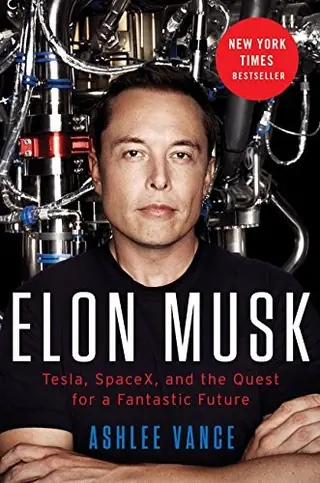
on “Libraries and Well-Being: A Case Study from The New York Public Library” ↗"Musk had spent months studying the aerospace industry and the physics behind it. From Cantrell and others, he'd borrowed Rocket Propulsion Elements, Fundamentals of Astrodynamics, and Aerothermodynamics of Gas Turbine and Rocket Propulsion, along with several more seminal texts." "Elon Musk" by Vance pg 108 All three of those books are advanced…
on “Steve Wozniak: Life to me was never about accomplishment, but about happiness” ↗