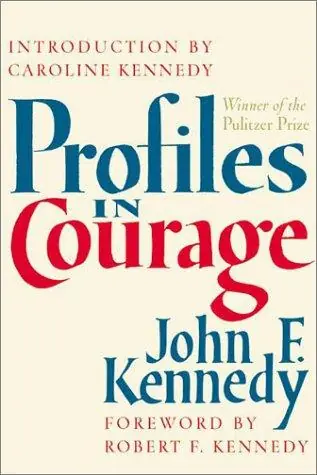
Profiles in courage
by John F. Kennedy · first published 1955
5mentions
2recommended by
5HN commenters
2016–2025first – last mentioned
40% recommend60% neutral
Profiles eight historical figures who demonstrated particular integrity in the face of opposition, including John Quincy Adams, Daniel Webster, Thomas Hart Benton, and Robert A. Taft.
Affiliate links. As an Amazon Associate I earn from qualifying purchases.
…democracy. The layers of parliamentary systems are partly a means of protection against manipulations. If you want to read an interesting and nice to read book that partly talks about this, then I'd recommend Profiles in Courage by John F. Kennedy. Though a consumer decision is not the same as a political vote, at least the latter is not supposed to be similarly thoughtless, so there is no need to interpret my comment that broadly.
on “Making sense of the EU’s fight for user-replaceable smartphone batteries” ↗Profiles in Courage by JFK (probably ghost written) I go back to the section on Daniel Webster and the compromise of 1850 a lot. It always stuck with me how much courage it took to advocate for compromise and peace rather…
on “Ask HN: What nonfiction books do you keep rereading?” ↗JFK won for Profiles in Courage, though in all likelihood it was largely ghost-written by Ted Sorensen.
on “Susan Fowler's Uber Expose Should Win a Pulitzer” ↗You could add Kennedy's "Profiles in Courage" and a few others I think (Huey Long and "Every Man a King" for instance). In the case of both Kennedy and Obama the book was used in combination with great oratory skill to introduce the candidate to…
on “Churchill and His Money, or Lack of It” ↗…unusual. More than that, there are famous examples of books for which someone got the credit for the writing when they actually did little or none of it: John F. Kennedy being credited as the author of Profiles in Courage, for example. Even the content of Profiles in Courage was probably less Kennedy's than the content of the books Feynman gets credited for was Feynman's.
on “Richard Feynman's blackboard at the time of his death (1988)” ↗