
Political Parties
by R Michels · first published 1962
5mentions
2recommended by
3HN commenters
2018–2025first – last mentioned
67% recommend33% neutral
Affiliate links. As an Amazon Associate I earn from qualifying purchases.
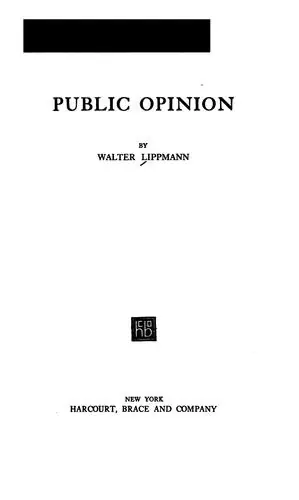
…shortest and quickest answer, here a good one I think, is that given by Betteridge's Law[1] — No. But it depends. [0] A couple of very readable and more-relevant-than-ever classics on this theme: Michels' Political Parties (1911) and Lippmann's Public Opinion (1922). [1]https://en.wikipedia.org/wiki/Betteridge%27s_law_of_headline...
on “Has liberalism failed?” ↗This is equally an argument against forming any organization, isn't it? Michels' classic Political Parties is a fascinating and depressing look at that problem. This stuff, problems with democracy, was fretted over 100 years ago, not so much nowadays, since democracy was redefined as what is called 'democracy'…
on “Whole Foods workers seek to unionize” ↗…of it, which enables the oligarchs Slightly related, and for anyone that might accuse the OP of using the term "oligarch" as too modern or too politically-motivated, I highly suggest Robert Michels's "Political Parties", a book written more than 100 years ago and whose subtitle says it all: "A Sociological Study of the Oligarchical Tendencies of Modern Democracy". I've just finished reading it (it had been on my to-read…
on “Operation Dark Winter” ↗…'whatever they now have in countries we call democratic', thus avoiding the worrying about democracy that produced the fascinating books of the early 20th C on problems with it. e.g. Lippmann's, Michels' Political Parties)
on “The AI Threat to Open Societies” ↗Sadly, and fortunately, there is no such thing as "avoiding centralization", the evidence is overwhelming: == Politics & Sociology (power concentrates in organizations) - Robert Michels, Political Parties (1911) origin of the "iron law of oligarchy": even democratic groups tend to end up run by a few: https://en.wikipedia.org/wiki/Iron_law_of_oligarchy - Jo Freeman, "The Tyranny of Structurelessness"…
on “Are we decentralized yet?” ↗