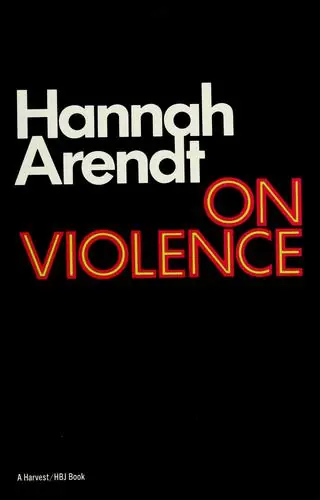
On violence
by Hannah Arendt · first published 1969
3mentions
2recommended by
3HN commenters
2019–2022first – last mentioned
67% recommend33% neutral
El término «violencia», en su sentido más elemental, refiere al daño ejercido sobre las personas por parte de otros seres humanos. Los experimentos totalitarios del siglo xx ampliaron este uso de la violencia, a una escala y una intensidad inéditas en la historia de la humanidad, y es en este contexto donde cabe encuadrar esta obra perenne de Hannah Arendt. Para la filosofía política, la violencia objeto de su estudio tiene dos caras: la violencia organizada del Estado o aquella que irrumpe frente al mismo. Esto ha hecho que muchos pensasen que la violencia es sobre todo una forma de ejercicio
Affiliate links. As an Amazon Associate I earn from qualifying purchases.
…describe is the setting for a Young Adult fantasy series. Which is fine, and interesting for a while, but not a good way to think about how we would like our society to function. Go read Hannah Arendt's "On Violence", if you haven't. Or "Eichmann in Jerusalem." It's the banality of evil that's the really unsettling thing.
on “It's Time to Bust Police Unions” ↗…their aimlessnessness. When rioters do discriminate in who they attack and what they destroy we don't call them rioters and we are generally more open to the idea that their actions may be justified. On Violence (Hannah Arendt), which is cited in the article, is a good discussion. In '67 there was an interesting public discussion with Arendt, Chomsky, and others titled "The Legitimacy of Violence as a Political…
on “Why is there no theory of the just riot? (2021)” ↗…no one left who could even be asked to answer for what is being done. It is this state of affairs which is among the most potent causes for the current world-wide rebellious unrest. -- Hannah Arendt, "On Violence" (1970)
on “Computers Don't Argue (1965)” ↗