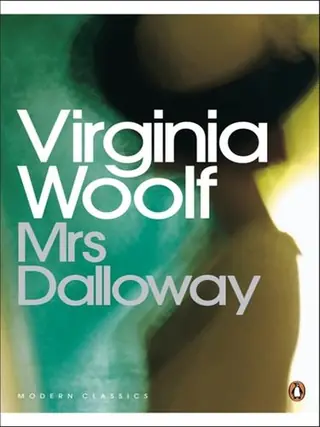
Mrs. Dalloway
by Virginia Woolf · first published 1925
64% recommend29% neutral7% critical
Why HN recommends it
A richly written stream-of-consciousness novel and a strong starting point for Virginia Woolf, more approachable than Orlando. Readers value its prose craft and its usefulness for sharpening reading and writing skills.
Summarised by Claude from recommending comments
Virginia Woolf’s novel chronicles a day in the life of Clarissa Dalloway, a politician’s wife in 1920s London, as she prepares to host a party that evening. The narrative follows Clarissa’s thoughts (and sometimes those of people she meets) as she goes about her errands, and events in the day remind her of her youth and friendships from the past. As the book progresses characters from the past emerge, igniting old feelings and making Clarissa question the life she has created for herself. Mrs. Dalloway became the inspiration for Michael Cunningham’s 1998 novel The Hours.
Affiliate links. As an Amazon Associate I earn from qualifying purchases.
Mentions per year
What Hacker News says
Related books
 2018–2026
Orlando
Virginia Woolf
Recommended by 5 · mentioned by 65 recommend · 6 mention5 recommend · 65 recommend
 2016–2025
A Room of One's Own
Virginia Woolf
Recommended by 8 · mentioned by 208 recommend · 20 mention8 recommend · 208 recommend
 2012–2025
To the Lighthouse
Virginia Woolf
Recommended by 11 · mentioned by 2611 recommend · 26 mention11 recommend · 2611 recommend
 2008–2026
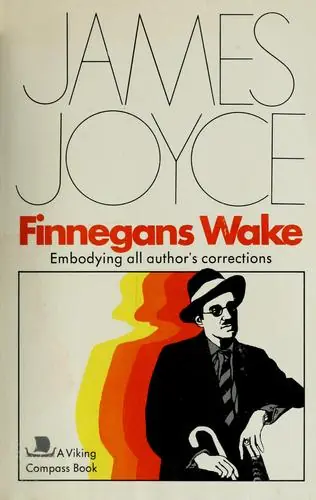
Finnegans Wake
James Joyce
Recommended by 7 · mentioned by 807 recommend · 80 mention7 recommend · 807 recommend
 2008–2026
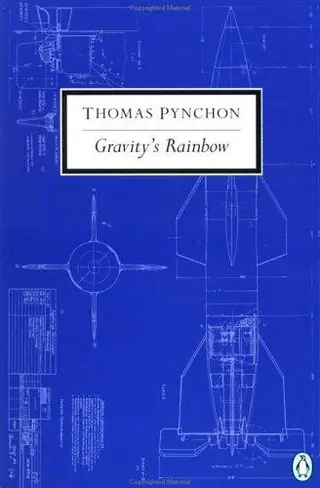
Gravity's Rainbow
Thomas Pynchon
Recommended by 58 · mentioned by 17958 recommend · 179 mention58 recommend · 17958 recommend
 2008–2026
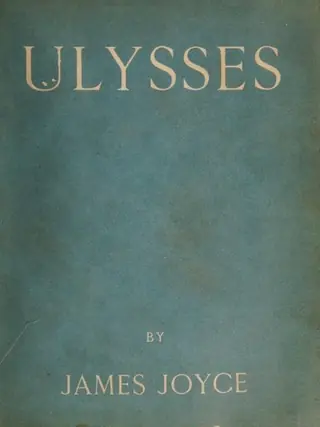
Ulysses
James Joyce
Recommended by 46 · mentioned by 21946 recommend · 219 mention46 recommend · 21946 recommend
 2011–2026
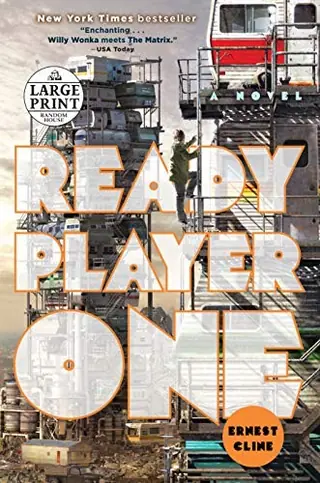
Ready Player One
Ernest Cline
Recommended by 123 · mentioned by 287123 recommend · 287 mention123 recommend · 287123 recommend
 2008–2026
How to Read a Book
Mortimer J. Adler, Charles Lincoln Van Doren
Recommended by 157 · mentioned by 234157 recommend · 234 mention157 recommend · 234157 recommend
If you haven't read any Virginia Woolf, I strongly recommend Mrs Dalloway. Just an incredible novel and more approachable as a starting point than, say, Orlando.
on “Genius and Ink by Virginia Woolf review – essays on ‘how to read’ (2019)” ↗For people who are interested in Virginia Woolf as a novelist, I would strongly recommend "Mrs Dalloway" as a starting point. It's an incredible novel - startlingly modern and beautifully written.[1] In terms of her essay writing, "A room of one's own"[2] is probably most famous/influential, although…
on “Virginia Woolf's list-making” ↗That is also of course a great novel but Mrs Dalloway was the thing that really made me realise how special she was as a writer, so that's what I would personally recommend. It may be that had such an impact on me because I read it before To the Lighthouse…
on “Virginia Woolf's list-making” ↗Jingle. Virginia Woolf's Mrs Dalloway makes for a nice stream of consciousness study in contrast.
on “Yes I Will Read Ulysses Yes” ↗Our critic A.O. Scott takes apart a scene from “Mrs. Dalloway,” Virginia Woolf’s 1925 masterpiece, and shows why the book is a must-read now. Gift link: https://www.nytimes.com/interactive/2025/09/03/books/virgini...
on “100 Years Ago, Fictional Londoners Looked Up. They Saw Our Present Day” ↗Woolf also does this in a beautiful way. To the Lighthouse, Mrs. Dalloway.
on “What to Make of Finnegans Wake? (2012)” ↗…addition to the book itself being good, is a good reader, so here are some of my current faves with splendid readers: A Clockwork Orange narrated by Tom Hollander; Lincoln in the Bardo, Nick Offerman; Mrs Dalloway, Juliet Stevenson; Lolita, Jeremy Irons; and Milkman, Brid Brennan.
on “Audible and audiobooks, the fastest growing part of publishing” ↗…code. I smirk somewhat at the idea that Virginia Woolf has much to teach you about clean code. I do, however, think that writing is a very general-purpose cognitive skill, and that exposure to books like Mrs. Dalloway (and their mechanics) are generally good for your brain.
on “To write better code, read Virginia Woolf” ↗…one from James Somers: actively engage (don't read without a pen and paper, explain stuff to yourself as you go) http://jsomers.net/blog/kenjitsu To my mind, 'what' trumps 'how'. A casual reading of 'Mrs. Dalloway' brings a greater reward than n airport non-fictions.
on “Ask HN: How Do You Read?” ↗I have always been genuinely baffled by the admiration people have for The Great Gatsby. It’s not the best F Scott Fitzgerald book. It’s not even the best novel of that year (Mrs Dalloway is so much better it pains me to mention it in the same sentence).
on “H.L. Mencken Reviews the Great Gatsby (1925)” ↗…that being absorbed in something mitigates boredom and existential ennui. And for me, the effect is most pronounced when I read something difficult, i.e. encyclopedic novels (Gravity’s Rainbow, Ulysses, Mrs Dalloway) or difficult philosophical books (Gödel, Escher, Bach or Being And Time).
on “Ask HN: How do you add novelty to your days?” ↗I agree they don't have to be, but a sense of authenticity of location can really add to the atmosphere of a novel. For example, in "Mrs Dalloway", you can literally retrace the steps of Mrs Dalloway through St James' park and St James' and on to Bloomsbury. The descriptions are incredibly precise and totally accurate. Likewise people walk through…
I am also a fan of lists, and I would say that as far as lists of "great books" go, an aggregated view would look like: To the Lighthouse > Mrs. Dalloway > Orlando > A Room of One's Own = The Waves
on “Virginia Woolf's list-making” ↗…Philip Roth wrote some science fiction about Erlang? Would that be okay? I'm kidding to make a point: marriage is seldom a 100% ideal proposition. In my house we intermingle our books. Virginia Woolf's "Mrs. Dalloway" is next to Tom Wolfe's "The Right Stuff". The benefit of sharing an amazon account makes up for the fact that I may see books she's interested at Amazon.com.
on “Kindle gets library book lending” ↗…continuously collect, and only write about what you care about. I think it's a useful approach. I personally don't find the streams-of-consciousness approach very compelling (didn't like Virginia Woolf's Mrs Dalloway). Streams-of-consciousness is good for very artsy-fartsy, avant-garde type works, but to me good writing comes from a lifetime of collecting experiences, observations and ideas and coalescing them. On…
on “Writing Is Thinking: Learning to Write with Confidence” ↗