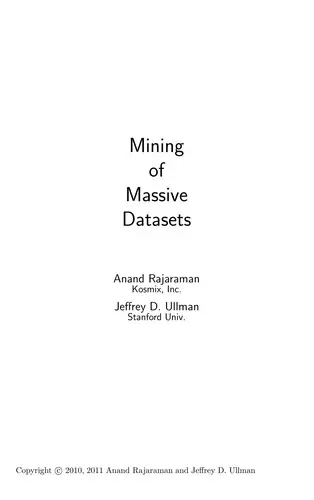
Mining of massive datasets
by Anand Rajaraman, Jeffrey D. Ullman, Jure Leskovec · first published 2012
85% recommend15% neutral
Why HN recommends it
Free Stanford text on large-scale data mining, covering similarity search, MinHash and LSH, and recommender systems. It is clear and well suited to college-level study and to engineers working on big data projects.
Summarised by Claude from recommending comments
The book is based on Stanford Computer Science course CS246: Mining Massive Datasets (and CS345A: Data Mining).
Affiliate links. As an Amazon Associate I earn from qualifying purchases.
Mentions per year
What Hacker News says
Related books
 2011–2023
Bayesian reasoning and machine learning
David Barber
Recommended by 15 · mentioned by 2015 recommend · 20 mention15 recommend · 2015 recommend
 2009–2024
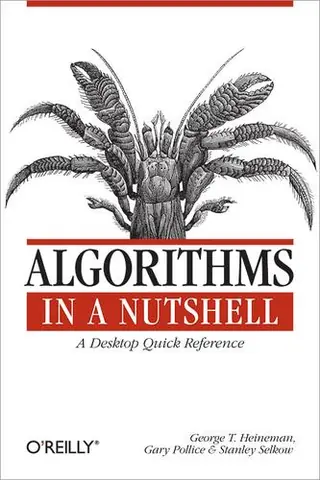
Algorithms in a nutshell
George T. Heineman
Recommended by 12 · mentioned by 2112 recommend · 21 mention12 recommend · 2112 recommend
 2010–2026
Sorting and searching
Donald Knuth
Recommended by 10 · mentioned by 2510 recommend · 25 mention10 recommend · 2510 recommend
 2007–2026
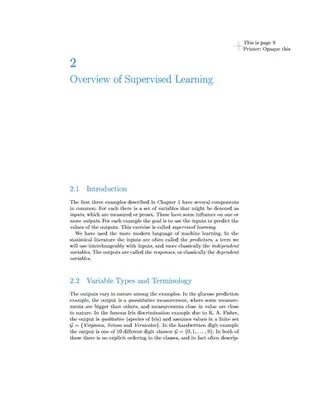
The Elements of Statistical Learning
Trevor Hastie, Robert Tibshirani, Jerome Friedman
Recommended by 144 · mentioned by 227144 recommend · 227 mention144 recommend · 227144 recommend
 2012–2026
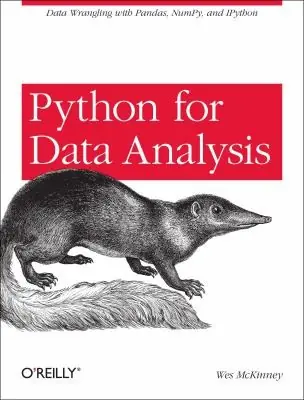
Python For Data Analysis
Wes McKinney
Recommended by 29 · mentioned by 5229 recommend · 52 mention29 recommend · 5229 recommend
 2009–2026
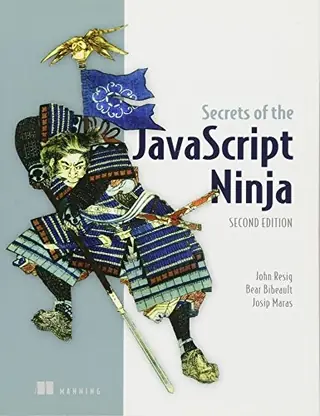
Secrets of the JavaScript Ninja
John Resig, Bear Bibeault, Josip Maras
Recommended by 40 · mentioned by 6140 recommend · 61 mention40 recommend · 6140 recommend
 2007–2026
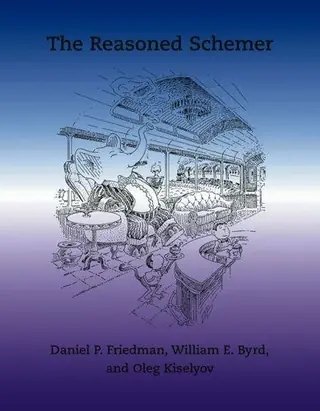
The reasoned schemer
Daniel P. Friedman
Recommended by 45 · mentioned by 7945 recommend · 79 mention45 recommend · 7945 recommend
 2007–2026
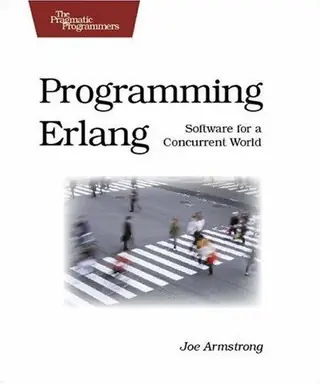
Programming Erlang
Joe Armstrong
Recommended by 69 · mentioned by 9569 recommend · 95 mention69 recommend · 9569 recommend
…all http://www.amazon.com/Pattern-Classification-Pt-1-Richard-Du... The Elements of Statistical Learning, by Hastie et all. It is free from Stanford. http://www-stat.stanford.edu/~tibs/ElemStatLearn Mining of Massive Datasets, free from Stanford. http://infolab.stanford.edu/~ullman/mmds.html Bayesian Reasoning and Machine Learning, by Barber, free available online. http://web4.cs.ucl.ac.uk/staff/D.Barber/pmwiki/pmwiki.php?n=...…
on “A Tour of Machine Learning Algorithms” ↗I love it when people link to freely available academic texts, thank you. Here's another one from Stanford: Mining of Massive Datasets http://infolab.stanford.edu/~ullman/mmds.html
on “Online graduate-level machine learning course from CMU's Tom Mitchell” ↗PCI is a great book. One book I'll recommend after reading it is "Mining of Massive Datasets" (http://infolab.stanford.edu/~ullman/mmds.html) - Chapter 9 especially. It goes into more depth than what's covered in PCI and it's not too difficult to follow. I'm working on a personal project in…
on “Introduction to Recommender Systems” ↗…classic) Algorithms in a Nutshell (OReilly) Clever Algorithms (Jason Brownlee. Uses Ruby for examples) Data Mining Analysis - Fundamental Algorithms (Mo. Zaki - ebook) Python for Data Analysis (Wes McKinney) Mining of Massive Datasets (Rajaraman, Leskovec, Ullman - ebook) Enjoy.
on “Good ebook for learning data structures & algorithm” ↗"Mining of Massive Datasets", by Jure Leskovec, Anand Rajaraman, and Jeffrey D. Ullman. You can get the PDF here: http://infolab.stanford.edu/~ullman/mmds/book.pdf
on “Ask HN: What's the best programming book you've read recently?” ↗Great! I was just reading through the first edition this week. It's excellent. Also see Mining of Massive Datasets: http://infolab.stanford.edu/~ullman/mmds/book.pdf
on “Introduction to Data Mining – Second Edition” ↗I agree with the beginning of the article, which describes the present state pretty well, the part about "better engineers than statisticians and better statisticians than engineers", etc. But then I disagree with the rest. The distinction between "Data Scientists" and "Engineers" is bogus, and the point about whether your data is "Big" is a red herring. In reality, there should not be any disti
on “Engineers Shouldn’t Write ETL” ↗I was just browsing through the classic "Mining of Massive Datasets" book (which is free!) when I noticed this apt passage in its introduction that explains the difference between data mining and machine learning: http://infolab.stanford.edu/~ullman/mmds.html > There…
on “The main trick in machine learning” ↗I would also add http://mmds.org/ in the list. Link to the book is 'http://infolab.stanford.edu/~ullman/mmds/book.pdf.
on “Free Data Science Books” ↗Mining Massive DataSets (MMDS) from Stanford professors. Videos: https://www.youtube.com/playlist?list=PLLssT5z_DsK9JDLcT8T62... Book: http://www.mmds.org/
on “Ask HN: What are the best advanced computer science courses online?” ↗…comparison of LSH performance to other state of the art methods like proximity graphs/HNSWLIB [1] and quantization/SCANN [2] As an introduction LSH (with MinHash) is also described in detail in the book "Mining Of Massive Datasets", ch.3, "Finding Similar items", highly recommended [3] if you want to play with LSH, python "annoy" library is the best place to start [4] [0] https://github.com/erikbern/ann-benchmarks [1] https://github.com/google-research/google-research/tree/mast...…
on “Introduction to Locality-Sensitive Hashing” ↗Maybe Clever Algorithms: Nature-Inspired Programming Recipes[1]. These techniques might not be useful to everybody, all the time, but they can be very handy in places. Edit: A couple of other suggestions. Managing Gigabytes: Compressing and Indexing Documents and Images[2] Mining of Massive Datasets[3] Algorithm Design Manual[4] Network Algorithmics[5] Neural Network Design[6] I think all
on “Ask HN: Most interesting, mildly impractical, well-written books on software?” ↗"Mining of Massive Datasets" and "Introduction to Information Retrieval" are both excellent college-level texts to their respective subjects. Also, the machine learning book is available for free, "Elements of Statistical Learning":…
on “List of freely available programming books” ↗Not to mention the algorithms and business behind which ad to serve where and when are worthy of an entire field of study all by themselves. Read the Advertising chapter in Mining Massive Datasets - http://www.mmds.org/ - and then figure out how you'd tackle those problems when you distribute them onto other people's servers.
on “Mobile Safari's Performance Is Not the Problem” ↗"Mining of Massive Datasets" by Leskovec, Rajaraman and Ullman is very good. Although the post gives a link to the Amazon page of the book, PDFs of the chapters are free to download at the official book web site[1]. [1] http://www.mmds.org/
on “Free Data Science Books” ↗