Les Misérables
by Victor Hugo · first published 1862
36% recommend60% neutral4% critical
Why HN recommends it
Sweeping story of love, redemption, justice and inequality, built around Jean Valjean, with vast scope and vivid set pieces like Waterloo. Rewards patient readers who take the slow stretches at normal pace.
Common criticism: Digressive, with long tangents that slow the story
Summarised by Claude from recommending comments
In this story of the trials of the peasant Jean Valjean--a man unjustly imprisoned, baffled by destiny, and hounded by his nemesis, the magnificently realized, ambiguously malevolent police detective Javert--Hugo achieves the sort of rare imaginative resonance that allows a work of art to transcend its genre.
Affiliate links. As an Amazon Associate I earn from qualifying purchases.
Mentions per year
What Hacker News says
Related books
 2009–2020
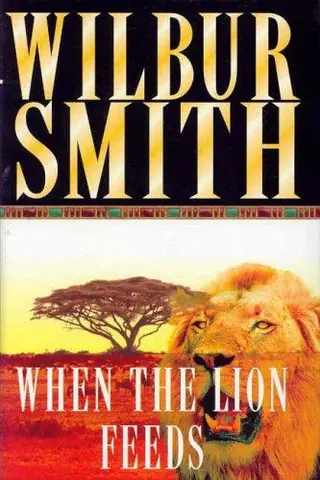
When the Lion Feeds
Wilbur Smith
Recommended by 2 · mentioned by 22 recommend · 2 mention2 recommend · 22 recommend
 2009–2019
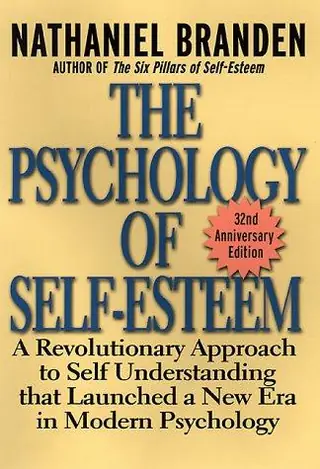
The psychology of self-esteem
Nathaniel Branden
Recommended by 2 · mentioned by 32 recommend · 3 mention2 recommend · 32 recommend
 2014–2020
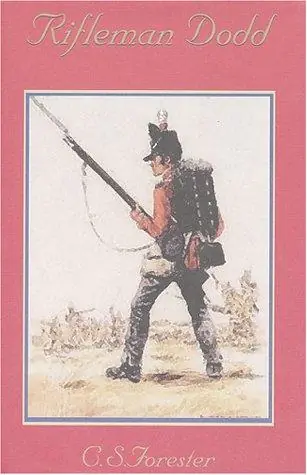
Rifleman Dodd
C. S. Forester
Recommended by 1 · mentioned by 21 recommend · 2 mention1 recommend · 21 recommend
 2015–2024
Living Buddha, living Christ
Thích Nhất Hạnh
Recommended by 1 · mentioned by 31 recommend · 3 mention1 recommend · 31 recommend
 2019–2023
Phantastes
George MacDonald
Recommended by 2 · mentioned by 32 recommend · 3 mention2 recommend · 32 recommend
Les Miserable
Victor Hugo
Recommended by 1 · mentioned by 31 recommend · 3 mention1 recommend · 31 recommend
 2012–2025
My Ántonia
Willa Cather
Recommended by 11 · mentioned by 1411 recommend · 14 mention11 recommend · 1411 recommend
 2009–2022
The Time Traveler's Wife
Audrey Niffenegger
Recommended by 2 · mentioned by 82 recommend · 8 mention2 recommend · 82 recommend
…and the art of motorcycle maintenance - for understanding beauty in the routine Essentialism, the disciplined pursuit of less and Walden - for understanding how "stuff" gets in the way of happiness Les Miserables - for understanding love
on “Ask HN: What books have made the biggest impact on your mental models?” ↗…you don't mind a bit (well, more than a bit) of Anglocentrism. There's a lot of this "if things had gone the other way" stuff and it's great conversation fodder. Also, Hugo's narrative of Waterloo in "Les Miserables" is wonderful and worth reading if you are at all intrigued.
on “Why the Battle of Waterloo was fought” ↗I've recommended this before, but if you want a thrilling, literary take on the battle, read Victor Hugo's account from Les Miserables: http://www.gutenberg.org/files/135/135-h/135-h.htm#link2H_4_... That's the anonymous translation, which I liked just fine (there are modern ones), and can be bought for a buck or two just about anywhere.…
on “The Battle of Waterloo, as it happened on June 18, 1815” ↗…Japanese historical equivalent of Game of Thrones combined with a bit of MacBeth. The rise and fall of two shogunate families, and an analysis of the tragic flaws of character that brought their fall about. Les Miserables - Victor Hugo. Small Gods - Terry Pratchett. Heart of Darkness - Joseph Conrad. The Guide - R. K. Narayan. Evidence - Mary Oliver. All of Us - The Collected Poetry of Raymond Carver. Silence - Shusaku…
on “Ask HN: What books have made the biggest impact on your mental models?” ↗Victor Hugo ~ Les Misérables
on “Ask HN: Best book you read in 2011” ↗…that a classic. "Catch-22" (Heller), "Mother Night" and "Slaughterhouse Five" (Vonnegut), and "The Little Prince" (Exupery) are all "classic" books I've read many times over. I was not a huge fan of "Les Miserables" (Hugo) before I read it out loud with my wife about a year ago, and it really grew on me then. To Orwell's "1984" I would add "Animal Farm". "My Antonia" (Cather) has something great in it, though…
on “Ask HN: classic literature recommendations?” ↗Hugo is fantastically intelligent but also unabashedly romantic - perhaps even sentimental. I loved Les Miserables, and one of the good things about it was its exoneration of the conscience, of what the main characters unshakingly feel to be be good. He also packs a fair amount of (occasionally apocryphal) history…
on “How Victor Hugo came to write “Les Misérables”” ↗I remember that feeling well, although I’d some prior experience with surprisingly short/not long enough books (Gone with the Wind is sometimes described as “the shortest long book ever” for similar reasons). Les Misérables is probably my second favorite but that took me so many times longer to make my way through, probably because of Victor Hugo’s unfortunate tendency to go so off track, interje
on “Ask HN: What are your favorite books or essays written at least 100 years ago?” ↗Les Miserables by Victor Hugo -- the book, not the musical. Well worth it.
on “Ask HN: What are you reading right now?” ↗Perhaps Victor Hugo Les Miserables, its like so vast, like a sea.
on ““Hamlet” by T. S. Eliot (1919)” ↗1) Neal Stephenson: Anathem 2) Victor Hugo: Les Miserables 3) Haruki Marakami: Hard-boiled wonderland and the end of the world. And ditch your so-called friend.
on “Google giving Malware Warning on all search results (now fixed)” ↗Victor Hugo seems to give him a bit more credit. His account of Waterloo in "Les Miserables" was thrilling (but suspect).
on “How Good Was Napoleon? (2007)” ↗…circle from criminals are born to commit crime to criminals can be rehabilitated to criminals should be punished and soon criminals are born to commit crime (predictive/thought crimes). Victor Hugo's "Les Miserables" was an excellent example of the French ideology of the period.
on “The Radical Humaneness of Norway’s Halden Prison” ↗Instead I can recommend Victor Hugo's Les Miserables, or to understand presently overwhelmed United States: Cervantes' Don Quixote. Both much less stale and dry in their prose, but incredibly more insightful.
on “George Orwell’s 1984 is currently the top selling book on Amazon” ↗"Les Miserables" by Victor Hugo. That book embodies so much: love, redemption, justice, perceived justice, human growth, rebellion, religion...it can be a hard slog of a read at times but Hugo really gives his characters…
on “Ask HN: What is your comfort book?” ↗