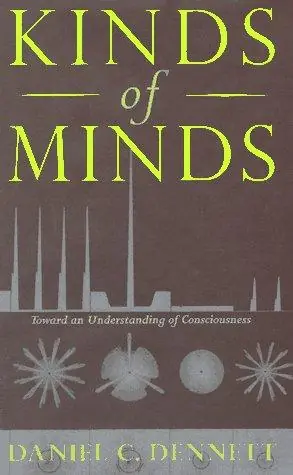
Kinds of minds
toward an understanding of consciousness
by Daniel C. Dennett · first published 1996
67% recommend33% neutral
In Kinds of Minds, Dennett asks the ultimate metaphysical questions: What is a mind and who else (besides the questioner) has one? Combining ideas from philosophy, artificial intelligence, and neurobiology, Dennett leads the reader on a fascinating journey of inquiry, exploring such intriguing possibilities as: Can any of us really know what is going on in someone else's mind? What distinguishes the human mind from the minds of animals, especially those capable of complex behavior? If such animals, for instance, were magically given the power of language, would their communities evolve an int
Affiliate links. As an Amazon Associate I earn from qualifying purchases.
…mourning. It's not so obvious. Especially with domestic animals, the kind of behaviour you are describing may have evolved in order to survive in humans' company. Recommended reading: Daniel Dennett's Kinds of Minds ( http://www.amazon.com/Kinds-Of-Minds-Understanding-Conscious... ) Wittgenstein on what a lion would say if he could speak: http://www.youtube.com/watch?v=628eVJgHD6I (This is a very pleasant pineapple)
on “Birds hold 'funerals' for dead” ↗If you want an example of genuinely valuable philosophy, I found "Kinds of Minds" by Daniel Dennett to be a compelling discussion of the origins of consciousness. It's not "fact" but it does provide interesting ways to think about the issue; ways that could drive experiment or further…
on “Why Science Needs Metaphysics” ↗…embodied cognition? Even though a mind may arise from a body, could the computational processes characteristic of a mind not also be activated from a non-body? I'm reading and influenced right now by Kinds Of Minds by Daniel Dennett. https://www.amazon.com/Kinds-Minds-Understanding-Consciousne...
on “The Rise of Somatic Therapy” ↗