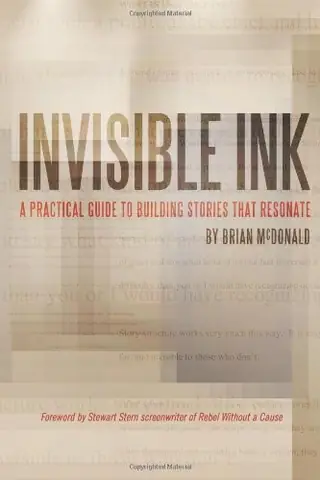
Invisible Ink
by Brian McDonald · first published 2010
8mentions
7recommended by
8HN commenters
2010–2026first – last mentioned
88% recommend13% neutral
Why HN recommends it
A short, practical guide to storytelling centered on theme and structure, built around the idea of an underlying armature. It is succinct and useful for writers and communicators.
Summarised by Claude from recommending comments
Affiliate links. As an Amazon Associate I earn from qualifying purchases.
Item 4 is one I've seen elsewhere: https://www.amazon.com/Invisible-Ink-Practical-Building-Reso... In fact, I recall a Pixar writer said it was one of his favorite books. Actually, I found it (same blog): https://www.aerogrammestudio.com/2013/03/22/the-story-spine-...…
on “Pixar's Rules of Storytelling (2013)” ↗This single best book on storytelling that I've ever read is 'Invisible Ink' by Brian McDonald [1]. Of all the concepts in my comment above, the one it covers most in-depth is "theme" (the book calls it "armature," but same idea). The main argument of the book is that storytelling…
on “Ask HN: Getting Better at Storytelling?” ↗…expect a specific type and writers needs to eat. If you are interested in story structures I recommend this books -Story: Substance, Structure, Style and the Principles of Screenwriting bt Robert McKee -Invisible Ink: A Practical Guide to Building Stories that Resonate by Brian McDonald
on “The significance of plot without conflict (2012)” ↗I highly recommend Brian McDonald's three books on screen writing, Invisible Ink, The Golden Theme, and Ink Spots. They're short, succinct, and practical. Brian also hosts a podcast on storytelling, You Are a Storyteller. https://writeinvisibleink.com/episodes/
on “The Real McKee: Lessons of a screenwriting guru (2003)” ↗…channel. They have a lot of great interviews/shows about how command of the concept of storytelling can improve your communication, written or otherwise. Brian McDonald’s books are great too—-especially Invisible Ink. One more thing I’ve found helpful is to take up a practice that has nothing to do with writing—-gardening in my case—-and see if you can learn some things that shape the way you think about the writing…
on “Ask HN: How to Get Better at Writing?” ↗…Tell the audience what you are going to say, then say it, and tell them you said it. Few observations: 1) it says for noj-fiction, but I think the trunk analogy is even more prescient in fiction. The Invisible Ink by Brian McDonald basically just hammers on this over and over again: know what you want to say and say it. 2) the author does not say it directly, but it is obvious that he learned to write the right…
on “To write non-fiction, draw the trunk, then the rest of the tree” ↗I've read dozens of books on storytelling and Invisible Ink is one of my favorites.
on “Pixar's Rules of Storytelling (2013)” ↗Invisible Ink: A Practical Guide to Building Stories that Resonate by Brian McDonald
on “Ask HN: What are you reading right now?” ↗