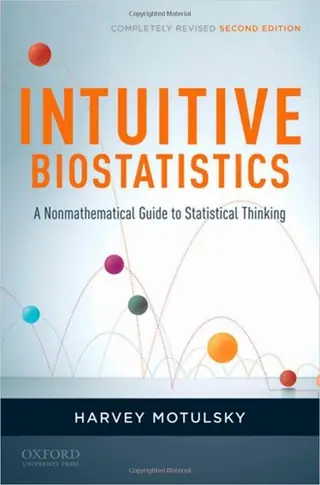
Intuitive biostatistics
by Harvey Motulsky · first published 2010
100% recommend
"Thoroughly revised and updated, the second edition of Intuitive Biostatistics retains and refines the core perspectives of the previous edition: a focus on how to interpret statistical results rather than on how to analyze data, minimal use of equations, and a detailed review of assumptions and common mistakes. Intuitive Biostatistics, Completely Revised Second Edition, provides a clear introduction to statistics for undergraduate and graduate students and also serves as a statistics refresher for working scientists. New to this edition: Chapter 1 shows how our intuitions lead us to misinterp
Affiliate links. As an Amazon Associate I earn from qualifying purchases.
Mentions per year
What Hacker News says
Related books
 2016–2024
An Introduction to Error Analysis
John R. Taylor
Recommended by 3 · mentioned by 33 recommend · 3 mention3 recommend · 33 recommend
 2013–2024
Naked Statistics
Charles J. Wheelan
Recommended by 7 · mentioned by 157 recommend · 15 mention7 recommend · 157 recommend
 2008–2026
The cartoon guide to statistics
Larry Gonick
Recommended by 17 · mentioned by 1717 recommend · 17 mention17 recommend · 1717 recommend
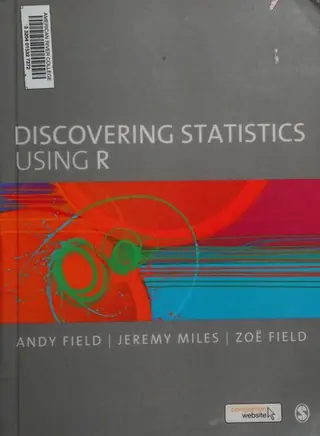 2014–2024
Discovering statistics using R
Andy P. Field
Recommended by 4 · mentioned by 84 recommend · 8 mention4 recommend · 84 recommend
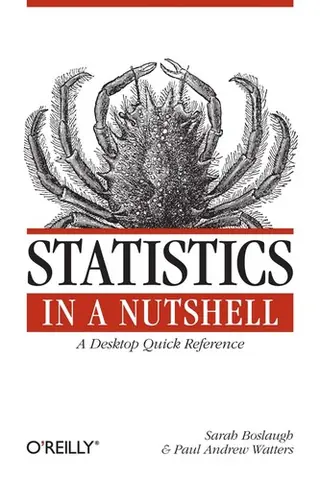 2009–2026
Statistics in a nutshell
Sarah Boslaugh
Recommended by 7 · mentioned by 107 recommend · 10 mention7 recommend · 107 recommend
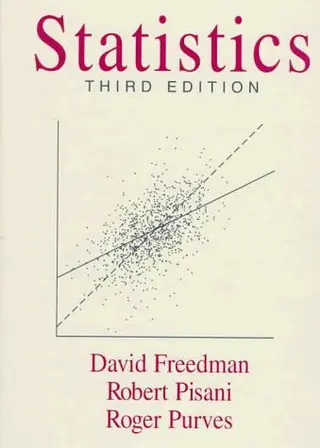 2009–2024
Statistics
David Freedman, Robert Pisani, Roger Purves
Recommended by 11 · mentioned by 1511 recommend · 15 mention11 recommend · 1511 recommend
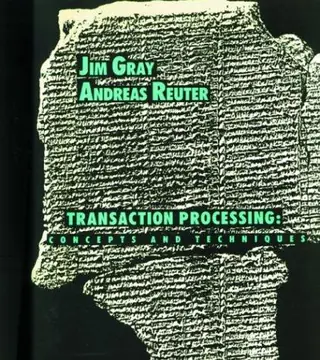 2008–2025
Transaction processing
Gray, Jim
Recommended by 13 · mentioned by 1813 recommend · 18 mention13 recommend · 1813 recommend
 2010–2023
Statistical inference
George Casella
Recommended by 16 · mentioned by 2116 recommend · 21 mention16 recommend · 2116 recommend
…all changed my understanding of their topic. - How to Read a Book by Adler and Van Doren. I was in academia when I read this and it had a huge impact on how I read and thought about academic papers. - Intuitive Biostatistics by Motulsky. First stats book that I enjoyed. Emphasises the practice of statistics, particularly the assumptions and mistakes people tend to make. - World War II Map by Map, published by DK. Had never…
on “Ask HN: Which books do you consider real gems in your field of work/study?” ↗…studies, and even there most people just use PLINK's logistic regression without understanding what's being done and call it a day. Another really good book on how to understand statistics is Motulsky's Intuitive Biostatistics - it introduces all common "tests" and methodologies people working in the life sciences use, but without the formulas (you use R for that anyway). It's more about the caveats of each test, in which situation…
on “Data Science from Scratch: First Principles with Python” ↗I'll raise you Motulsky's Intuitive Biostatistics It doesn't teach you how to calculate the steps of a t-test, but it will teach you in which cases to apply what test, the pitfalls of the test, and how to interpret the results
on “Statistics: P values are just the tip of the iceberg” ↗I know of one book: Motulsky's Intuitive Biostatistics, very little formulas, much focus on upsides and downsides of various stats approaches, opinions etc.
on “The Kolmogorov-Smirnov Test” ↗Intuitive Biostatistics by Motulsky Goes over the commonly used methods in science but only explains the intuition behind the method and what you can and cannot expect from the results, drawbacks etc. Written in a very conversational…
on “The Probability and Statistics Cookbook” ↗Statistics books I liked: Motulsky's Intuitive Biostatistics - this one goes over all the usual methods used in science from distributions to t-test to ANOVA to regressions etc., the basics, but doesn't introduce the maths (you use R for that) but the assumptions…
on “Ask HN: What language-agnostic programming books should I read?” ↗…psychology of learning and how to build stable communities, it's available for free so why not - Statistics books are always good to mend your thinking! My favorite layman's introduction is Motulsky's Intuitive Biostatistics (no formulas, plain English), for a non-practitioner Wheelan's Naked Statistics is probably better - Seth Godin wrote lots of good business books, pick one (I liked Linchpin) - If you haven't read them…
on “Ask HN: Which non-programming books are a beneficial read for programmers?” ↗I GREATLY enjoyed Intuitive Biostatistics by Motulsky. It assumes that you're not going to calculate any test statistic on your own, you're going to use Excel, R, or his own software. Therefore the book contains little to no formulas. Instead,…
on “Ask HN: What are your favorite statistics and probability textbooks?” ↗I thought "Intuitive Biostatistics: A Nonmathematical Guide to Statistical Thinking" combined with "PDQ Statistics" did okay. Way better than the awful instructor textbook taught as an intro to higher-level stats with R and S-Plus, and…
on “Ask HN: What's the best book(s) to grasp statistics?” ↗