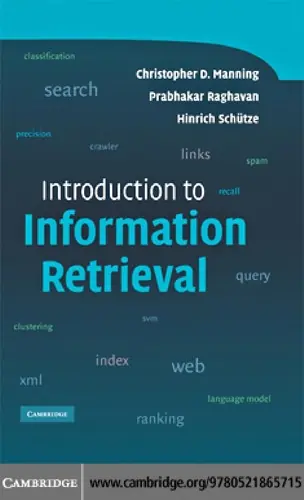
Introduction to information retrieval
by Christopher D. Manning, Prabhakar Raghavan, Hinrich Schütze · first published 2008
93% recommend5% neutral2% critical
Why HN recommends it
Readable, free-online textbook on how text search works, including indexing, ranking and evaluation, plus crawler architecture. Suits newcomers building search engines; works to skim for vocabulary, then as a reference.
Summarised by Claude from recommending comments
Class-tested and coherent, this textbook teaches classical and web information retrieval, including web search and the related areas of text classification and text clustering from basic concepts. It gives an up-to-date treatment of all aspects of the design and implementation of systems for gathering, indexing, and searching documents; methods for evaluating systems; and an introduction to the use of machine learning methods on text collections. All the important ideas are explained using examples and figures, making it perfect for introductory courses in information retrieval for advanced un
Affiliate links. As an Amazon Associate I earn from qualifying purchases.
Mentions per year
What Hacker News says
Related books
 2015–2022
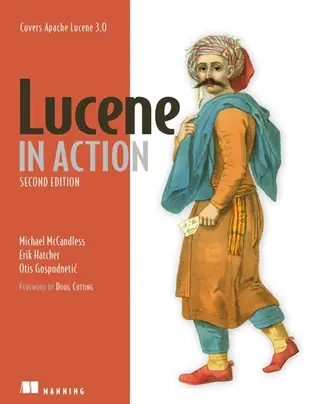
Lucene in action
Michael McCandless
Recommended by 5 · mentioned by 65 recommend · 6 mention5 recommend · 65 recommend
 2009–2022
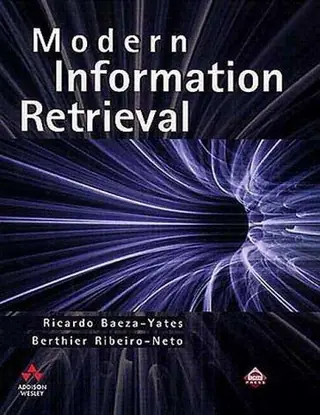
Modern information retrieval
R. Baeza-Yates
Recommended by 4 · mentioned by 84 recommend · 8 mention4 recommend · 84 recommend
 2008–2026
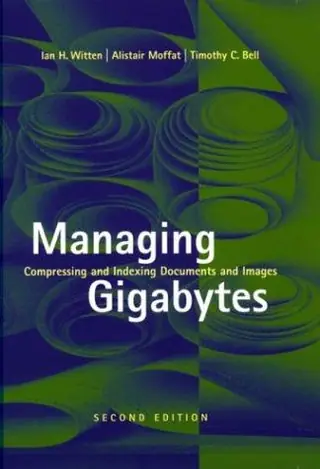
Managing gigabytes
Ian H. Witten, Alistair Moffat, Timothy C. Bell
Recommended by 26 · mentioned by 3526 recommend · 35 mention26 recommend · 3526 recommend
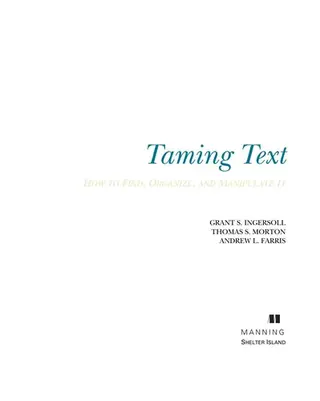 2010–2017
Taming Text
Grant Ingersoll, Thomas S. Morton, Drew Farris
Recommended by 6 · mentioned by 86 recommend · 8 mention6 recommend · 86 recommend
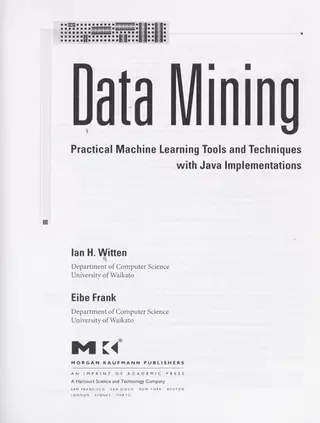 2007–2021
Data mining
I. H. Witten, Ian H. Witten, Eibe Frank
Recommended by 9 · mentioned by 149 recommend · 14 mention9 recommend · 149 recommend
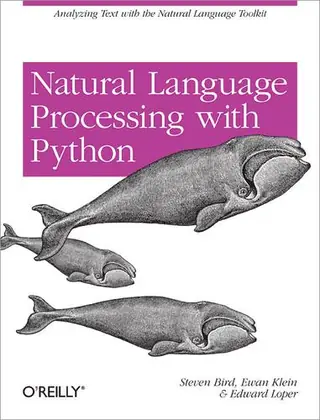 2009–2023
Natural Language Processing With Python
Edward Loper, Steven Bird, Ewan Klein
Recommended by 25 · mentioned by 2825 recommend · 28 mention25 recommend · 2825 recommend
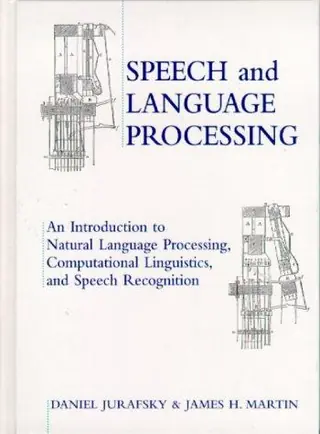 2008–2026
Speech and language processing
Dan Jurafsky, Daniel Jurafsky, James H. Martin
Recommended by 41 · mentioned by 4541 recommend · 45 mention41 recommend · 4541 recommend
 2009–2025
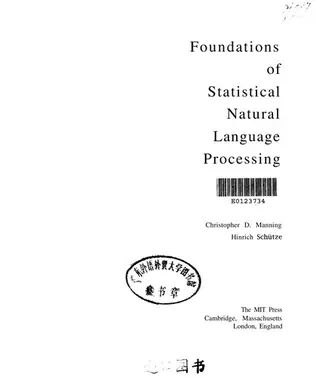
Foundations of Statistical Natural Language Processing
Christopher Manning, Hinrich Schütze
Recommended by 15 · mentioned by 1615 recommend · 16 mention15 recommend · 1615 recommend
Introduction to Information Retrieval: http://www.amazon.com/dp/0521865719/ Convex Optimization: http://www.amazon.com/dp/0521833787/ Foundations of Statistical Natural Language Processing: http://www.amazon.com/dp/0262133601/ Read Peter…
on “Ask HN: After SICP, what next?” ↗I heartily recommend "Introduction to Information Retrieval": http://www.amazon.com/Introduction-Information-Retrieval-Chr... Skim it once to collect vocabulary, then use it as a reference for IR algorithms.
on “FuzzyWuzzy: Fuzzy String Matching in Python” ↗…the core of Google's (original) ranking algorithm, PageRank, which is inspired by ideas like h-index. https://en.wikipedia.org/wiki/PageRank Also, the "standard" book which we used is quite readable: Introduction to Information Retrieval by Manning, et al. https://www.amazon.com/Introduction-Information-Retrieval-Ch...
on “Ask HN: Why Google stops printing results after page #1,000” ↗I'm also very interested in search engines this are two books I would recommend: Introduction to Information Retrieval: https://www.amazon.com/Introduction-Information-Retrieval-Ch... Search User Interfaces: https://www.amazon.com/Search-User-Interfaces-Marti-Hearst-e...
on “Ask HN: I want to dive into how to make search engines” ↗I'd call that Information Retrieval, not Machine Learning. Indexing documents doesn't "learn" any more than a file system storing files, and TF-IDF and BM25 are simply weighting functions. But of course, it's an interesting topic. If you want to learn more, the first edition of the most widely used textbook is free: http://www-nlp.stanford.edu/IR-book/
on “Full-Text Search in JavaScript” ↗…validation of this market. Although I'm a pretty competent hacker, I'm new to search. I've done some reading on search and information retrieval in general, and picked up a copy of Manning et al.'s "Introduction to Information Retrieval", (http://nlp.stanford.edu/IR-book/information-retrieval-book.html) which looks fantastic. However, I don't want to reinvent too many wheels, at least not until I really have to. I'm planning to dive…
on “Ask HN: Building a domain-specific search engine. Advice, experiences?” ↗Code: The Hidden Language of Computer Hardware and Software http://www.amazon.ca/gp/aw/d/B008PGKDOO This is one of the most enjoyable reads I have had in a long time, definitely recommended. Introduction to Information Retrieval http://nlp.stanford.edu/IR-book/ This is a free digital book, very good so far.
on “Ask HN: What is HN reading?” ↗Obligatory: http://nlp.stanford.edu/IR-book/information-retrieval-book.h... Edit: link to compression intro page (very readable) http://nlp.stanford.edu/IR-book/html/htmledition/index-compr...
on “Index Compression algorithms used by Google” ↗Introduction to Information Retrieval by Manning, Raghavan, & Schutze is my favorite. Available here: http://nlp.stanford.edu/IR-book/
on “Ask HN: What resources are there for Search/Information retrieval?” ↗Also: http://www-nlp.stanford.edu/IR-book/ https://www.ics.uci.edu/~welling/teaching/273ASpring10/Intro... ____________ more info on Barber book mentioned in OP: https://news.ycombinator.com/item?id=4672930 http://www.reddit.com/r/MachineLearning/comments/i06a0/book_...
on “Free Data Science Books” ↗Any course on information retrieval will have the basics. Here's an online textbook: http://nlp.stanford.edu/IR-book/ A quick glance through it made me think there's a lot of tricks that are commonplace at Google but not mentioned in the text, but I'm not sure how many of them are proprietary, so I think it's safer for me not to mention them. TF-IDF, however, has a whole Wikipedia article abou
on “Amit Singhal, an Influential Engineer at Google, Will Retire” ↗This is a an interesting way of doing text search over a collection of documents, that I suppose makes sense if you only have a small number of documents to search. Generally, an inverted index [1] is used rather than a trie, and collection-based term weights are calculated using something like IDF [2]. You could then use something like cosine to compute length normalised rankings for documents.
on “The math and algorithms behind a search library” ↗You should check out Manning's "Introduction to Information Retrieval", it has far more detail about web crawler architecture than I can write in a post, and served as a blueprint for much of Applebot's early design decisions.
on “Applebot” ↗Three reference textbooks are available openly: * Introduction to Information Retrieval, http://informationretrieval.org/ * Information Retrieval in Practice, http://www.search-engines-book.com/ * Entity-Oriented Search, https://eos-book.org/ Modern Information Retrieval is also a classic reference. Not openly available but some contents are (were?) available online. Their site seems to be dow
on “Ask HN: Books about full text search?” ↗…data structures like tries, inverted indexes, stemming, string search algorithms like KMP and Boyer-Moore. When I got started with IR I used Baeza-Yate's "Modern Information Retrieval"; Manning's new "Introduction to Information Retrieval" looks great, though I haven't gotten my hands on a copy yet. Here are the Wikipedia pages on the concepts above: http://en.wikipedia.org/wiki/Trie http://en.wikipedia.org/wiki/Inverted_index http://en.wikipedia.org/wiki/Stemming…
on “Information Retrieval papers you need to read” ↗