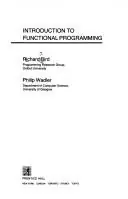
Introduction to functional programming
by Bird, Richard · first published 1988
78% recommend22% neutral
Why HN recommends it
Language-agnostic introduction to functional programming that also covers algorithms and efficient data structures. The first edition is the one to seek out, and it suits those new to the paradigm.
Summarised by Claude from recommending comments
Affiliate links. As an Amazon Associate I earn from qualifying purchases.
Mentions per year
What Hacker News says
Related books
Thinking Functionally with Haskell
Richard Bird
Recommended by 5 · mentioned by 85 recommend · 8 mention5 recommend · 85 recommend
 2010–2022
Apprenticeship Patterns
Dave H. Hoover, Adewale Oshineye
Recommended by 16 · mentioned by 1916 recommend · 19 mention16 recommend · 1916 recommend
 2010–2026
Sorting and searching
Donald Knuth
Recommended by 10 · mentioned by 2510 recommend · 25 mention10 recommend · 2510 recommend
 2009–2024
The passionate programmer
Chad Fowler
Recommended by 31 · mentioned by 3931 recommend · 39 mention31 recommend · 3931 recommend
 2007–2026
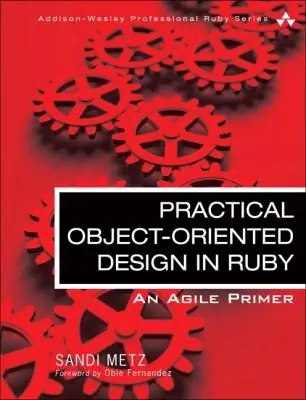
The seasoned schemer
Daniel P. Friedman
Recommended by 33 · mentioned by 4733 recommend · 47 mention33 recommend · 4733 recommend
 2012–2025
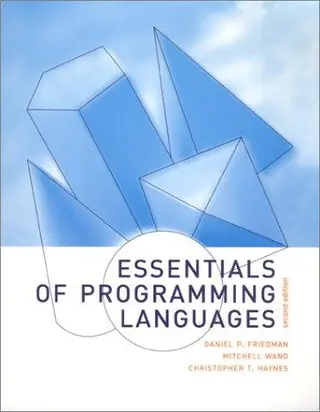
Practical Object Oriented Design In Ruby
Sandi Metz
Recommended by 46 · mentioned by 6246 recommend · 62 mention46 recommend · 6246 recommend
 2008–2026
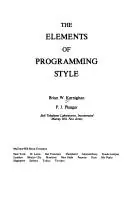
Essentials of programming languages
Daniel P. Friedman
Recommended by 43 · mentioned by 4843 recommend · 48 mention43 recommend · 4843 recommend
 2008–2026
The elements of programming style
Brian W. Kernighan, P. J. Plauger
Recommended by 30 · mentioned by 6930 recommend · 69 mention30 recommend · 6930 recommend
…because I noticed that this submission, like another submission that made the front page of HN twice in the past two days [0], touches on the same material as Ch. 6 of Richard Bird and Philip Wadler's book Introduction to Functional Programming [1], which I happened to be re-reading a couple of nights ago. And I want to tell you to go read it. Really, if you find this sort of thing interesting, you should read it. The book isn't strictly a…
on “Folds and parallelism” ↗…introductory book on functional programming written with Philip Wadler [2] introduces the technique, which is usually called "program calculation". (Though published in 1988, their book remains a great introduction to functional programming.) If you really want to go off the deep end, Jeremy Gibbons's extensive lectures notes, published as a book chapter [3], are the best source I know. (Beware: here be category theory.) 0. https://en.m.wikipedia.org/wiki/Referential_transparency…
on “Total Functional Programming [pdf]” ↗Talking about books I would recommend Introduction to Functional Programming 1st edition (Prentice Hall 1988 -- the second, paradoxically, is "spoiled" by Haskell), by Bird and Wadler.
on “The Haskell Road to Logic, Maths and Programming” ↗…[] = [] quicksort (p:xs) = (quicksort lesser) ++ [p] ++ (quicksort greater) where lesser = filter (< p) xs greater = filter (>= p) xs Bird & Wadler is a great introduction to functional programming as well as algorithms and efficient data structures. http://www.amazon.com/Introduction-Functional-Programming-In... (blimey, I had no idea my old copy was now so valuable!)
on “I am a great programmer, but horrible algorithmist” ↗Richard Bird, Philip Wadler - Introduction to Functional Programming http://www.amazon.com/Introduction-Functional-Programming-In... Richard Bird - Pearls of Functional Algorithm Design http://www.amazon.com/Pearls-Functional-Algorithm-Design-Ric... Christian Queinnec…
on “Ask HN: What's the best programming book you've read recently?” ↗Another (old) gem that I feel like suggesting to anyone interested in this topic is 'Introduction to Functional Programming' by Philip Wadler and Richard Bird, which is also available online for free: https://usi-pl.github.io/lc/sp-2015/doc/Bird_Wadler.%20Intro...
on “A Short Introduction to the Lambda Calculus (2004) [pdf]” ↗If you can find a copy, the first edition of ‘Introduction to Functional Programming’ by Richard Bird covers the concepts of functional programming in a language-agnostic way.
on “Functional Programming in OCaml” ↗Introduction to functional programming 1st edition by Richard Bird
on “Ask HN: What language-agnostic programming books should I read?” ↗Thinking Functionally with Haskell, Richard Bird, 2015 [0] states The first edition was titled 'Introduction to Functional Programming', and was co-authored with Phil Wadler. It was published in 1988. This is the one linked and free available. The second edition was titled Introduction to 'Functional Programming using Haskell', published…
on “Introduction to Functional Programming (1988) [pdf]” ↗1. I’ve read that the first edition of Philip Wadler’s and Richard Bird’s Introduction to Functional Programming is better than the second edition, but having read neither, I can’t give an opinion one way or the other. 2. I have deep respect for older editions of Apple’s Human Interface Guidelines, particularly…
on “Older editions of which books were better than the new ones? (2010)” ↗