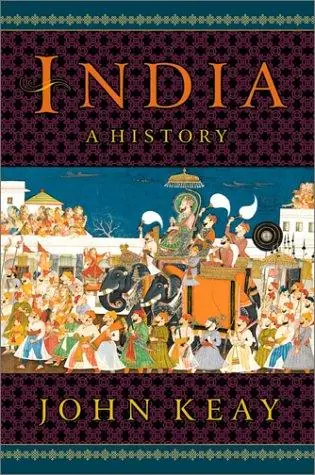
India
by John Keay · first published 2000
100% recommend
Why HN recommends it
Readable survey of Indian history from ancient civilisations through the colonial period, academic yet fascinating and even-handed. Suits readers wanting a single comprehensive overview of the subcontinent.
Summarised by Claude from recommending comments
"This book is a compelling epic of cultures and conquest, colonization and independence. It vividly re-creates the turning points of Indian history and brings to life the leaders who shaped India's evolution, from Ashoka, the "Caesar of Ancient India," who ruled the vast Mauryan empire in the third century B.C., to twentieth-century figures such as Mahatma Gandhi and Jawaharlal Nehru. Along the way Keay provides fresh insights into the patterns of invasion and migration that have stirred the subcontinent's cultures for centuries, from the "Aryan" invaders, to Alexander's Macedonian armies, to
Affiliate links. As an Amazon Associate I earn from qualifying purchases.
Mentions per year
What Hacker News says
Related books
 2011–2026
The Way of Zen
Alan Watts
Recommended by 16 · mentioned by 2216 recommend · 22 mention16 recommend · 2216 recommend
 2017–2026
The Silk Roads
Peter Frankopan
Recommended by 22 · mentioned by 3422 recommend · 34 mention22 recommend · 3422 recommend
 2010–2026
Mere Christianity
C. S. Lewis
Recommended by 29 · mentioned by 5229 recommend · 52 mention29 recommend · 5229 recommend
 2009–2026
Le Ton beau de Marot
Douglas R. Hofstadter
Recommended by 27 · mentioned by 5227 recommend · 52 mention27 recommend · 5227 recommend
 2009–2026
Shop class as soulcraft
Matthew B. Crawford
Recommended by 42 · mentioned by 5342 recommend · 53 mention42 recommend · 5342 recommend
 2008–2026
A History of Western Philosophy
Bertrand Russell
Recommended by 64 · mentioned by 11264 recommend · 112 mention64 recommend · 11264 recommend
 2007–2026
Think and Grow Rich
Napoleon Hill
Recommended by 81 · mentioned by 14581 recommend · 145 mention81 recommend · 14581 recommend
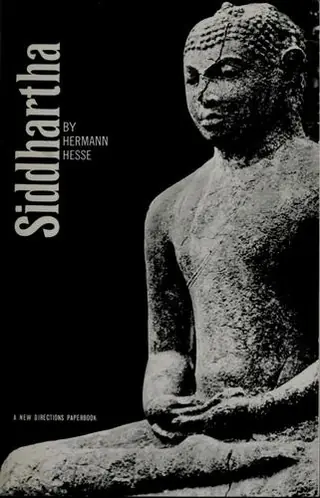 2007–2026
Siddhartha
Hermann Hesse
Recommended by 138 · mentioned by 186138 recommend · 186 mention138 recommend · 186138 recommend
Also, for anyone interested in an academic, objective, inclusive and yet thoroughly fascinating summary of Indian history, I highly recommend "India: A History" by John Keay (http://en.wikipedia.org/wiki/John_Keay)
on “Sanskrit As A Language Of Science” ↗India: A History. Revised and Updated by John Keay Url : http://www.amazon.com/India-A-History-Revised-Updated/dp/080...
on “Ask HN: What are your favorite books? I'm bored” ↗…couple of years before and upto the freedom in 1947. The way the french author duo paint the then lifestyle of the Britishers, the kings and the common man left me satisfied. Currently I'm slow reading "India - A History" by John Keay. Another well written book.
on “Ask HN: Books you wish you had read earlier?” ↗India: A History, by John Keay
on “Vijayanagara – The Last Emperors of South India [audio]” ↗…civilisations (Egypt, Babylon, Harappan) and the progression through time (for example mentioning the Periplus of Roman adventurers into the far east). Good histories of China (Goldman/Fairbanks), and India (Keay) had whetted my appetite, and I think I'll need to read Dalrymple to be fully sated.
on “An amateur historian's favorite books about the Silk Road” ↗…could resolve it's South China Sea concerns via multilateral agreements, or through military aggression. Also, there are other theories, including realism and constructivism. ---- [1] John Keay, in India: A History. Keay is not a credentialed academic historian but has written respected surveys of history; I don't know how well his theory ultimately holds water, but it's the best expression of the issue…
on “The Geopolitics of the United States, Part 1: The Inevitable Empire (2011)” ↗