I See Satan Fall Like Lightning
by Rene Girard · first published 2001
89% recommend11% neutral
Why HN recommends it
Accessible entry point to René Girard's mimetic theory and the scapegoat mechanism; described as straightforward and readable, shorter than his larger works, and a good start for anyone new to Girard.
Summarised by Claude from recommending comments
Affiliate links. As an Amazon Associate I earn from qualifying purchases.
Mentions per year
What Hacker News says
Related books
 2021–2023
Wanting
Luke Burgis
Recommended by 5 · mentioned by 95 recommend · 9 mention5 recommend · 95 recommend
 2015–2024
Things hidden since the foundation of the world
René Girard, Jean-Michel Oughourlian, Guy Lefort
Recommended by 6 · mentioned by 126 recommend · 12 mention6 recommend · 126 recommend
 2009–2026
How I found freedom in an unfree world
Harry Browne
Recommended by 19 · mentioned by 2119 recommend · 21 mention19 recommend · 2119 recommend
 2008–2026
Finite and infinite games
James P. Carse, James Carse
Recommended by 58 · mentioned by 7858 recommend · 78 mention58 recommend · 7858 recommend
 2008–2026
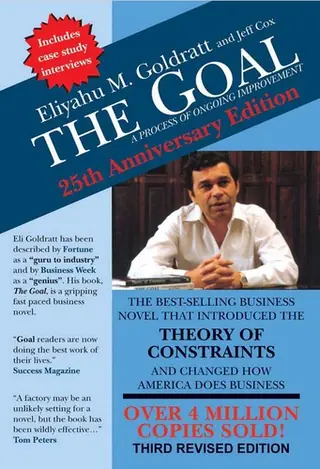
The goal
Eliyahu M. Goldratt, Jeff Cox, Ensemble cast, Dwight Jon Zimmerman
Recommended by 85 · mentioned by 12085 recommend · 120 mention85 recommend · 12085 recommend
 2012–2026
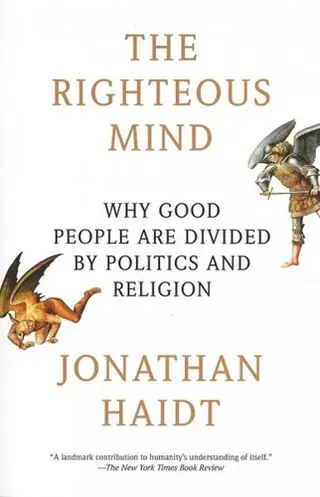
The Righteous Mind
Jonathan Haidt
Recommended by 94 · mentioned by 14494 recommend · 144 mention94 recommend · 14494 recommend
 2007–2026
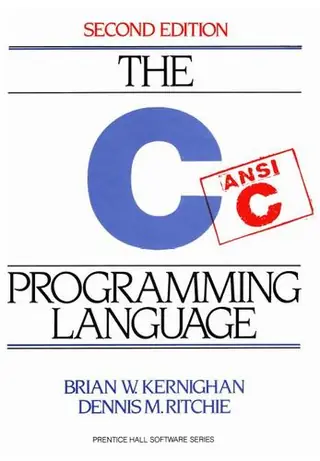
The C Programming Language
Brian W. Kernighan, Dennis MacAlistair Ritchie
Recommended by 246 · mentioned by 501246 recommend · 501 mention246 recommend · 501246 recommend
…who attended a seminar taught by Girard at Stanford, has a fairly good understanding of Girard's views, one that is not amenable to cliches. If you are interested in learning about Girard, start with "I See Satan Fall Like Lightning".
on “U.S. Troops Were Told Iran War Is for "Armageddon,"” ↗I See Satan Fall Like Lightning, by René Girard. Girard was a professor at Stanford and writes about the idea of 'mimetic desire'. His overarching idea is humans are fundamentally creatures of mimesis, and whether we realize it or…
on “Ask HN: What books changed the way you think about almost everything?” ↗…Against Method, Capital Marx, Orthodoxy Chesterton, Blood Meridian McCarthy, VALIS P.K. Dick, The Ones Who Walk Away from Omelas Le Guin, Sirens of Titan Vonnegut, Finite and Infinite Games James P. Carse, I See Satan Fall Like Lightning Girard, Discipline and Punish Foucault, Capitalist Realism Mark Fisher, some of Land's earlier work like Meltdown. That's some of the stuff that comes to mind as having shifted my perception on things…
on “Ask HN: Which book/essay changed your life?” ↗I See Satan Fall Like Lightning is another good Girard intro point, and 2/5ths of the length of Things Hidden. It was written 22 years later, and reflects the evolution of Girard's thinking in that time.
on “I read a book that blew my mind a little” ↗…human desire (let's even call it compulsion) to imitate others can be used to base an entire anthropology on, as René Girard did quite masterfully. For anyone interested, I strongly recommend reading "I See Satan Fall Like Lightning".
on “Be Wary of Imitating High-Status People Who Can Afford to Countersignal” ↗…ones I've really enjoyed: The Origin of Consciousness in the Breakdown of the Bicameral Mind - Julian Jaynes; And: Phenomenology of the End - Franco Berardi; The True Believer - Eric Hoffer; I See Satan Fall Like Lightning - Rene Girard; Surplus Enjoyment - Slavoy Zizek; Dionysus, Christ, and the Death of God - Giuseppe Fornari Phenomenology of the End in particular blew my mind.
on “Ask HN: Which non-fiction books had the biggest impact on you?” ↗If someone wants to dig deeper into the scapegoat principle/process I recommend picking up René Girard's I See Satan Fall Like Lightning, I stopped halfway though it a few years ago and intend to resume it sometime. Also I expected to see the book itself as reference in the blog post and was surprised when I checked the references section.
on “Casus Belli Engineering” ↗…are a great gateway to our (Western) culture as they draw on everything from ancient mythologies (notably greek) to modern philosophy, with a focus on the sources on the Christian religion. Start with "I See Satan Fall Like Lightning", a very straightforward, almost romanesque read, and if interested, read "Violence and Religion" and "Things Hidden Since The Foundation Of The World". A great way to dive into Humanities.
on “Anti-mimetic tactics for living a counter-cultural life” ↗René Girard, in "I See Satan Fall Like Lightning," effectively (in my opinion) mapped out how dialectical narratives underpin the process of scapegoating victims in a society for sacrifice / purging via revolutionary violence. There is a deep connection…
on “The meta-positioning habit of mind” ↗