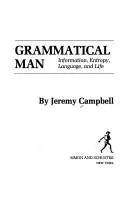
Grammatical man
by Jeremy Campbell · first published 1973
88% recommend13% neutral
Why HN recommends it
Popular history of information theory tying Shannon's entropy and communication ideas to linguistics, biology and life; praised as a fascinating, accessible read for curious non-specialists and those new to the subject.
Summarised by Claude from recommending comments
Just as physics made sense out of the mysteries of earth, air, fire, and water, it can be said that the science of information enriches and unifies an amazing diversity of modern sciences, from physics and mathematics to biology and linguistics. Because symbols, messages, and codes are the stuff not only of computers and telecommunications, but also of living organisms and the forms of human knowledge, information, and thus information theory, is universal. This is the first book to tell the story of information theory, how it arose with the development of radar during World War II, and how it
Affiliate links. As an Amazon Associate I earn from qualifying purchases.
Mentions per year
What Hacker News says
Related books
Portrait of Dorian Gray
Robert Boettcher, Oscar Wilde
Recommended by 2 · mentioned by 32 recommend · 3 mention2 recommend · 32 recommend
 2010–2019
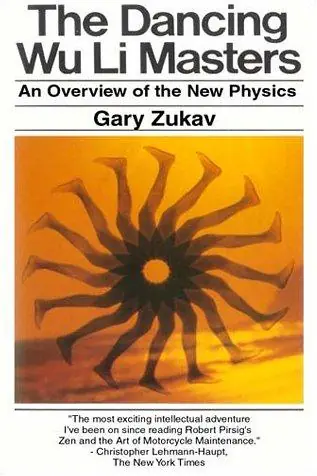
The Dancing Wu Li Masters
Gary Zukav
Recommended by 3 · mentioned by 33 recommend · 3 mention3 recommend · 33 recommend
 2010–2026
The way we live now
Anthony Trollope
Recommended by 5 · mentioned by 65 recommend · 6 mention5 recommend · 65 recommend
Thousand Plateaus
Gilles Deleuze, Felix Guattari
Recommended by 8 · mentioned by 298 recommend · 29 mention8 recommend · 298 recommend
 2015–2026
Systems of survival
Jane Jacobs
Recommended by 5 · mentioned by 105 recommend · 10 mention5 recommend · 105 recommend
 2010–2026
The Tao of Physics
Fritjof Capra
Recommended by 10 · mentioned by 1610 recommend · 16 mention10 recommend · 1610 recommend
 2008–2025
Citizen of the Galaxy
Robert A. Heinlein
Recommended by 8 · mentioned by 198 recommend · 19 mention8 recommend · 198 recommend
 2009–2026
The Computer and the Brain
John Von Neumann
Recommended by 9 · mentioned by 209 recommend · 20 mention9 recommend · 209 recommend
There's a fantastic book on Shannon called "Grammatical Man", by Jeremy Campbell - https://www.amazon.com/dp/B000KHFL0W
on “The Man Who Invented Information Theory (2017)” ↗…Dancing Wu Li Masters, by Gary Zukav The Naked Ape, by Desmond Morris The Road to Serfdom, by Friedrich Hayek The Worldly Philosophers, by Robert Heilbroner The Story of Philosophy, by Will Durant Grammatical Man, by Jeremy Campbell Zen and the Art of Motorcycle Maintenance, by Robert M. Pirsig Flow, by Mihaly Csikszentmihalyi
on “Ask HN: What books have made the biggest impact on your mental models?” ↗…elusiveness of reality. If a particle is just a probability density function of potential interactions with other particles, does the substance of reality reside in the particle, or in the interaction? Grammatical Man : Information, Entropy, Language and Life, by Jeremy Campbell. Is the substance of reality matter or information, or are they the same? If biology is applied chemistry, which is applied physics, which…
on “Ask HN: Good books?” ↗In no particular order, and some of these being more "highly underrated" as opposed to "unknown", with the notable exception of Smith's Wealth of Nations which is disturbingly un- and mis-read: 1. Grammatical Man, by Jeremy Campbell (1982) https://www.worldcat.org/title/grammatical-man-information-e... My introduction to information theory and its diverse set of interrelated applications and phenomena. 2. Ecology…
on “Ask HN: What are the best unknown books you have read?” ↗If you're looking for a good read, I enjoyed Jeremy Campbell's "Grammatical Man" quite a bit, it ties together information theory and linguistics. Obviously not the most in-depth book on either topic, but fascinating nonetheless. http://www.amazon.com/Grammatical-Man-Information-Entropy-La...
on “A Short, Simple Introduction to Information Theory” ↗…communication which is completely novel simply won't be understood. A communication which is completely known conveys no new information. You need a balance. I think I first encountered this concept in Grammatical Man, a 1980s-ish book by Jeremy Campbell on information and chaos theory, exceptionally well written, and highly recommended. More recently, recalling as I write this, I've seen a plot of the level of understanding…
on “What I learned as a hired consultant to autodidact physicists” ↗…Though 30+ years old, they remain highly current and relevant. https://www.worldcat.org/title/connections/oclc/4494136 https://www.worldcat.org/title/day-the-universe-changed/oclc... Jeremy Campbell's Grammatical Man (1984) introduced the concepts of information theory and their deep, deep, deep interconnections to a tremendous number of interconnected systems, many not explored within his book. Darwin's The Origin…
on “Ask HN: What book have you given as a gift?” ↗…Though 30+ years old, they remain highly current and relevant. https://www.worldcat.org/title/connections/oclc/4494136 https://www.worldcat.org/title/day-the-universe-changed/oclc... Jeremy Campbell's Grammatical Man (1984) introduced the concepts of information theory and their deep, deep, deep interconnections to a tremendous number of interconnected systems, many not explored within his book. Darwin's The Origin…
on “Ask HN: What good books have you read lately?” ↗Funny you mention that story, I came across it for the first time about 3 days ago in a book I was reading -- Grammatical Man. It's one of the best reads I've found on the history of information theory. Funnily enough the friend that lent it to me isn't even a tech person, he's an electrician who's more interested in occultism…
on “The Unparalleled Genius of John von Neumann (2019)” ↗…ever wanted to know what happens inside a browser The Computer and the Brain: https://www.goodreads.com/book/show/358880.The_Computer_and_... where the master compares the machine with our brain The Grammatical Man: If you ever wanted to know the importance of structure and constraint in everything: https://www.goodreads.com/book/show/722028.Grammatical_Man
on “Ask HN: What are your favorite books of all time, and why?” ↗…system. "Broken Republic": This is by far the most accurate description about current affairs in India. How India is being hollowed out and how its most vulnerable section is the one fighting against it. "Grammatical Man: Information, Entropy, Language and Life": I'm currently reading it (20% through) and it has already made a big impact. The meaning of information is deep and subtle and pervades not just human being…
on “Ask HN: What books changed the way you think about almost everything?” ↗Jeremy Campbell's The Grammatical Man would like a word with you on Lovelace actual documented contributions.
on “Turing Oversold?” ↗…Liar's Tale: A History of Falsehood (https://www.worldcat.org/title/liars-tale-a-history-of-false...), and concludes that lying is a universal behaviour. (Campbell's other notable book, the 1982 title Grammatical Man, is about information theory, and was a fascinating introduction to the field for me.)
on “How can you tell if someone is lying?” ↗