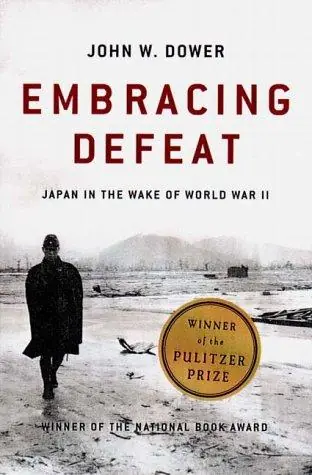
Embracing Defeat
by John W. Dower · first published 1999
30% recommend70% neutral
John Dower, distinguished historian of modern Japan, casts his eye on the immediate aftermath of World War II. Drawing on a vast range of Japanese sources, this new study illuminates how shattering defeat followed by over six years of American military occupation affected every level of Japanese society in ways that neither the victor nor the vanquished could anticipate. The great achievement of Embracing Defeat lies in its vivid portrayal of the countless ways in which the Japanese met the challenge of "starting over" - from top-level manipulations concerning the fate of Emperor Hirohito to
Affiliate links. As an Amazon Associate I earn from qualifying purchases.
Mentions per year
What Hacker News says
Related books
 2015–2017
Inventing Japan
Ian Buruma
Recommended by 1 · mentioned by 21 recommend · 2 mention1 recommend · 21 recommend
 2008–2026
American Prometheus
Kai Bird, Martin J. Sherwin
Recommended by 24 · mentioned by 4524 recommend · 45 mention24 recommend · 4524 recommend
 2008–2026
The making of the atomic bomb
Richard Rhodes
Recommended by 117 · mentioned by 161117 recommend · 161 mention117 recommend · 161117 recommend
 2014–2026
Echopraxia
Peter Watts
Recommended by 45 · mentioned by 6645 recommend · 66 mention45 recommend · 6645 recommend
 2008–2026
The Brothers Karamazov
Fiódor Dostoievski, Constance Garrett
Recommended by 86 · mentioned by 18786 recommend · 187 mention86 recommend · 18786 recommend
 2007–2026
Crime and punishment
Recommended by 113 · mentioned by 276113 recommend · 276 mention113 recommend · 276113 recommend
 2008–2026
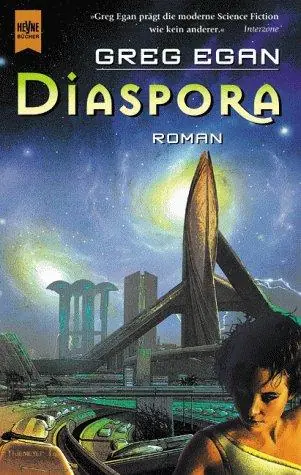
Diaspora
Greg Egan
Recommended by 131 · mentioned by 184131 recommend · 184 mention131 recommend · 184131 recommend
 2009–2026
Blindsight
Peter Watts
Recommended by 214 · mentioned by 294214 recommend · 294 mention214 recommend · 294214 recommend
The book where I read most of this from is Embracing Defeat: Japan in the Wake of World War II by John Dower. It's a big book, and covers a lot about occupation, not just economics, but I found it engrossing and quite readable. It's a little out of date now, being…
on “Doing Business in Japan” ↗Embracing Defeat by John Dower. The history of Japan's defeat in World War II is well known, but less known is how Japan transformed from a quasi-theocratic military dictatorship to the liberal democracy it is today.…
on “Ask HN: Any interesting books you have read lately?” ↗"Drink: A Cultural History of Alcohol", which I talked about in a thread recently: https://news.ycombinator.com/item?id=10146846 Before that, it was "Embracing Defeat: Japan in the Wake of World War II". I decided to read it because I saw a kinda not great movie about the period immediately after surrender, and I realized it was something I knew almost nothing about.…
on “Ask HN: What books are you reading?” ↗> I don't know what lens you are looking at this through... Mostly from reading Buruma's Inventing Japan, and Dower's War Without Mercy and Embracing Defeat. The fact that the pre-Perry regime was nasty has no bearing on the causal factors of Japan's later imperialism
…both prostitution and fraternization illegal, the number of reported rapes soared, showing that prostitution and the easy availability of women had suppressed incidents of rape. > John Dower, in his Embracing Defeat: Japan in the Wake of World War II, cites author Yoshimi Kaneko's claim that while the U.S./Japanese-sponsored brothels were open “the number of rapes and assaults on Japanese women were around 40 a day,”…
…destroyed, and things could have gone really badly, especially in Japan. I can't find the reference right but I remember reading average adult calorie intake to drop to ~1200 kcals in 1947/1948 in "embracing defeat" by John Dower. That period has a huge influence on Japan to this day, including architecture of Tokyo through black market. Both Japan and Germany had strong military govt culture, and became reliably…
on “The Third Atomic Bomb” ↗I read the "Embracing Defeat" by John Dower. It's about Japan instead, but what struck me is that the wealthy and powerful in general paid little price and perhaps even enriched themselves from the war. All the government warehouses…
on “The Oligarchs Who Came to Regret Supporting Hitler” ↗…presume that the treatment of the civilian population was worse for indigenous Okinawans-- maybe even today Okinawans can find themselves treated as 'not real Japanese'. It's been a while since I read 'Embracing Defeat' but I recall its summary of the state of Japan towards the end of the war and a lecturer saying, in effect, that nobody had to invade Japan to cause the deaths of millions, the supply chain (Asian mainland…
on “History's deadliest air raid happened in Tokyo during World War II (2020)” ↗I've been reading Dower's"Embracing Defeat: Japan in the Wake of World War II" and I think embarrassment is a significant factor, though this is not exclusive with your explanations. While the nation as a whole may not exhibit signs of shame,…
on “Why Japanese leaders attacked Pearl Harbor” ↗…don't recommend reading any of them, they're very unpleasant reading. But it's important to document what happened. "After the Reich", NacDonogh "An Eye For An Eye", Sack "Crimes and Mercies", Bacque "Embracing Defeat", Dower "Gruesome Harvest", Keeling "Justice At Nuremburg", Conot "Other Losses", Bacque "The Nuremburg Trial", Tusa "The Long Road Home", Shephard
on “One of the last Navajo code-talkers died on October 19th, aged 107” ↗