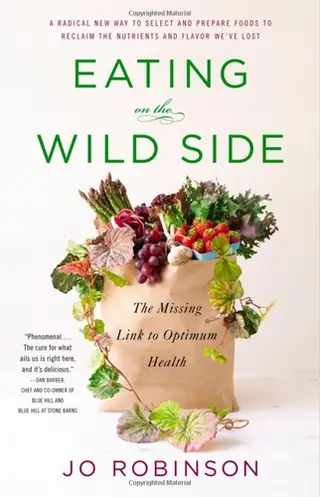
Eating on the Wild Side
by Jo Robinson · first published 2013
2mentions
1recommended by
2HN commenters
2018–2020first – last mentioned
50% recommend50% neutral
"Approximately 10,000 years ago our ancestors began to domesticate animals for food and choose plants to grow in their gardens. The choices we have been making ever since then about what to feed those animals and what plants to grow have had a huge impact on our diets. In Pasture Perfect Jo explained the benefits of eating meats, eggs, and dairy products from animals raised on pasture – their native diets. In Eating on the Wild Side, Jo points out the dramatic nutritional difference between the wild plants in our original diet and the fruits and vegetables we eat today. Some wild potatoes, for
Affiliate links. As an Amazon Associate I earn from qualifying purchases.
…through selective breeding for taste and early picking of produce for ease of transportation. A fantastic book on this subject, with advice for how to find produce with higher phytonutrient content, is Eating on the Wild Side[0]. [0] https://www.amazon.com/Eating-Wild-Side-Missing-Optimum/dp/0...
on “Dirt Poor: Have Fruits and Vegetables Become Less Nutritious?” ↗…apparently surprisingly high in micronutrients, moreso than cantaloupe or honeydew melons even. The small seedless watermelons that have appeared in recent years are the best source of these. (Source: Eating on the Wild Side by Jo Robinson http://www.amazon.com/exec/obidos/ASIN/0316227943/donhosek)
on “A Renaissance painting reveals how breeding changed watermelons (2015)” ↗