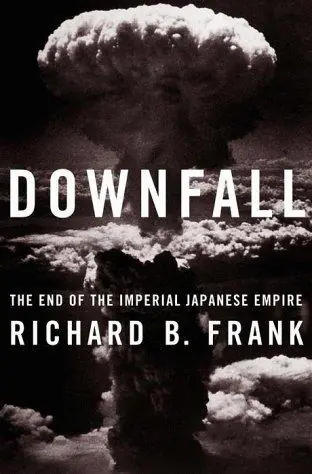
Downfall
by Richard B. Frank · first published 1999
40% recommend60% neutral
"These pages present the untold story of how American leaders learned in the summer of 1945 that their compromise strategy to end the war by blockade and bombardment, followed by invasion, had been shattered; radio intelligence had unmasked a massive Japanese buildup on Kyushu designed to turn the initial invasion into a bloody shambles. Meanwhile, the text and analysis of diplomatic intercepts depicted sterile prospects for negotiation before a final clash of arms. Here also, for the first time, is a full and balanced account of how Japan's leaders risked annihilation by gambling on a milita
Affiliate links. As an Amazon Associate I earn from qualifying purchases.
Mentions per year
What Hacker News says
Related books
 2021–2025
The Bomber Mafia
Malcolm Gladwell
Recommended by 3 · mentioned by 123 recommend · 12 mention3 recommend · 123 recommend
 2014–2021
Bomber Command
Max Hastings
Recommended by 3 · mentioned by 53 recommend · 5 mention3 recommend · 53 recommend
 2008–2026
The making of the atomic bomb
Richard Rhodes
Recommended by 117 · mentioned by 161117 recommend · 161 mention117 recommend · 161117 recommend
…engaged in a war (that Japan started) whereas the Jews (and other victims of the Nazis) were not at war with Germany. If you want a more nuanced perspective on the bombings and the surrender of Japan, read Downfall by Richard B. Frank. Even if you disagree with Frank, acting like there's no debate on this subject is dishonest. There's plenty of debate. In my opinion, people who talk about issues like this in…
on “Conversations among German Nuclear Physicists at Farm Hall (1945) [pdf]” ↗…not show the horrors of it. If one is more interested in an objective take on history, especially those using the argument that the Japanese were already "defeated" before the bombs came, then the book Downfall by Richard B Frank is a good book to start with for those who hold a firm anti-nuke stance.
on “Bombings of Hiroshima and Nagasaki (and Testimonials)” ↗Coincidentally, I just started reading Downfall: The End of the Imperial Japanese Empire by Richard B. Frank [1]. The very first chapter details survivor accounts of the March 45 fire bombing of Tokyo. Later chapters go into the difficulties LeMay…
on “When pop history bombs: a response to Malcolm Gladwell” ↗…strategists, having anticipated a reaction like Toyoda's, planned to drop a second bomb shortly after the first, to convince the Japanese that the U.S. had a large supply.[1] [0] Frank, Richard B. (1999). Downfall: the End of the Imperial Japanese Empire. New York: Penguin. ISBN 978-0-14-100146-3 [1] Hasegawa, Tsuyoshi (2005). Racing the Enemy: Stalin, Truman, and the Surrender of Japan. Cambridge, Massachusetts:…
on “"We'll call it AI to sell it, Machine Learning to Build it"” ↗…it seems clear that, out of what seemed to be the feasible alternatives available, the use of nuclear bombs did not stand out in terms of civilian casualties and human suffering. [1] Richard B. Frank, Downfall: The End of the Imperial Japanese Empire.
on “History's deadliest air raid happened in Tokyo during World War II (2020)” ↗