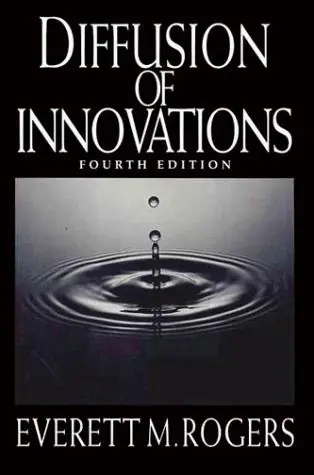
Diffusion of innovations
by Everett M. Rogers · first published 1962
47% recommend53% neutral
Why HN recommends it
Foundational text on how new ideas and technologies spread through a population, with adopter categories from innovators through laggards. Suits marketers, product people and engineers rolling out tools in a team.
Summarised by Claude from recommending comments
This is a very dense read on how new ideas spread. It is an academic classic work. If you like it, you might also like Images of Organisation, Crossing the Chasm, and the Iowa Hybrid Corn Study.
Affiliate links. As an Amazon Associate I earn from qualifying purchases.
Mentions per year
What Hacker News says
Related books
 2007–2026
Crossing the Chasm
Geoffrey A. Moore
Recommended by 106 · mentioned by 171106 recommend · 171 mention106 recommend · 171106 recommend
 2007–2025
The Tipping Point
Malcolm Gladwell
Recommended by 31 · mentioned by 8731 recommend · 87 mention31 recommend · 8731 recommend
 2007–2026
The Soul of a New Machine
Tracy Kidder
Recommended by 260 · mentioned by 376260 recommend · 376 mention260 recommend · 376260 recommend
 2008–2026
The Timeless Way of Building
Christopher Alexander
Recommended by 67 · mentioned by 10367 recommend · 103 mention67 recommend · 10367 recommend
 2007–2025
Mindset
Carol S. Dweck
Recommended by 86 · mentioned by 12186 recommend · 121 mention86 recommend · 12186 recommend
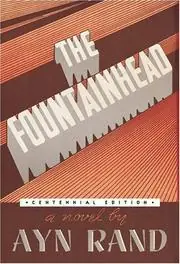 2007–2026
The Fountainhead
Ayn Rand
Recommended by 64 · mentioned by 14364 recommend · 143 mention64 recommend · 14364 recommend
 2007–2026
The Prince
Niccolò Machiavelli
Recommended by 61 · mentioned by 19461 recommend · 194 mention61 recommend · 19461 recommend
 2007–2026
A pattern language
Christopher Alexander, Sara Ishikawa, Murray Silverstein, Max Jacobson
Recommended by 110 · mentioned by 226110 recommend · 226 mention110 recommend · 226110 recommend
…everyone is on it. 11. It's cool to hate on Gladwell, but read The Tipping Point if you haven't already. Then chase down some of the stuff by Watts, Barabasi, etc. on network science. Maybe even read Diffusion of Innovations by Everett Rogers. There's a growing body of science that speaks to how things happen in networks... there may be something interesting that falls out of thinking about "preferential attachment" and…
on “Ask HN: Facebook alternative, are users willing to try something different?” ↗There's actually a really good book on this: Diffusion of Innovations by Rogers, http://www.amazon.com/o/ASIN/0743222091/ The book places adopters into 5 categories, innovators, early adopters, early majority, late majority, and laggards. The innovators are the few that…
on “Ask HN: How do you define an early adopter? ” ↗1- The Prince by Niccolo Machiavelli. Specially the edition commented by Napoleon Buonaparte. 2-Diffusion of Innovations by Everett M. Rogers. This book makes "Crossing the chasm" a simplistic introduction for laggards 3-The Art of War by Sun Tzu 4-If Nature Is the Answer, What Was the Question? By Jorge Wagensberg 5-Sacred…
on “Ask HN: Which non-technology book has influenced you the most and why?” ↗The book Diffusion of Innovations [1962] has a few case studies about that. https://en.wikipedia.org/wiki/Diffusion_of_innovations https://www.amazon.com/Diffusion-Innovations-5th-Everett-Rog... This is the seminal book on marketing,…
on “Gates Foundation spent $200M funding toilet research” ↗"...interesting example of how organizations learn." Highest recommendation for Everett Rogers' Diffusion of Innovation, first published in 1963, 5th edition in 2003. https://en.wikipedia.org/wiki/Diffusion_of_innovations It's seminal. Having read a lot of process and innovation books in 90s and aughts, I really wish I had known to just start with the original text. Knowledge sharing takes time. We know how to model…
on “UChicago doctors see ‘remarkable’ success using ventilator alternatives” ↗1. The Pragmatic Programmer. 2. Writing Tools: 50 Essential Strategies for Every Writer. 3. Diffusion of Innovations. 4. The Little Book of Common Sense Investing. 5. Implementing Lean Software Development: From Concept to Cash. 6. Writing to Learn. 7. On Writing Well. 8. Pragmatic Thinking and Learning: Refactor…
on “Ask HN: What are some no fluff books on engineering, career, and general wisdom?” ↗…HN. There are certainly too many one-idea books, but there are also many extraordinary, irreplicable works: A Pattern Language, Thinking Fast and Slow, The Landscape of History, The Modern Firm, The Diffusion of Innovations, Bowling Alone, The Life You Can Save, And the Band Played On, and on and on.
on “The Need to Read” ↗I recommend that people take a look at “Diffusion of Innovations” Rodgers 1962 and all of the subsequent work since. It doesn’t directly address usability and design, which I believe are also important, but it addresses it indirectly. [1] https://en.m.wikipedia.org/wiki/Diffusion_of_innovations
on “How often do superior alternatives fail to catch on?” ↗…you call "the basics" in a workplace with a dozen or so people is going to be more than a year-- at best, if you do everything right and are people person with enormous leadership leverage. Read about "Diffusion of Innovations" (https://en.wikipedia.org/wiki/Diffusion_of_innovations). It's an arguably successful theory for how organizations implement technological changes. It was originally conceived by social scientists who…
on “Ask HN: Are my expectations on code quality and professionalism too high?” ↗Yes and: > ...farmers often get out ahead of the ag schools. Rogers' book Diffusion of Innovations is the seminal text. https://en.wikipedia.org/wiki/Diffusion_of_innovations "The study of diffusion of innovations took off in the subfield of rural sociology in the midwestern United States in the 1920s…
on “Building on soil in Big Sandy: Regenerative organic farming in rural Montana” ↗…difference between angel and later stage investors. DARPA's remit is to try a bunch of crazy ideas, see what happens. OWS's mission was to rush promising ideas to market. Being a huge fan of the book Diffusion of Innovations, the basis for pop-biz books like Crossing the Chasm, the need for Operation Warp Speed strategy is both obvious and necessary.
on “Operation Warp Speed: A new model for industrial policy” ↗…and so forth. Completely changed my mental model for my work. Paraphrasing from book (from memory): "Architecture" is the set of visible design choices. Design Rules is to software methodology what Diffusion of Innovations is to product development. There is some overlap between Design Rules and Diffusion of Innovations, of course. They're compliments.
on “Good Software Architectures are mostly about Boundaries” ↗Nearly 20 years ago after reading Diffusion of Innovations I decided to use everything in the book. The company ran off a few svn servers (formally cvs) and so I ran a handful of Git courses at my work to help us ultimately migrate to Git (this was early days…
on “Connecticut and the 1 Kilometer Effect” ↗…Everything Is Connected to Everything Else and What It Means[3] Six Degrees: The Science of a Connected Age[4] The Wisdom of Crowds[5] Nexus: Small Worlds and the Groundbreaking Science of Networks[6] Diffusion of Innovations[7] Of course - being that Network Science is a multidisciplinary field, that touches a lot of other areas - it can be hard to get a handle on what to study. But those few books - between them - cover…
on “An Introduction to Graph Theory and Network Science” ↗…Crossing the Chasm and Inside the Tornado, which were seminal books at places like Netscape. Before that, the key idea was TAM, the Technology Adoption Model, pioneered by Professor Everett Rogers in Diffusion of Innovations in 1962.
on “How often do superior alternatives fail to catch on?” ↗