Difference and RepetitionGilles Deleuze, Paul Patton
Difference and Repetition
by Gilles Deleuze, Paul Patton · first published 2004
11mentions
4recommended by
10HN commenters
2012–2023first – last mentioned
40% recommend50% neutral10% critical
Affiliate links. As an Amazon Associate I earn from qualifying purchases.
Mentions per year
What Hacker News says
Related books
Anti-OedipusGilles Deleuze, Félix Guattari2010–2026
Anti-Oedipus
Gilles Deleuze, Félix Guattari
Recommended by 4 · mentioned by 204 recommend · 20 mention4 recommend · 204 recommend
Thousand PlateausGilles Deleuze, Felix Guattari2010–2026
Thousand Plateaus
Gilles Deleuze, Felix Guattari
Recommended by 8 · mentioned by 298 recommend · 29 mention8 recommend · 298 recommend
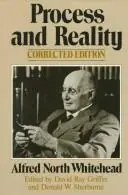 2015–2025
Process and reality
Alfred North Whitehead
Recommended by 3 · mentioned by 133 recommend · 13 mention3 recommend · 133 recommend
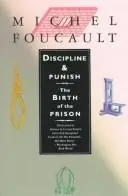 2009–2026
Discipline and Punish
Michel Foucault, Simon Prebble
Recommended by 36 · mentioned by 7036 recommend · 70 mention36 recommend · 7036 recommend
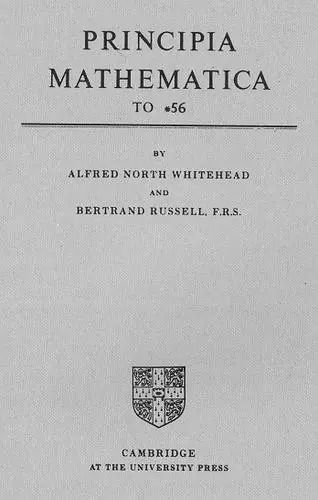 2007–2026
Principia mathematica
Alfred North Whitehead, Bertrand Russell
Recommended by 9 · mentioned by 1619 recommend · 161 mention9 recommend · 1619 recommend
…dip your toes in the water: – Gilles Deleuze wrote powerfully on metaphysics, integrating many incites from mathematics in the 60's and 70's: http://en.wikipedia.org/wiki/Deleuze#Metaphysics Check out "Difference and Repetition". – Alain Badiou uses set theory in his ontology: http://en.wikipedia.org/wiki/Alain_Badiou#Mathematics_as_ont... – I find his ontology lacking though; he should learn something from the failings of…
on “Why philosophy is largely ignored by science” ↗…of Spirit Hegel - Logic von Kleist - Marionette Theatre Kierkegaard - The Sickness Unto Death Heidegger - Being and Time Sartre - Being and Nothingness Sartre - Flies Sartre - Nausea Deleuze - Difference and Repetition Kafka - Metamorphosis Kafka - The Castle Lem - Magellan Nebula Lem - His Master's Voice Cioran - A Short History of Decay Pessoa - Book Of Despair Wolfe - New Sun tetralogy
on “Ask HN: What books changed the way you think about almost everything?” ↗…encapsulates the issue quite well. Deleuze is also excellent here -- I saw you mentioned BwO (and have Nomadology referenced in your profile), but I think you would particularly like The Fold and parts of Difference and Repetition, both of which approach the 'is' as endlessly, imperfectly repeated 'as', much the way one thinks of DNA mutatedly reproducing itself. Making a mental note to raid my library tonight and pull out some…
on “_why is a role, not a person” ↗…That is... a lot. IMHO, Nietzche, Spinoza, Foucault, and Kafka are the big ones, if you don't want to read like, ten books about ten people you probably haven't read yet. You can follow these up with "Difference and Repetition," his primary thesis, and "Logic of Sense," his final solo work before meeting Guattari. He wrote these in between some of those solo works, but IMHO, they make sense as a unit, with these as the end,…
on “Stanford Encyclopedia of Philosophy” ↗most of it is an attempt to escape Hegelianism/Marxism/psychoanalysis, but his earlier works (Difference and Repetition, Logic Of Sense) are much better in terms of accessibility, to me his best are books on other philosophers, on Kant, Spinoza, Leibniz. The late stages of philosophers' works are often quite wacky.
on “Gilles Deleuze – What is Philosophy? [audio]” ↗I came into CS later than Silicon Valley would like me to have, and so I was already familiar with poststructuralism when I was reading about information theory. Much of it was just a rehash of Difference & Repetition; I can't find the quote now, but I recall Foucault calling Deleuze the first philosopher who was really of this period (the 'information age' or whatever) & he was right. Knowing yo
on “Foucault’s lecture notes from 1970–71 demolish caricatures of his thought (2013)” ↗Sure thing (though it was my lovely wife that bought them, not me!): - Systems Engineering Demystified by Jon Holt - Essential Architecture and Principles of Systems Engineering by C. E. Dickerson & Siyuan Ji - System Design & Management: An Introduction to Systems Engineering by Bob Parkinson On a somewhat related note I also got Difference & Repetition by Deleuze and Process and Reality by A
on “System Design Primer: Learn how to design large-scale systems” ↗…absolutely no round squares. https://en.wikipedia.org/wiki/Squircle Absolute truth exists relative to axioms. Given x, y. Even the law of identity is not metaphysically necessary; Deleuze argues that difference and repetition are prior to identity. > Absolute truth must exist. If there was no such thing as absolutely truth then it is absolutely true that there is no absolute truth. In other words, a logical contradiction.…
Boyd's stuff is really interesting but yeah, he doesn't provide quite as much of a unified theory of everything as a lot of the Pentagon people seem to think. imo one result of the over-bureaucratized nature of the US military is that ideas that would be considered fairly basic in other contexts are treated as incomparable advances there [edit] which reminds me of the IDF/Deleuze thing - the gran
on “Advanced Situational Awareness [pdf]” ↗…the other hand, I think Deleuze has a deep understanding of philosophy and, to some extent, mathematics. Deleuze always tries to make a transition from traditional theories to his extreme conception of difference and repetition. It's crazy, but it has a certain genius.
on “Gilles Deleuze – What is Philosophy? [audio]” ↗…familiar with poststructuralism when I was reading about information theory. Much of it was just a rehash of Difference & Repetition; Claude Shannon's foundational work was published 20 years before Difference and Repetition. And even if the reverse were true, I don't see how you can make a claim like this when one is a rigorous mathematical treatise, and the other is, frankly, bullshit math.
on “Foucault’s lecture notes from 1970–71 demolish caricatures of his thought (2013)” ↗