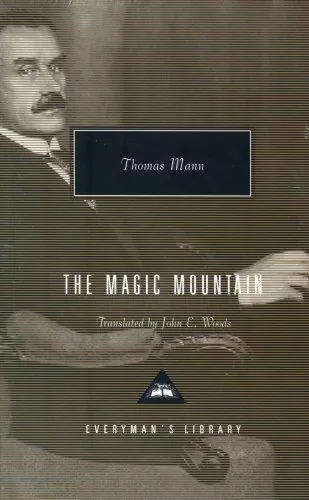
Der Zauberberg
by Thomas Mann · first published 1924
4mentions
1recommended by
4HN commenters
2020–2026first – last mentioned
25% recommend75% neutral
One of the most influential and celebrated German works of the 20th century has been newly rendered in English by Woods, twice winner of the PEN Translation Prize. First published in 1929, Mann's novel tells the story of Hans Castorp, a modern everyman who spends seven years in an Alpine sanatorium for tuberculosis patients, finally leaving to become a soldier in World War I. Isolated from the concerns of the everyday world, he is exposed to the wide range of ideas that shaped a world on the verge of explosion. Considering what was to follow, the most poignant moment comes when Naphta, a Jewis
Affiliate links. As an Amazon Associate I earn from qualifying purchases.
In case you know german and like audiobooks, I highly recommend the following version of Magic Mountain (Der Zauberberg) https://hoerspiele.dra.de/detailansicht/1426911 (No download link there) It is a great book, certainly made an impression on me.
on “How Thomas Mann Wrote the Magic Mountain” ↗…Orwell died just one year after 1984’s publication. In other situations it can work in reverse. For example, Thomas Mann died in 1955, so his works will typically enter the public domain in 2025. However, Der Zauberberg was published in 1924 so is now in the public domain under US law. This (among works by other authors) lead to Gutenberg being blocked in Germany as they weren’t willing to build a geoblocking system.…
on “Planet eBook – Classic literature publications formatted for popular devices” ↗Interesting to see Mann's evolution towards (maybe even during the writing of) Der Zauberberg (1924)? (good thing he wasn't the inspiration for Orwell's 2-minute hate; that guy would've had a much harder time backtracking)
on “Weavers and Concluders: Two communication styles (2021)” ↗…amidst my coming-of-age, in hindsight without this particular frame of Bildung left by myself I would have been left utterly confused and maybe at some point acted out on it. By engaging with books like Der Zauberberg by Thomas Mann or Der Mann ohne Eigenschaften by Robert Musil, my apparent madness was calmed down and instead of breaking the dam of a forming social front of myself with the vastness of the unconsciousness,…
on “Why are there so many rationalist cults?” ↗